
The cliffhanger chapter isn’t simply about leaving your protagonist dangling from a literal cliff—though I’ve used that device more than once in my action thrillers. It’s about creating a specific type of narrative tension that compels readers to turn the page, while simultaneously providing enough resolution to satisfy the immediate dramatic question. The challenge lies in balancing revelation with concealment, giving readers just enough to feel progress while withholding the crucial element that drives them forward.
Across eighteen series and more than 150 novels, I’ve discovered that effective cliffhanger chapters operate on multiple levels of tension simultaneously. They’re not random moments of jeopardy tacked onto chapter endings, but carefully orchestrated escalations that emerge organically from character decisions and plot momentum.
The Anatomy of Effective Chapter Tension
A working cliffhanger chapter requires three essential components: an immediate physical or emotional threat, an unresolved question that extends beyond the current scene, and a character decision that raises the stakes. In my DCI Isaac Cook series, I frequently end chapters with Cook discovering evidence that implicates someone unexpected—not because I want a cheap shock, but because that revelation forces him into a moral or procedural dilemma that readers must see resolved.
The key is understanding that tension isn’t just about what happens next—it’s about what the characters will choose to do next. When Cook finds evidence against a colleague, the cliffhanger isn’t the discovery itself. It’s the impossible choice between loyalty and justice that discovery creates. The physical action stops, but the emotional and ethical momentum carries forward.
Too many writers mistake surprise for suspense. A surprise occurs when something unexpected happens. Suspense occurs when readers know something is about to happen but don’t know when or how. The most effective cliffhangers combine both elements: they surprise readers with a revelation while creating suspense about its consequences.
Strategic Placement Within Story Architecture
Cliffhanger chapters work best when positioned at moments of maximum character vulnerability. This doesn’t mean your protagonist must be in physical danger—though that certainly works in police procedurals. Emotional vulnerability can be equally compelling. When DI Tremayne realizes his investigation has been compromised from within his own department, the cliffhanger isn’t the revelation itself but the isolation it creates.
I’ve learned to map cliffhangers against character arcs rather than plot points. The most effective chapter endings occur when external plot developments force internal character growth. Your protagonist discovers the killer’s identity, but that discovery requires them to confront their own prejudices or fears. The external revelation drives internal conflict, creating both immediate and long-term tension.
The rhythm of cliffhanger placement matters enormously. Space them too closely and readers become exhausted. Too far apart and momentum flags. I aim for a major cliffhanger every three to four chapters, with smaller tensions punctuating individual chapter endings. This creates a pattern of escalating intensity without overwhelming readers with constant crisis.
How I Actually Write Cliffhanger Chapters
My process begins with identifying the core question each chapter must answer and the new question it must raise. Before I write a single sentence, I know both the revelation that will satisfy readers and the new uncertainty that will propel them forward. This prevents the common mistake of writing toward a vague sense of ‘something dramatic’ happening.
I write cliffhanger chapters in reverse chronological order during my editing phase. I start with the final moment—the revelation, decision, or threat—then work backward to ensure every sentence builds toward that climax. This technique prevents meandering middle sections that dissipate tension rather than building it.
Character motivation drives every cliffhanger I write. In my Maya Thorne series, when Thorne discovers evidence hidden in an abandoned mine shaft, the cliffhanger isn’t the physical danger of the collapsing structure. It’s her realization that someone she trusts has been systematically destroying evidence. The physical jeopardy provides immediate tension, but the betrayal creates lasting suspense.
I test every cliffhanger against this question: does this ending make readers want to know what happens next, or does it make them want to know what the character will do next? The second option creates stronger, more sustainable tension because it engages readers’ emotional investment in character development rather than mere curiosity about plot mechanics.
Common Mistakes That Destroy Chapter Tension
The most destructive error is the false cliffhanger—dramatic moments that evaporate immediately in the following chapter. If your protagonist seems to be shot at the end of Chapter 12, but Chapter 13 reveals it was just a training exercise, you’ve betrayed reader trust. I’ve seen too many writers use these cheap tricks, thinking they’re creating suspense when they’re actually teaching readers not to invest emotionally in chapter endings.
Another frequent mistake is the action-only cliffhanger. Your detective kicks down a door and finds a room full of evidence, chapter ends. This creates momentary excitement but no lasting tension because there’s no character dilemma attached to the discovery. Compare this to finding the evidence and realizing it implicates your detective’s mentor. The second version creates both immediate shock and ongoing emotional conflict.
Overwriting destroys cliffhanger effectiveness more often than underwriting. When you’ve created genuine tension, trust it. Don’t elaborate on why this moment is significant or hint heavily at coming revelations. I learned this lesson painfully in my early espionage work—the most powerful cliffhangers often consist of a single, precise sentence that encapsulates the new reality your character faces.
Writers also fail when they confuse confusion with mystery. A cliffhanger that leaves readers genuinely unclear about what has happened isn’t mysterious—it’s frustrating. Effective chapter endings provide clarity about immediate events while raising questions about their implications. Your readers should understand exactly what your protagonist has discovered or experienced, but remain uncertain about what it means for their goals and relationships.
Building Episodic Momentum Across Series
In series work, cliffhanger chapters serve dual purposes: they maintain tension within individual books while building anticipation for future installments. The technique requires careful calibration—each book must provide sufficient resolution to satisfy readers while establishing threads that will develop across multiple volumes.
I approach series cliffhangers by distinguishing between case-specific tensions and character-development tensions. In my DCI Isaac Cook books, individual cases resolve completely within each novel, but Cook’s relationships with colleagues, his evolving investigative methods, and his personal struggles continue developing across the entire series. This allows readers to experience both completion and anticipation.
The strongest series cliffhangers emerge from character growth rather than plot manipulation. When Cook makes a decision that aligns with his professional ethics but damages his personal relationships, that choice creates tension that extends beyond any single case. Readers are invested in seeing how he’ll handle similar conflicts in future investigations.
Series writers must also manage reader expectations carefully. If every book ends with a major personal crisis or professional upheaval, readers begin to anticipate and discount these patterns. I vary the intensity and type of series-spanning tensions, sometimes ending books with quiet moments of character insight that nevertheless raise questions about future developments.
Conclusion
Effective cliffhanger chapters are architectural elements that support the entire narrative structure, not decorative flourishes added to generate excitement. They succeed when they emerge naturally from character choices and story logic, creating tension that feels both surprising and inevitable. Master this balance, and your chapters will drive readers forward with genuine anticipation rather than manufactured suspense.
About Phillip Strang
Phillip Strang is an Australian crime and thriller novelist. Across eighteen series and more than 150 novels, his work spans London police procedurals (DCI Isaac Cook), UK investigations (DI Tremayne), Australian outback crime (Maya Thorne), FBI thrillers (Alex Harlan), Scottish Highland mysteries (DI Sarah Lynch), and espionage (Steve Case). Learn more about Phillip or browse his complete catalogue on Amazon.
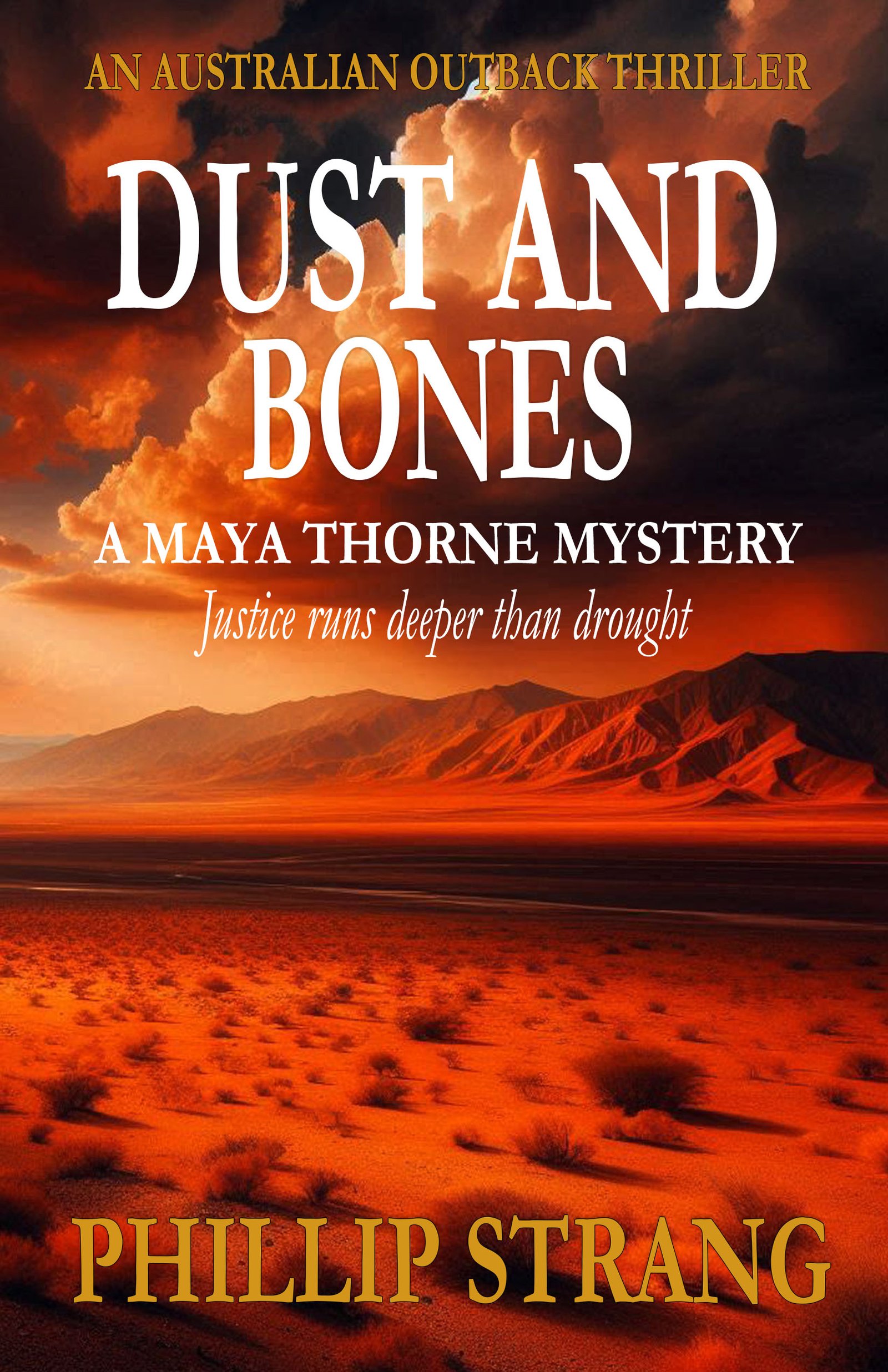
A MAYA THORNE MYSTERY
Get Dust and Bones Free
Justice runs deeper than drought.
Red dust. Shallow graves. A detective who hunts killers where the law runs thin and the nearest help is two hundred miles away.
Send Me the BookYou'll also receive occasional new release emails. Unsubscribe anytime. No spam, ever.
As an Amazon Associate, Phillip Strang earns from qualifying purchases. This page contains affiliate links — buying through them costs you nothing extra.