
Coastal crime fiction presents unique opportunities that inland mysteries simply cannot match. The proximity of water creates natural boundaries, escape routes, and disposal methods that fundamentally alter how crimes unfold and investigations proceed.
Across eighteen series and more than 150 novels, I have found that maritime settings offer crime writers some of the most versatile backdrops for murder, corruption, and psychological tension. The coast operates as both sanctuary and trap, where the rhythmic crash of waves can mask screams and the tide can wash away evidence with clockwork precision.
The Isolation Factor in Maritime Crime
Coastal settings excel at creating the controlled environment that crime fiction demands. Unlike urban mysteries where help is always a phone call away, coastal communities often exist in practical isolation. Ferry schedules, weather patterns, and geographical barriers become plot devices that writers can manipulate with complete believability.
I have used this isolation extensively in my work. Remote fishing villages, offshore platforms, and island communities create natural locked-room scenarios where suspects cannot simply disappear into a crowd. The investigator and the criminal are bound by the same geographical constraints, intensifying their psychological dance.
The seasonal nature of many coastal areas adds another layer. Tourist towns that swell to ten times their winter population create fascinating dynamics between locals and outsiders, between those who belong and those who are merely visiting. This tension between permanent and temporary residents provides rich material for exploring motives rooted in economic desperation, territorial disputes, and cultural clashes.
Water as Character and Tool
Successful coastal crime fiction treats water as an active participant rather than passive scenery. Tides operate on precise schedules that can establish alibis or destroy them. Storms arrive with meteorological predictability that allows for careful plotting of when characters will be trapped together or cut off from assistance.
The ocean offers unique methods for both committing crimes and concealing evidence. Bodies can be weighted and sunk, but experienced crime writers know that saltwater and marine life affect decomposition in specific ways that forensic investigators understand. This creates opportunities for both clever criminals and clever detectives.
In my Maya Thorne series, I have explored how coastal geography shapes investigation techniques. Beach access points, boat launches, and cliff paths create limited routes that investigators can systematically examine. The physical constraints of coastal terrain make certain crimes more likely and others nearly impossible.
Maritime Communities and Criminal Networks
Coastal communities operate under different social and economic pressures than inland towns. Fishing industries, shipping, tourism, and maritime commerce create specific opportunities for organized crime. Smuggling operations, whether drugs, weapons, or people, naturally gravitate toward coastal areas where legitimate maritime traffic can provide cover.
The transient nature of maritime work creates perfect conditions for criminals who need to disappear quickly. Merchant sailors, fishing crews, and yacht captains move between ports regularly, making them difficult to track. This mobility makes coastal areas ideal for crimes that require quick escape routes or the ability to establish alibis in multiple locations.
I have found that the most compelling coastal crimes emerge from the intersection of legitimate maritime business with criminal enterprise. When characters have genuine reasons to be on boats, near harbors, or familiar with tides and weather patterns, their criminal activities feel organic rather than contrived. The best action thriller novels understand this integration of setting and plot.
How I Approach Coastal Crime Writing
When I am developing a coastal crime story, I begin with the maritime calendar rather than the characters. I research tide tables, weather patterns, ferry schedules, and seasonal tourism cycles for the specific location. These natural rhythms become the framework within which my plot must operate.
I spend considerable time understanding the economic realities of coastal communities. What industries support the local population? How do seasonal fluctuations affect employment and income? Where do legitimate maritime activities intersect with potential criminal opportunities? These questions shape both motive and method in coastal crimes.
The physical research is equally important. I map coastlines, noting access points, secluded areas, and natural barriers. I study local maritime law enforcement capabilities, understanding response times and jurisdictional boundaries. Coast Guard stations, harbor patrol schedules, and emergency response procedures all influence how crimes can be committed and investigated.
In my DI Sarah Lynch series set in the Scottish Highlands, I have used the interplay between lochs, coastal waters, and highland terrain to create complex crime scenarios that could not exist in any other setting. The key is making the geography work for the story rather than against it.
Common Pitfalls in Maritime Mystery Writing
The most frequent mistake in coastal crime fiction is treating water as a convenient body disposal method without understanding the practical realities. Writers who assume that dumping a body in deep water guarantees it will never resurface reveal their inexperience with maritime conditions. Bodies in saltwater behave differently than bodies in freshwater, and experienced investigators know this.
Another common error is misunderstanding maritime jurisdiction and law enforcement capabilities. Writers often assume that coastal crimes fall into legal gray areas where normal police procedures do not apply. In reality, maritime law enforcement is highly organized, with clear protocols for coordinating between local police, coast guard, and federal agencies.
Many coastal crime stories fail because they rely too heavily on weather as a plot device without establishing meteorological believability. Storms that arrive without warning, tides that behave unpredictably, or weather conditions that conveniently isolate characters at crucial moments destroy reader credibility. Successful coastal crime fiction works within natural patterns rather than inventing impossible ones.
The romanticization of coastal life also undermines many maritime mysteries. Writers who focus on picturesque harbors and quaint fishing villages often miss the economic desperation, environmental pressures, and social tensions that drive real coastal communities. The most compelling crimes emerge from authentic local conflicts rather than imported urban problems.
Some authors make the mistake of assuming that all coastal areas are similar. Mediterranean harbors operate differently than North Atlantic fishing ports, which function differently than Pacific resort towns. Each maritime environment has distinct characteristics that affect how crimes are committed, investigated, and resolved. Generic coastal settings produce generic coastal crimes.
Technical accuracy matters more in maritime settings than in many other crime fiction subgenres. Readers familiar with boats, navigation, and coastal conditions will immediately notice errors in terminology, procedure, or maritime behavior. When writing about specialized maritime activities like commercial fishing, yacht racing, or cargo shipping, the details must be correct or the entire story loses credibility. Understanding the difference between police procedural novels and maritime procedurals is crucial for writers working in coastal settings.
Conclusion
Coastal crime fiction succeeds when writers understand that maritime settings are not simply backdrops but active elements that shape character, motive, and method. The most effective coastal mysteries emerge from the authentic intersection of geography, community, and criminal opportunity that exists nowhere but at the water’s edge.
About Phillip Strang
Phillip Strang is an Australian crime and thriller novelist. Across eighteen series and more than 150 novels, his work spans London police procedurals (DCI Isaac Cook), UK investigations (DI Tremayne), Australian outback crime (Maya Thorne), FBI thrillers (Alex Harlan), Scottish Highland mysteries (DI Sarah Lynch), and espionage (Steve Case). Learn more about Phillip or browse his complete catalogue on Amazon.
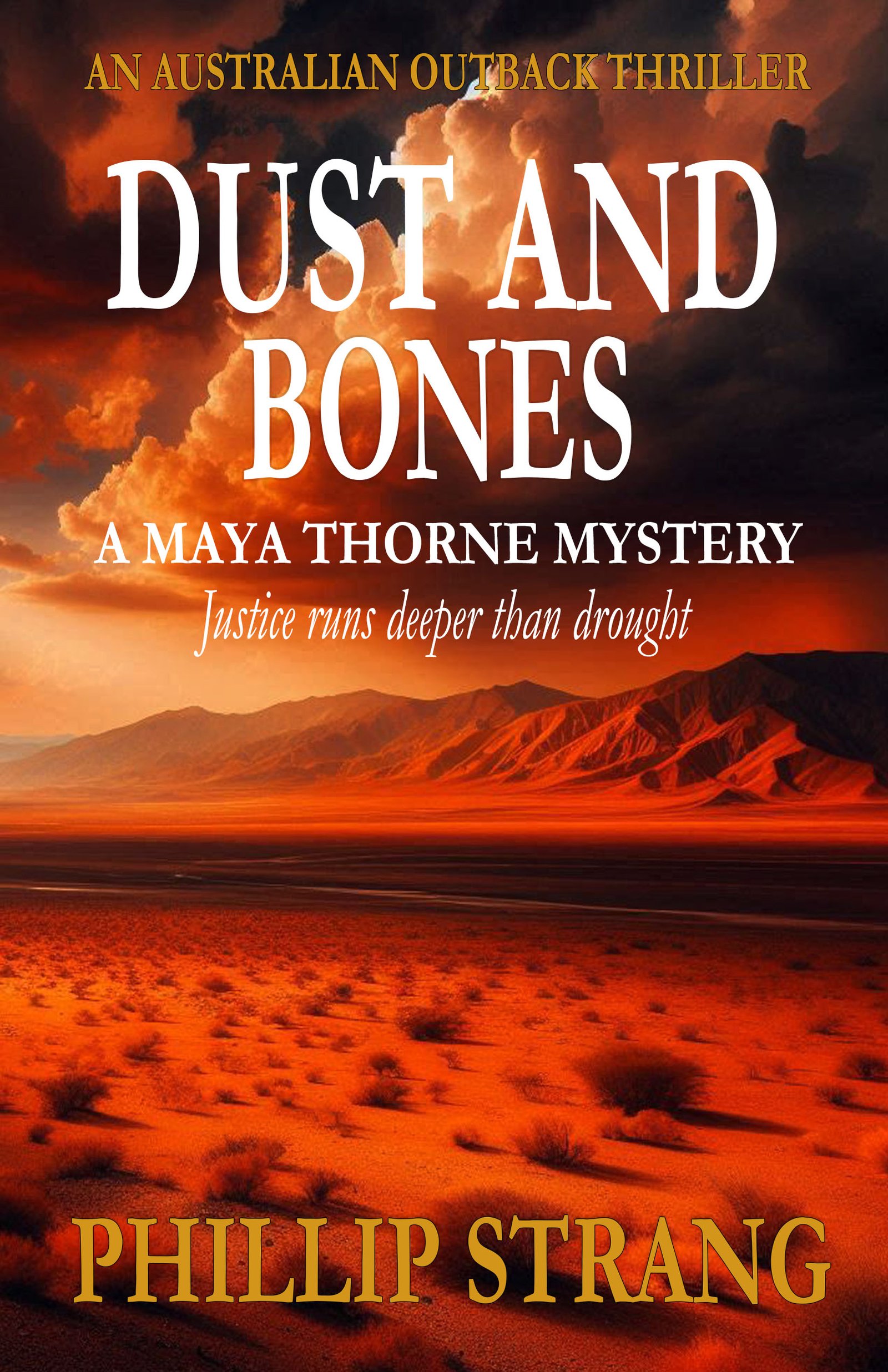
A MAYA THORNE MYSTERY
Get Dust and Bones Free
Justice runs deeper than drought.
Red dust. Shallow graves. A detective who hunts killers where the law runs thin and the nearest help is two hundred miles away.
Send Me the BookYou'll also receive occasional new release emails. Unsubscribe anytime. No spam, ever.
As an Amazon Associate, Phillip Strang earns from qualifying purchases. This page contains affiliate links — buying through them costs you nothing extra.