
Desert landscapes in crime fiction offer more than scenic backdrops—they function as active participants in the story’s mechanics. The harsh environment strips away urban conveniences and social safety nets, forcing characters into primal situations where survival instincts clash with moral choices. When done properly, the desert becomes a crucible that reveals character truth while amplifying the stakes of your central crime.
Across eighteen series and more than 150 novels, I have found that environmental settings must earn their place in crime fiction through functional storytelling rather than mere atmospheric decoration. The desert’s unique properties—isolation, resource scarcity, extreme temperatures, and unforgiving terrain—create natural plot pressures that urban or suburban settings cannot replicate.
The Desert as Character Antagonist
The most effective use of desert settings treats the landscape as an active antagonist rather than passive scenery. Heat exhaustion, dehydration, disorientation, and exposure become constant threats that compound whatever human dangers your protagonist faces. This environmental pressure creates what I call ‘layered jeopardy’—your detective or victim must navigate both criminal threats and natural hazards simultaneously.
When writing my Maya Thorne series set in the Australian outback, I learned that the landscape’s hostility must be established early and reinforced consistently. The desert doesn’t pause its assault on characters while they pursue leads or interrogate suspects. Thirst doesn’t wait for convenient plot moments. This constant environmental pressure accelerates character decisions and eliminates the luxury of prolonged deliberation that urban settings might allow.
The key is making environmental threats feel immediate and personal rather than theoretical. Instead of telling readers the desert is dangerous, show your protagonist rationing water, seeking shade, or losing their sense of direction. These physical realities create authentic tension while advancing your plot.
Isolation Techniques in Desert Crime Writing
Desert isolation operates differently from other remote settings because escape routes are visible but practically unreachable. Characters can see for miles in every direction, yet help remains impossibly distant. This psychological effect—being surrounded by emptiness rather than barriers—creates a unique form of claustrophobia that urban crime writers cannot access.
Isolation in desert settings eliminates the quick arrival of backup, forensic teams, or medical assistance that drives much urban crime fiction. Your protagonist must solve problems with limited resources while the environment actively works against preservation of evidence. Heat degrades biological samples, wind erases tracks, and vast distances make witness testimony unlikely.
This isolation forces character self-reliance while creating natural story constraints. Your detective cannot call for immediate backup or rush victims to nearby hospitals. These limitations become creative opportunities that generate unique plot solutions and character growth moments.
The isolation also affects perpetrator psychology. Criminals in desert settings often display different behavioral patterns than urban counterparts, influenced by the landscape’s demands for survival skills and self-sufficiency. This environmental influence should shape your antagonist’s methods and motivations.
Environmental Evidence and Forensic Challenges
Desert environments create specific forensic challenges that can drive plot development while maintaining procedural authenticity. Extreme temperature fluctuations, minimal moisture, and constant wind exposure affect decomposition rates, evidence preservation, and crime scene integrity in ways that differ dramatically from other settings.
Sand and dust create their own evidentiary opportunities and obstacles. Footprints may be preserved perfectly or erased within hours, depending on wind conditions. Vehicle tracks become crucial evidence when roads are scarce, but the same shifting sands that preserve them can also obliterate them. These environmental factors create natural time pressure for investigations while offering unique clues unavailable in urban settings.
The scarcity of water sources in desert regions creates predictable human movement patterns that smart investigators can exploit. People and vehicles must follow certain routes to access water, fuel, and shelter. This geographic necessity creates natural surveillance points and limits escape routes in ways that can drive plot development.
Effective police procedural novels adapt their investigative methods to environmental realities rather than forcing urban techniques onto unsuitable landscapes. Your detective’s expertise should reflect the specific challenges their environment presents.
Character Psychology Under Environmental Pressure
Desert environments strip away social pretenses and reveal core character traits more rapidly than gentler settings. The physical demands of survival in harsh conditions create immediate pressure that accelerates character development and forces rapid decision-making. Characters cannot maintain facades when their primary concern becomes basic survival.
Heat, thirst, and exhaustion affect judgment and behavior in predictable ways that crime writers can exploit for plot advancement. Dehydration causes confusion and poor decision-making. Heat exhaustion reduces physical capabilities and increases irritability. These physiological effects create natural character conflict and plot complications.
The desert’s visual emptiness also affects psychological state. Some characters find the vast openness liberating, while others experience anxiety or agoraphobia. These psychological responses to environment can drive character motivation and create internal conflict that complements external plot pressures.
When developing my approach to environmental characterization, I focus on how the setting changes character behavior rather than simply providing a backdrop for predetermined actions. The desert should force your characters to adapt, revealing hidden strengths, weaknesses, and survival instincts that advance both plot and character development.
Common Pitfalls in Desert Landscapes for Crime Fiction
Many crime writers treat desert settings as exotic decoration without understanding their practical implications for story mechanics. The most common mistake involves characters behaving as if they were in temperate urban environments, ignoring the physical realities of heat, distance, and resource scarcity. When your detective pursues suspects across sand dunes in a business suit without sweating or seeking water, you lose credibility with readers who understand basic desert survival.
Another frequent error involves underestimating the logistical challenges desert settings create for criminal activity. Bodies cannot be disposed of easily when the ground is too hard to dig and scavengers are scarce. Vehicle maintenance becomes crucial when the nearest service station is hundreds of miles away. Effective desert crime fiction acknowledges these practical constraints rather than ignoring them for plot convenience.
Writers also frequently misunderstand desert ecology, portraying all arid environments as identical sand-covered wastelands. Actual deserts contain diverse terrain, vegetation, and wildlife that create different tactical advantages and challenges. Research your specific desert type—Mojave, Sonoran, Sahara, Outback—and understand its unique characteristics.
The tendency to romanticize desert landscapes undermines their effectiveness as crime fiction settings. The desert’s beauty exists alongside genuine danger, and effective crime writing emphasizes the latter without ignoring the former. Your prose should respect the environment’s harsh realities while acknowledging its stark magnificence.
Practical Approaches for Desert Crime Writing
When I develop stories for harsh environments, I begin with the setting’s constraints and build plot elements that work with rather than against environmental realities. This means understanding seasonal weather patterns, water source locations, typical wildlife behavior, and human settlement patterns for your chosen desert region.
Vehicle reliability becomes a crucial plot element in desert settings where mechanical failure can mean death. Your characters’ transportation choices should reflect their experience level and the specific demands of their environment. Experienced desert travelers carry extra fuel, water, and spare parts, while newcomers make predictable mistakes that create natural plot complications.
Communication limitations in remote desert areas create natural isolation without requiring contrived circumstances like dead cell phone batteries. Many desert regions simply lack cellular coverage, and radio communication depends on terrain and atmospheric conditions. These limitations feel authentic while creating the communication blackouts that crime plots often require.
Research becomes essential for authentic desert crime writing. Understand local law enforcement jurisdictions, emergency response capabilities, and typical crime patterns for your chosen region. Desert communities often develop unique social structures and informal justice systems that differ from urban law enforcement models. This knowledge creates opportunities for action thriller novels that feel authentic to their settings.
Conclusion
Desert landscapes demand respect from crime writers willing to harness their unique storytelling potential. When environmental challenges become integral to plot development and character growth, the setting transforms from backdrop to active story participant. The key lies in understanding how harsh conditions affect human behavior, criminal activity, and investigative procedures, then building stories that exploit these environmental advantages rather than fighting against them.
About Phillip Strang
Phillip Strang is an Australian crime and thriller novelist. Across eighteen series and more than 150 novels, his work spans London police procedurals (DCI Isaac Cook), UK investigations (DI Tremayne), Australian outback crime (Maya Thorne), FBI thrillers (Alex Harlan), Scottish Highland mysteries (DI Sarah Lynch), and espionage (Steve Case). Learn more about Phillip or browse his complete catalogue on Amazon.
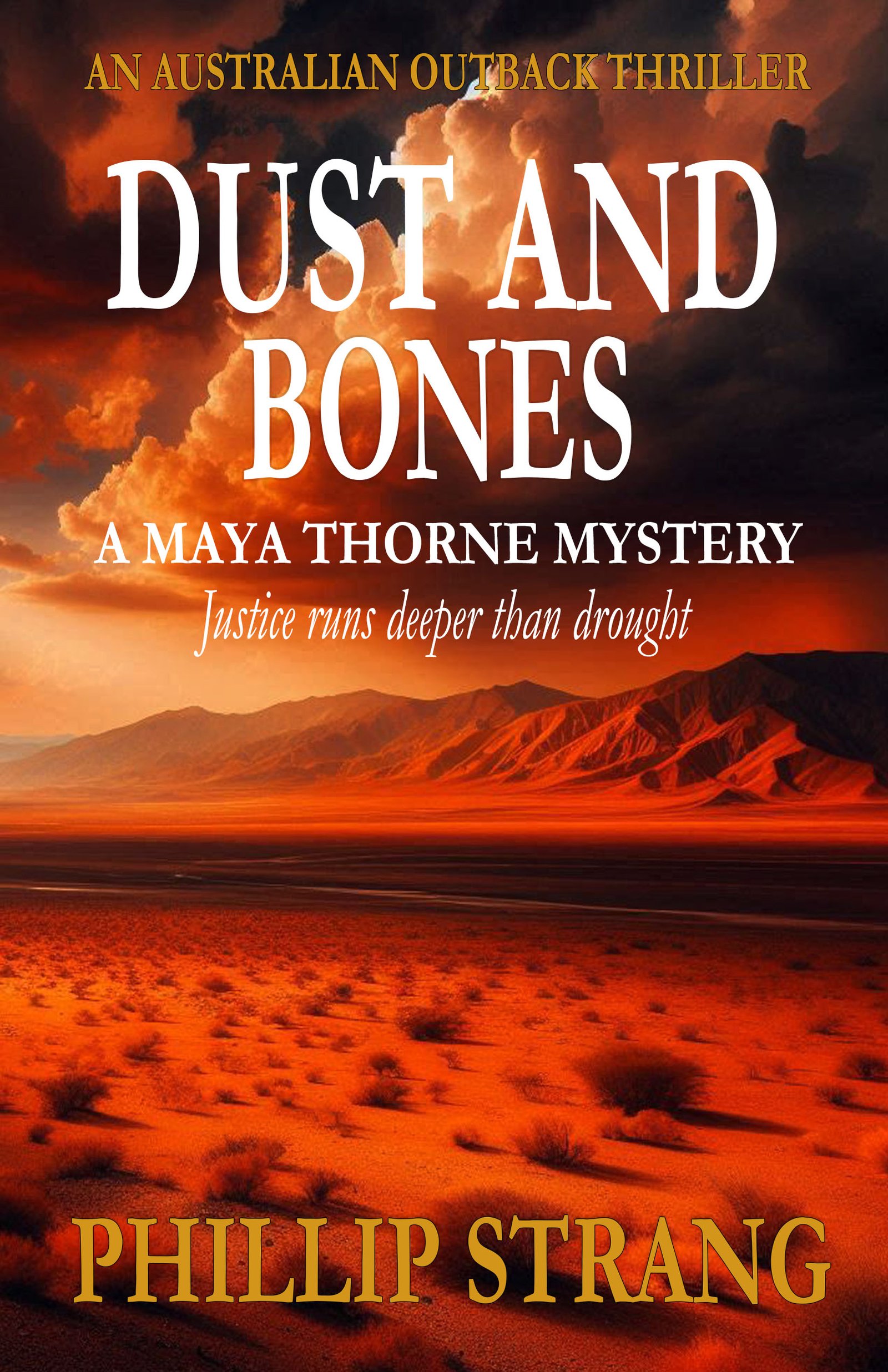
A MAYA THORNE MYSTERY
Get Dust and Bones Free
Justice runs deeper than drought.
Red dust. Shallow graves. A detective who hunts killers where the law runs thin and the nearest help is two hundred miles away.
Send Me the BookYou'll also receive occasional new release emails. Unsubscribe anytime. No spam, ever.
As an Amazon Associate, Phillip Strang earns from qualifying purchases. This page contains affiliate links — buying through them costs you nothing extra.