
Discovery writing—or ‘pantsing’ as it’s commonly called—presents unique challenges for crime novelists who must juggle clues, red herrings, and investigative logic without a roadmap. The traditional wisdom suggests crime writers need detailed outlines to manage complex plots, but many successful authors find their best work emerges through organic discovery. The question isn’t whether you can write crime fiction without an outline, but whether you can develop the discipline to make discovery writing serve the genre’s demanding structure.
Across eighteen series and more than 150 novels, I’ve found that discovery writing can produce more authentic investigations and surprising plot developments than rigid planning, provided you understand how to harness controlled chaos. The key lies in trusting your subconscious while maintaining just enough structure to prevent narrative collapse.
The Reality of Discovery Writing in Crime Fiction
Crime fiction operates under different rules than literary or character-driven novels. Readers expect logical progression, fair play with clues, and satisfying resolutions that feel both surprising and inevitable. Discovery writers face the challenge of delivering these elements without knowing where they’re heading. The solution isn’t to abandon structure entirely but to develop what I call ‘flexible frameworks’—loose scaffolding that supports spontaneous creation while preventing plot chaos.
When I began writing the DCI Isaac Cook series, I started with nothing more than a crime scene and a detective’s personality. The investigation unfolded as I wrote, with clues emerging organically from character interactions and setting details. This approach created authentic investigative rhythms because I was genuinely discovering evidence alongside my protagonist. The trick was learning to recognise which spontaneous elements served the story and which needed cutting.
Discovery writing works particularly well for police procedural novels because real investigations rarely follow linear paths. Detectives pursue leads that dead-end, discover connections they didn’t expect, and solve cases through persistence rather than brilliant deduction. When you’re writing without knowing the solution, your detective’s confusion becomes genuine rather than performed.
Building Character-Driven Investigations
The strongest advantage of discovery writing lies in character authenticity. When you don’t know what your detective will find, their reactions and investigative choices emerge from genuine personality traits rather than plot requirements. This creates more believable character arcs and prevents the mechanical feel that can plague over-plotted crime fiction.
Your characters become true collaborators in discovery writing. I’ve found that strong character voices will naturally guide investigations toward logical conclusions if you listen carefully to their instincts. A seasoned detective will notice different details than a rookie, and their personal history will influence which leads they pursue first. By following character logic rather than predetermined plot points, you create investigations that feel lived-in and authentic.
The danger lies in letting character wandering replace narrative momentum. Discovery writing requires constant evaluation of whether character-driven scenes advance the investigation or merely fill pages. Every spontaneous character moment must earn its place by revealing information, developing relationships, or building tension.
Managing Clues and Red Herrings Organically
The conventional wisdom suggests crime writers must plant clues systematically, but discovery writing allows for more sophisticated misdirection. When you introduce elements without knowing their ultimate significance, some will naturally develop into genuine clues while others become red herrings. This organic approach often creates more convincing false leads because they weren’t designed to mislead—they simply didn’t develop into solutions.
The key technique involves what I call ‘delayed decision-making.’ Instead of determining immediately whether a suspicious character or mysterious object will prove significant, let multiple possibilities exist simultaneously. Write scenes that could support various interpretations, then gradually commit to specific meanings as the story develops. This approach creates genuine ambiguity rather than artificial confusion.
When working on the Maya Thorne series, I often introduced secondary characters without knowing whether they’d become suspects, allies, or red herrings. Their ultimate role emerged through their interactions with Maya and their responses to investigative pressure. This organic development created more complex character relationships and more surprising plot developments than predetermined roles would have allowed.
My Approach to Discovery Writing
My discovery writing process begins with what I call the ‘essential trinity’: a crime, a detective, and a setting. Everything else develops through writing. I start each session by re-reading the previous day’s work, allowing my subconscious to identify emerging patterns and possibilities. This daily review often reveals connections I hadn’t consciously planned but that feel inevitable once noticed.
I maintain a simple document alongside the manuscript—not an outline, but a growing record of introduced elements. Character names, physical evidence, timeline details, and potential connections get noted as they appear. This prevents continuity errors without constraining future developments. The document becomes a resource rather than a restriction, allowing me to build on established elements without losing track of details.
The most crucial skill in discovery writing involves recognising when spontaneous developments strengthen the narrative versus when they create problems. I’ve learned to distinguish between productive confusion—complexity that will resolve into satisfying clarity—and destructive confusion that merely complicates without purpose. When developments feel forced or convenient, they usually are, and the manuscript benefits from stepping back to find more organic solutions.
Revision becomes particularly important in discovery writing. First drafts often contain promising elements that need repositioning, red herrings that work too well and overshadow the real solution, or investigative paths that need strengthening. I view the first draft as exploration and the second draft as architecture, where I consciously structure what discovery revealed. Character-driven novels benefit enormously from this organic-then-architectural approach.
Avoiding Common Discovery Writing Pitfalls
The most dangerous mistake in discovery writing involves confusing confusion with complexity. When you don’t know where you’re heading, it’s tempting to introduce additional complications instead of developing existing elements. A crime scene with seventeen pieces of evidence isn’t more interesting than one with five significant clues—it’s just messier. I’ve seen discovery writers pile on suspicious characters, mysterious objects, and cryptic conversations, creating chaos rather than mystery.
Another common error involves falling in love with spontaneous developments that don’t serve the larger story. Just because a character interaction writes beautifully doesn’t mean it belongs in the investigation. Discovery writing requires constant editorial judgment about which organic developments enhance the narrative and which ones distract from it. The most painful cuts often involve genuinely well-written scenes that simply don’t advance the case.
Perhaps the most subtle trap involves avoiding decisions indefinitely. Discovery writing works when you gradually commit to specific interpretations and developments, not when you maintain endless ambiguity. Some writers become so comfortable with multiple possibilities that they never resolve anything, creating frustrating reading experiences. The art lies in knowing when to stop discovering and start concluding.
Pacing problems also plague discovery writers who mistake investigative realism for dramatic pacing. Real investigations involve lengthy periods of routine work, dead ends, and administrative tasks, but readers need constant forward momentum. Discovery writing can easily drift into investigative mundane rather than investigative tension if you don’t consciously maintain dramatic energy.
Conclusion
Discovery writing offers crime novelists the opportunity to create genuinely surprising investigations and authentic character development, but it requires disciplined spontaneity rather than complete chaos. The method works best when you trust your instincts while maintaining enough structure to support the genre’s demands for logical progression and fair play.
About Phillip Strang
Phillip Strang is an Australian crime and thriller novelist. Across eighteen series and more than 150 novels, his work spans London police procedurals (DCI Isaac Cook), UK investigations (DI Tremayne), Australian outback crime (Maya Thorne), FBI thrillers (Alex Harlan), Scottish Highland mysteries (DI Sarah Lynch), and espionage (Steve Case). Learn more about Phillip or browse his complete catalogue on Amazon.
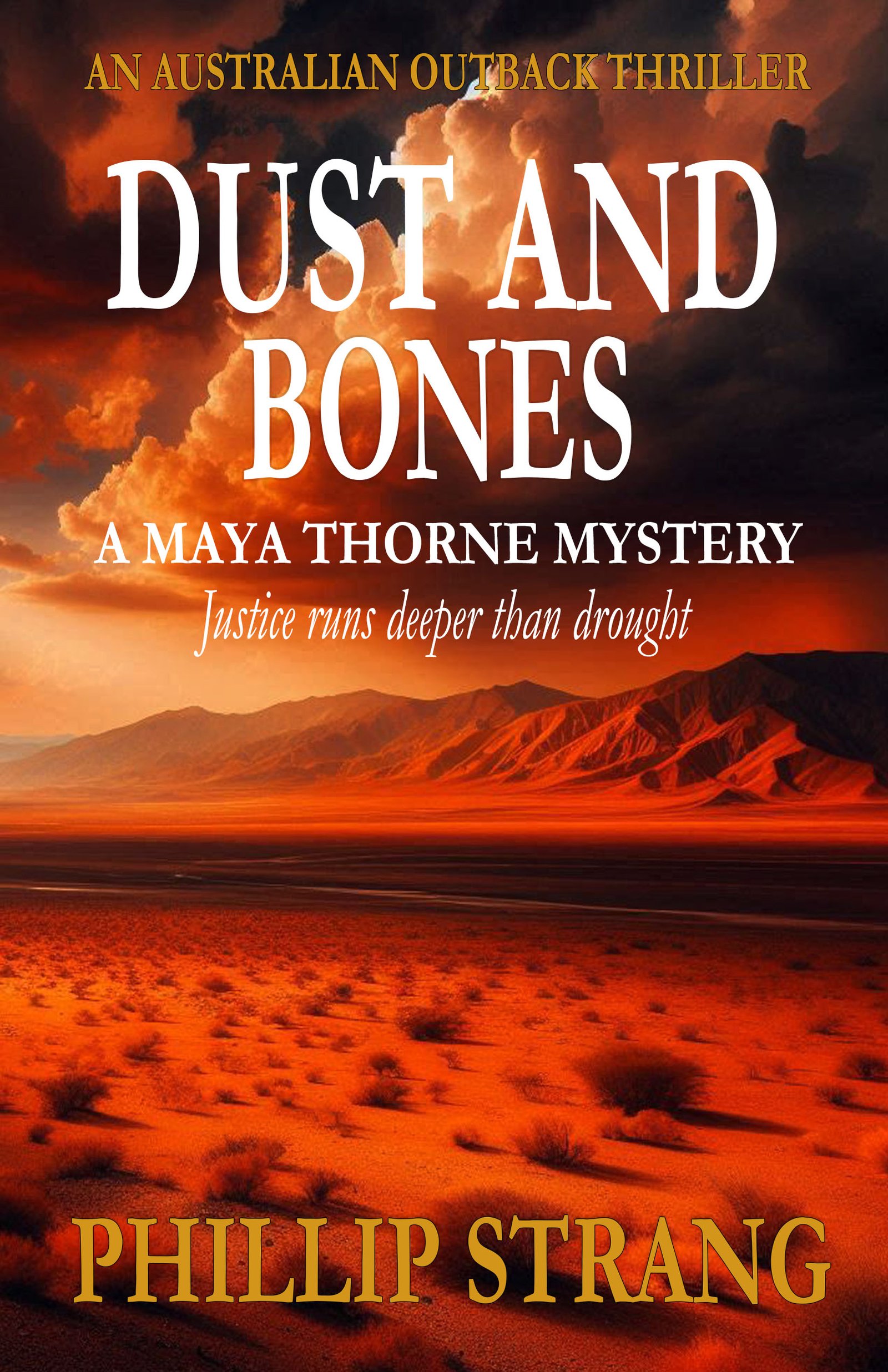
A MAYA THORNE MYSTERY
Get Dust and Bones Free
Justice runs deeper than drought.
Red dust. Shallow graves. A detective who hunts killers where the law runs thin and the nearest help is two hundred miles away.
Send Me the BookYou'll also receive occasional new release emails. Unsubscribe anytime. No spam, ever.
As an Amazon Associate, Phillip Strang earns from qualifying purchases. This page contains affiliate links — buying through them costs you nothing extra.