
The difference between a publishable crime novel and one that languishes in a drawer often comes down to rigorous editing. Most writers understand they need to revise, but few grasp the systematic approach required to transform a rough manuscript into a tightly plotted thriller that keeps readers turning pages until three in the morning.
Across eighteen series and more than 150 novels, I have found that editing a crime novel requires a fundamentally different mindset than editing literary fiction or romance. Crime fiction demands precision in pacing, logic in plot construction, and consistency in character motivation that can make or break the reader’s suspension of disbelief. The stakes are higher because crime readers are often the most discerning—they notice plot holes, inconsistent timelines, and characters who act against their established nature.
The Four-Pass System That Actually Works
I edit every crime novel using four distinct passes, each with a specific focus. The first pass addresses structural issues—does the inciting incident occur early enough, are the plot points properly spaced, does the climax deliver on the promise of the setup. During this stage, I might discover that a subplot involving a witness in my DCI Isaac Cook series actually undermines the main investigation’s tension, requiring significant restructuring.
The second pass focuses entirely on character consistency and motivation. Crime novels live or die by whether readers believe the detective would make certain choices or whether the killer’s actions align with their psychological profile. I track every character’s emotional arc and ensure their decisions feel inevitable given their circumstances.
The third pass is pure pacing and scene structure. Crime fiction requires relentless forward momentum, and I scrutinize every scene to ensure it either advances the plot or deepens character development—preferably both. Scenes that merely provide atmosphere or showcase clever writing get cut, no matter how much I personally love the prose.
The final pass addresses line-level issues: dialogue that sounds unnatural when read aloud, sentences that slow the reading experience, and the thousand small technical problems that can jar readers out of the story.
My Working Method: From Manuscript to Published Novel
I approach each revision pass with a different mindset and even different physical conditions. For structural editing, I work with a printed manuscript, using colored pens to track different plot threads. There’s something about the tactile experience that helps me see problems I miss on screen.
For character work, I keep detailed character sheets open alongside the manuscript, constantly checking dialogue and actions against established traits. When working on my Maya Thorne series, I discovered during editing that my protagonist was making jokes in scenes where she should have been genuinely disturbed by evidence of violence. The humor worked in isolation but undermined the emotional weight of the investigation.
Pacing requires reading sections aloud or using text-to-speech software. Crime novels must flow when spoken, and awkward rhythms become immediately apparent when heard rather than read silently. I often discover that police procedural novels require different pacing than psychological thrillers, with procedurals benefiting from shorter, more staccato scenes during active investigations.
The line edit happens entirely on screen, often late at night when I’m slightly tired. Fatigue forces me to focus on whether sentences are truly clear and whether dialogue serves the story rather than showing off my ear for conversation.
What Doesn’t Work: Common Editorial Mistakes
Most crime writers make the same fundamental editing errors, often because they apply general fiction editing advice to a genre with specific requirements. The biggest mistake is editing for beautiful prose rather than compelling story momentum. I see manuscripts where writers have crafted gorgeous descriptive passages that completely destroy the tension of a chase scene or investigation.
Another critical error involves over-explaining the mystery elements during revision. Writers often add clarifying details that actually make the plot less engaging rather than more comprehensible. Crime readers want to work for their understanding, and excessive explanation insults their intelligence.
Character voice presents its own challenges during editing. Many writers smooth out dialogue until every character sounds identical, losing the distinct speech patterns that help readers track who’s speaking without constant attribution. This becomes particularly problematic in espionage thrillers where characters from different backgrounds must sound authentically distinct.
Timeline inconsistencies represent perhaps the most dangerous editing oversight in crime fiction. Unlike other genres where readers might forgive small continuity errors, crime readers notice when evidence appears before it’s discovered or when characters reference events that haven’t yet occurred in the story’s chronology.
The Brutality of Cutting What Works
Effective crime novel editing requires killing scenes that work perfectly in isolation but harm the overall story structure. This might mean cutting a brilliantly written interrogation scene because it reveals information too early, or eliminating a compelling subplot because it distracts from the central mystery.
I learned this lesson while editing one of my DI Tremayne novels, where I had written an exceptional scene showing the detective’s personal life that readers loved in early drafts. However, it occurred at a crucial point in the investigation and completely deflated the mounting tension. Cutting it improved the book significantly, even though the scene itself was well-crafted.
The key is recognizing that crime novels are architectural structures where every element must support the central mystery. Beautiful writing that doesn’t serve this purpose weakens the foundation, regardless of its individual merit. This principle applies to action thriller novels as much as quieter psychological mysteries.
Technical Elements That Make or Break Crime Fiction
Crime novels demand technical precision that other genres can sometimes finesse. Legal procedures, forensic details, and investigative protocols must be accurate enough to satisfy knowledgeable readers without overwhelming those who read for entertainment rather than education.
During editing, I fact-check every technical detail and often consult with professionals to ensure accuracy. This doesn’t mean drowning the story in procedural minutiae, but rather getting the details right when they matter to the plot. Readers will forgive simplified explanations but not fundamental errors in how investigations actually work.
Weapon details, geographic accuracy, and timeline logistics all require careful attention during the editing process. I’ve learned to keep detailed notes about these elements throughout the writing process, making the editing phase more efficient and less likely to introduce new inconsistencies while fixing others.
Conclusion
Editing a crime novel effectively requires understanding that the genre demands different priorities than other fiction. The systematic approach of multiple focused passes, combined with the willingness to cut effective scenes that don’t serve the larger story, transforms adequate manuscripts into compelling page-turners that satisfy the demanding expectations of crime fiction readers.
About Phillip Strang
Phillip Strang is an Australian crime and thriller novelist. Across eighteen series and more than 150 novels, his work spans London police procedurals (DCI Isaac Cook), UK investigations (DI Tremayne), Australian outback crime (Maya Thorne), FBI thrillers (Alex Harlan), Scottish Highland mysteries (DI Sarah Lynch), and espionage (Steve Case). Learn more about Phillip or browse his complete catalogue on Amazon.
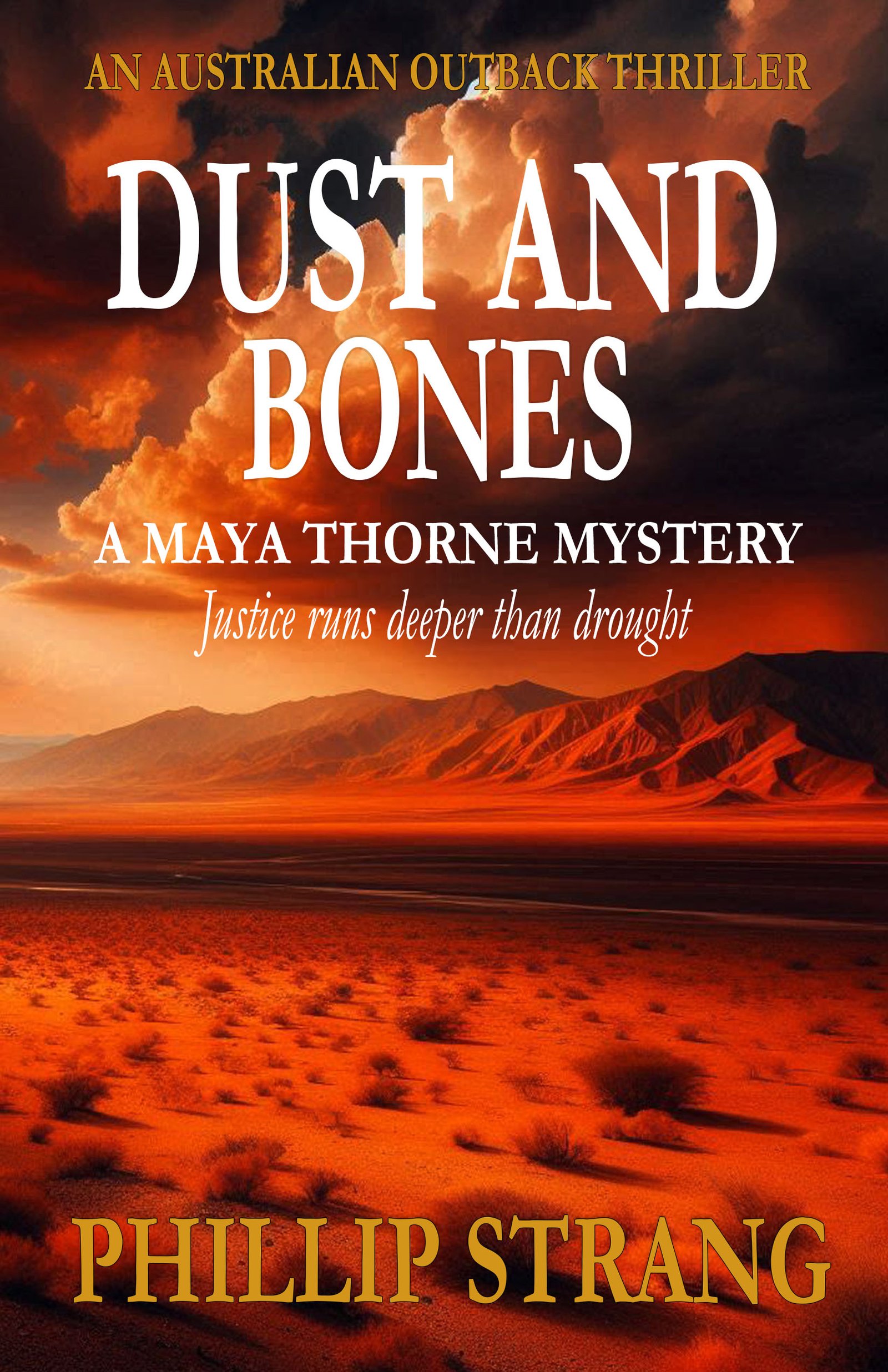
A MAYA THORNE MYSTERY
Get Dust and Bones Free
Justice runs deeper than drought.
Red dust. Shallow graves. A detective who hunts killers where the law runs thin and the nearest help is two hundred miles away.
Send Me the BookYou'll also receive occasional new release emails. Unsubscribe anytime. No spam, ever.
As an Amazon Associate, Phillip Strang earns from qualifying purchases. This page contains affiliate links — buying through them costs you nothing extra.