
The art of foreshadowing in crime fiction walks a razor’s edge between revelation and concealment. Every clue must earn its place in the narrative while remaining invisible enough that readers feel satisfied, not cheated, when the truth emerges. The challenge lies not in hiding information, but in presenting it so naturally that it becomes part of the story’s fabric rather than a flashing neon sign pointing toward the solution.
Across eighteen series and more than 150 novels, I’ve learned that effective foreshadowing requires the same meticulous planning as a real criminal investigation. Each planted detail must serve multiple purposes, supporting both the immediate scene and the larger narrative arc while maintaining the delicate balance between fair play and genuine surprise.
The Dual Nature of Every Scene
In crime fiction, every scene must work on at least two levels simultaneously. The surface level delivers immediate story value—character development, atmosphere, advancing the plot—while the deeper level plants seeds for future revelations. This dual functionality prevents foreshadowing from feeling forced or obvious because it’s genuinely integrated into the story’s natural progression.
Consider how a detective’s casual observation about a suspect’s expensive watch might reveal character traits and establish wealth in the moment, while later proving crucial when financial records show recent money troubles. The watch isn’t mentioned to foreshadow; it’s mentioned because a good investigator notices details, and that natural observation becomes meaningful retrospectively.
In my DCI Isaac Cook series, I often use Cook’s methodical nature to introduce details that seem like routine police work but later prove significant. His habit of cataloguing everything he observes feels authentic to his character while allowing me to establish facts that become crucial when the case breaks open. The key is ensuring the character’s actions drive the revelation, not the plot’s needs.
How I Actually Plant Clues
My approach to foreshadowing begins in the plotting stage, long before I write the first scene. I map out not just what needs to be revealed, but when and how each piece of information can be introduced naturally. This requires thinking backwards from the solution while writing forwards through the investigation.
I create what I call ‘revelation schedules’—timelines that show when each clue appears, how it’s presented, and what other story elements surround it. A crucial piece of evidence might first appear as background detail in chapter three, get mentioned peripherally in chapter seven, and finally prove decisive in chapter fifteen. Each appearance serves the immediate scene while building cumulative significance.
The most effective foreshadowing often comes through character behavior rather than physical clues. In my Maya Thorne books, set in the Australian outback, I frequently use the harsh environment to reveal character under pressure. A person’s reaction to isolation or extreme heat might seem like natural character development but later proves indicative of their psychological state or hidden motivations. The best police procedural novels understand that human nature provides the richest source of both clues and misdirection.
The Misdirection Principle
True mastery of foreshadowing involves using readers’ expectations against them without resorting to cheap tricks. This means presenting genuine clues while simultaneously providing alternative explanations that seem equally plausible. The art lies in making both the false trail and the true solution feel inevitable in hindsight.
Effective misdirection works by exploiting genre conventions and reader psychology. Crime fiction readers expect certain patterns—the obvious suspect is usually innocent, the helpful witness often hides something, the victim’s closest relationships harbor the darkest secrets. Skilled foreshadowing can both satisfy and subvert these expectations simultaneously.
In my Steve Case espionage novels, I use the complexity of international intrigue to layer multiple possible interpretations of the same events. A seemingly routine diplomatic meeting might foreshadow either a terrorist plot or a government cover-up, with early clues supporting both possibilities until the truth emerges. The best espionage thrillers excel at this kind of multi-layered uncertainty.
Common Foreshadowing Mistakes to Avoid
The most damaging error in foreshadowing is what I call ‘spotlight syndrome’—drawing attention to clues through heavy-handed emphasis or unnatural dialogue. When a character inexplicably notices something irrelevant to their immediate concerns, readers immediately flag it as significant. Similarly, when dialogue becomes expository, delivering information that serves no purpose except to establish future plot points, the artifice becomes obvious.
Another frequent mistake involves emotional inconsistency between setup and payoff. If a character displays genuine grief over a death, but later reveals themselves as the killer, the earlier emotion must have been either masterful acting or serve some other psychological purpose. Contradictory character behavior without explanation feels like authorial manipulation rather than clever plotting.
Timing errors also undermine effective foreshadowing. Clues planted too early lose impact through reader forgetfulness, while those introduced too late feel like convenient discoveries rather than organic revelations. The rhythm of revelation must match the story’s emotional arc, building tension rather than relieving it prematurely through obvious telegraphing.
The Satisfaction Factor
Ultimately, successful foreshadowing creates a specific reader experience: the satisfying ‘aha’ moment when seemingly disparate elements suddenly coalesce into inevitable truth. This satisfaction depends on readers feeling they had access to the same information as the protagonist, even if they didn’t interpret it correctly.
The challenge lies in calibrating difficulty—providing enough information for astute readers to solve the puzzle while ensuring the solution doesn’t become obvious to everyone. This requires understanding your audience and genre expectations while respecting readers’ intelligence without overestimating their attention to detail.
In my experience, the most effective foreshadowing often involves emotional truth rather than just factual revelation. When readers understand not just who committed the crime but why it was inevitable given the character’s psychology and circumstances, the foreshadowing achieves its deepest purpose. The best character driven novels excel at this integration of plot and psychology, where the solution emerges from character as much as evidence.
Conclusion
Mastering foreshadowing in crime fiction requires treating every story element as potentially significant while ensuring that significance feels earned rather than imposed. The goal isn’t to trick readers but to create a narrative where the truth, once revealed, illuminates everything that came before with new meaning and inevitable logic.
About Phillip Strang
Phillip Strang is an Australian crime and thriller novelist. Across eighteen series and more than 150 novels, his work spans London police procedurals (DCI Isaac Cook), UK investigations (DI Tremayne), Australian outback crime (Maya Thorne), FBI thrillers (Alex Harlan), Scottish Highland mysteries (DI Sarah Lynch), and espionage (Steve Case). Learn more about Phillip or browse his complete catalogue on Amazon.
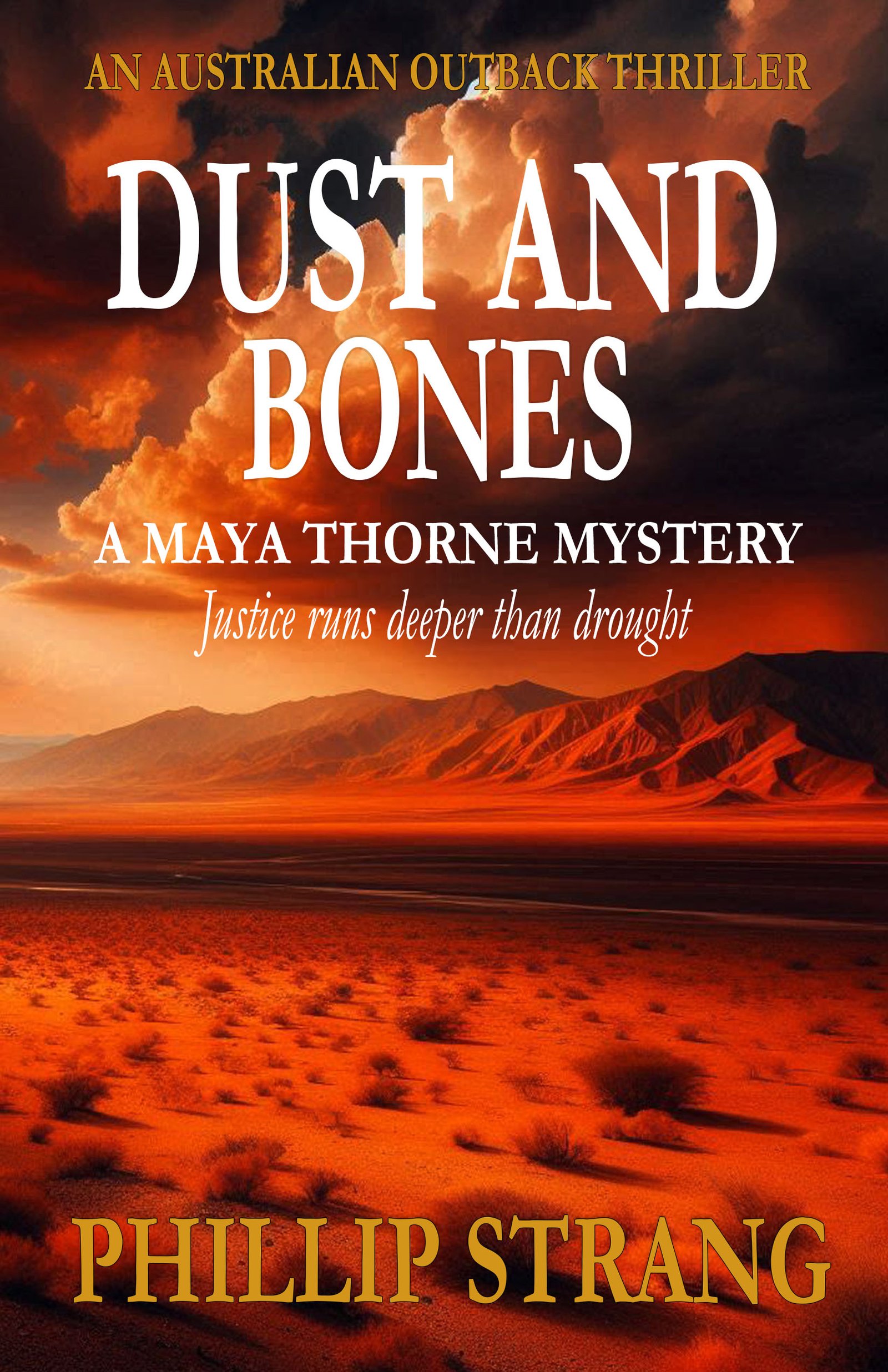
A MAYA THORNE MYSTERY
Get Dust and Bones Free
Justice runs deeper than drought.
Red dust. Shallow graves. A detective who hunts killers where the law runs thin and the nearest help is two hundred miles away.
Send Me the BookYou'll also receive occasional new release emails. Unsubscribe anytime. No spam, ever.
As an Amazon Associate, Phillip Strang earns from qualifying purchases. This page contains affiliate links — buying through them costs you nothing extra.