
Forest settings in crime fiction tap into something primal—the fear of being lost, hunted, or isolated in a place where civilization’s rules no longer apply. These environments offer writers a unique blend of natural menace and human vulnerability that few other locations can match.
After writing across eighteen series and more than 150 novels, I’ve discovered that forests function as more than mere backdrops; they become active participants in the criminal narrative, shaping both plot mechanics and psychological tension in ways that urban settings simply cannot replicate.
The Isolation Factor
Forests excel at creating genuine isolation. Unlike urban crime scenes where help might be a phone call away, woodland settings strip characters of their technological safety nets. Mobile towers become sparse, GPS signals weaken, and the familiar grid of streets dissolves into unmarked paths that all look identical after dark.
This isolation forces both criminals and investigators to rely on fundamental skills rather than modern conveniences. In my Maya Thorne series, the Australian outback’s forested regions create scenarios where conventional police procedures must adapt to environments where backup might be hours away and evidence can disappear beneath falling leaves or seasonal floods.
The psychological impact on characters becomes equally important. Isolation breeds paranoia, forces difficult decisions, and creates pressure-cooker situations where true character emerges. Criminals become more desperate, victims more resourceful, and investigators more reliant on instinct than procedure.
Natural Concealment and Discovery
Forests offer unparalleled opportunities for hiding evidence, bodies, and criminal activity while simultaneously providing organic discovery mechanisms that feel inevitable rather than contrived. Unlike urban environments where concealment requires human intervention—dumpsters, abandoned buildings, elaborate burial sites—forests provide ready-made hiding places that feel authentic.
Dense undergrowth can conceal a body for years, while seasonal changes create natural timers for discovery. Spring rains wash evidence downstream, autumn leaves bury crime scenes, and winter’s bare branches reveal what summer’s foliage once hid. These environmental factors create plot opportunities that emerge from setting rather than authorial manipulation.
The key lies in understanding your specific forest type. Deciduous woodlands operate differently than evergreen forests, while old-growth areas present different challenges than managed timber lots. Each environment offers distinct concealment patterns and discovery mechanisms that smart writers can exploit for maximum narrative impact.
Primal Fear and Psychological Tension
Humans retain deep-seated anxieties about being hunted in natural environments, making forests ideal for amplifying psychological tension without resorting to supernatural elements. The rustling leaves could hide a stalker, the snapping branch might signal approach, and the growing darkness transforms familiar paths into threatening mazes.
This primal fear operates on readers regardless of their personal experience with wilderness areas. Urban readers often feel more vulnerable in forest settings, while rural readers understand exactly how dangerous these environments can become. Both responses serve the writer’s purpose of creating authentic tension that doesn’t require elaborate setup or explanation.
Sound plays a crucial role in forest-based psychological tension. Unlike urban environments with constant background noise, forests offer periods of absolute silence broken by sudden, unexplained sounds. This auditory landscape creates natural jump scares and maintains reader anxiety throughout investigation sequences.
Common Mistakes in Crafting Forest Settings in Crime Fiction
Too many writers treat forests as generic green spaces rather than specific environments with distinct characteristics. A Pacific Northwest rainforest operates nothing like an Appalachian deciduous forest, yet authors frequently use interchangeable descriptions that could apply to any wooded area. This generic approach wastes the setting’s potential for creating authentic atmosphere and plot complications.
Another frequent error involves underestimating the physical demands of forest environments. Characters hike for hours in business attire without fatigue, navigate dense undergrowth at night without difficulty, or survive exposure without realistic consequences. Such unrealistic portrayals damage credibility and waste opportunities for genuine conflict.
Writers also commonly ignore seasonal variations, describing forests as if they remain static throughout the year. In reality, seasonal changes dramatically alter access routes, visibility, weather patterns, and animal behavior—all factors that should influence both criminal activity and investigation procedures. When writing DI Sarah Lynch investigations in the Scottish Highlands, I constantly consider how seasonal conditions would realistically impact both crime scenes and investigation logistics.
The most damaging mistake involves using forests merely as isolated locations without leveraging their unique environmental characteristics. These settings offer opportunities for specific types of evidence, particular investigation challenges, and distinctive psychological pressures that exist nowhere else. Writers who ignore these elements miss chances to create scenes that could only happen in forest environments.
Working Author Perspective
When I’m planning forest scenes, I start by researching the specific woodland type and understanding its seasonal variations, typical weather patterns, and wildlife behavior. This research directly influences plot possibilities—certain crimes become more feasible in specific forest types, while investigation methods must adapt to environmental realities.
I pay particular attention to access routes and escape paths. Real forests have limited entry points, established trails, and natural boundaries that would realistically constrain both criminal and investigative movement. Understanding these limitations helps create authentic action sequences and logical plot developments that respect environmental reality.
Timing becomes crucial in forest settings. Dawn and dusk create natural transition periods when visibility changes rapidly, while seasonal shifts affect everything from undergrowth density to stream levels. I plan key scenes around these natural rhythms rather than imposing arbitrary timing that ignores environmental factors.
The sensory environment requires special attention. Forests smell different in various seasons, sound different in different weather, and feel different at various times of day. These sensory details ground readers in specific moments while creating atmosphere that supports rather than overwhelms the central mystery. This approach has proven particularly effective in police procedural novels where environmental authenticity enhances rather than distracts from investigative procedures.
Conclusion
Forest settings offer crime fiction writers unparalleled opportunities to create isolation, leverage natural concealment, and tap into primal fears while providing realistic challenges that test characters beyond their normal capabilities. The key lies in understanding specific forest environments rather than treating them as generic backdrops, then allowing those environmental realities to drive plot development and character decisions. When properly utilized, forests become active participants in criminal narratives, creating scenes and complications that could exist nowhere else.
About Phillip Strang
Phillip Strang is an Australian crime and thriller novelist. Across eighteen series and more than 150 novels, his work spans London police procedurals (DCI Isaac Cook), UK investigations (DI Tremayne), Australian outback crime (Maya Thorne), FBI thrillers (Alex Harlan), Scottish Highland mysteries (DI Sarah Lynch), and espionage (Steve Case). Learn more about Phillip or browse his complete catalogue on Amazon.
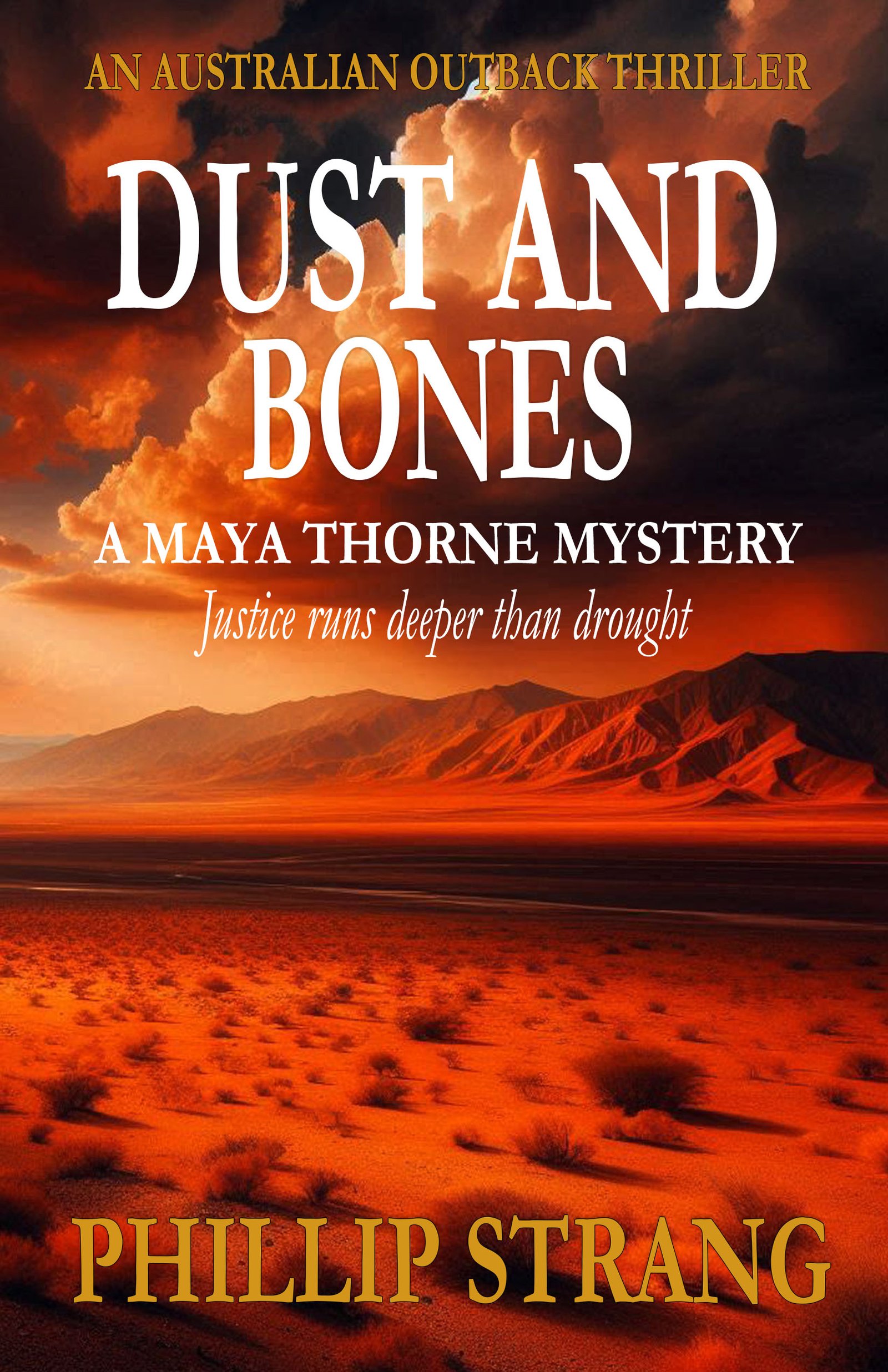
A MAYA THORNE MYSTERY
Get Dust and Bones Free
Justice runs deeper than drought.
Red dust. Shallow graves. A detective who hunts killers where the law runs thin and the nearest help is two hundred miles away.
Send Me the BookYou'll also receive occasional new release emails. Unsubscribe anytime. No spam, ever.
As an Amazon Associate, Phillip Strang earns from qualifying purchases. This page contains affiliate links — buying through them costs you nothing extra.