
Glasgow Noir: Urban Scottish Crime represents one of the most demanding subgenres in contemporary crime fiction, requiring writers to balance authentic local voice with universal criminal psychology. The city’s unique social fabric—post-industrial decay alongside fierce community loyalty—creates narrative tensions that can elevate or destroy a crime novel depending on how skillfully they’re handled.
Across eighteen series and more than 150 novels, I’ve found that urban Scottish crime writing succeeds or fails based on the author’s ability to make Glasgow itself a character rather than merely a backdrop. The city’s voice must permeate every scene, every piece of dialogue, every criminal motivation.
The Authenticity Problem in Urban Scottish Crime
Too many writers approach Glasgow with tourist eyes, focusing on stereotypes of sectarian violence and working-class struggle without understanding the city’s actual criminal ecosystem. Real Glasgow crime fiction requires deep knowledge of how different neighborhoods operate, how police hierarchy functions within Scottish law enforcement, and how local criminal enterprises actually work. When I developed my DI Sarah Lynch series, I spent considerable time understanding not just Highland communities but how Scottish police methodology differs fundamentally from English approaches—knowledge that proves crucial when writing urban Scottish investigations.
The dialect question presents another authenticity challenge. Heavy Glaswegian can alienate readers, but sanitized dialogue destroys credibility. The solution lies in rhythm and sentence structure rather than phonetic spelling. Glaswegian speech patterns—the way thoughts are organized, the cultural references embedded in casual conversation—carry more authentic weight than attempting to spell out every dropped consonant.
Violence and Vulnerability in Glasgow Noir
Glasgow’s relationship with violence differs markedly from London or Manchester crime settings. The violence here often stems from fierce loyalty rather than cold calculation, creating opportunities for character development that don’t exist in other urban crime contexts. Family connections run deeper, betrayals cut harder, and criminal motivations often blend personal honor with financial necessity.
This emotional intensity requires careful pacing. Unlike the methodical procedural approach that works well in traditional police procedurals, Glasgow noir demands scenes that can shift from quiet investigation to explosive confrontation within paragraphs. The key is establishing clear emotional stakes before introducing violence, ensuring readers understand not just what’s happening but why it matters to specific characters.
How I Approach Glasgow Noir: Urban Scottish Crime Writing
My method begins with mapping the criminal geography before plotting any story beats. Glasgow’s criminal enterprises operate within specific territorial boundaries that real locals understand instinctively. Writers who ignore these boundaries create implausible scenarios that undermine everything else in their narrative.
Character voices require particular attention. I develop each major character’s background through their relationship with specific Glasgow locations—not just where they live, but where they drink, where they feel safe, where they conduct business. These geographical connections inform dialogue choices and behavioral patterns in ways that pure character background sheets cannot achieve. The technique proved essential when writing complex urban investigations that required authentic criminal motivations.
Common Mistakes That Kill Urban Scottish Crime Fiction
The biggest error involves treating Glasgow as interchangeable with other British cities. Writers transplant London criminal structures into Scottish settings without understanding how different legal systems, police hierarchies, and community dynamics actually function. A Glasgow detective doesn’t investigate crimes the same way a London DCI does, and criminal enterprises operate under different pressures and opportunities.
Overreliance on historical conflicts represents another fatal flaw. While sectarian tensions inform Glasgow’s social landscape, contemporary crime fiction that focuses primarily on Orange versus Green conflicts feels dated and misses the complex criminal motivations that drive modern urban Scottish crime. Today’s Glasgow criminals are more likely motivated by drug territory disputes or financial desperation than religious affiliations.
Dialogue mistakes prove equally damaging. Writers either avoid Scottish speech patterns entirely, creating characters who sound like they could live anywhere, or they overcompensate with heavy dialect that becomes unreadable. The solution requires understanding that authentic Glaswegian dialogue comes from thought patterns and cultural references rather than spelling variations. When characters reference local landmarks, use specific cultural shorthand, or organize their thoughts in distinctly Scottish ways, readers sense authenticity without struggling through phonetic spelling.
Building Atmosphere Through Urban Decay and Renewal
Modern Glasgow presents unique atmospheric opportunities because the city exists in constant tension between post-industrial decline and aggressive renewal. This physical transformation creates perfect metaphors for character development and criminal motivation. Characters can embody either the decay or the renewal, and the most compelling figures contain elements of both.
Weather and light play crucial atmospheric roles, but not in obvious ways. Glasgow’s particular quality of light—the way buildings look during different seasons, how rain affects visibility in specific neighborhoods—should influence plot timing and character behavior. I’ve learned that the most effective noir crime thrillers integrate these environmental details seamlessly into action sequences rather than relegating them to separate descriptive passages.
Conclusion
Glasgow noir succeeds when writers respect both the city’s complexity and the genre’s demands for authentic criminal psychology. The urban Scottish crime novel requires deep local knowledge combined with universal storytelling skills—a challenging combination that rewards writers willing to invest the necessary research time.
About Phillip Strang
Phillip Strang is an Australian crime and thriller novelist. Across eighteen series and more than 150 novels, his work spans London police procedurals (DCI Isaac Cook), UK investigations (DI Tremayne), Australian outback crime (Maya Thorne), FBI thrillers (Alex Harlan), Scottish Highland mysteries (DI Sarah Lynch), and espionage (Steve Case). Learn more about Phillip or browse his complete catalogue on Amazon.
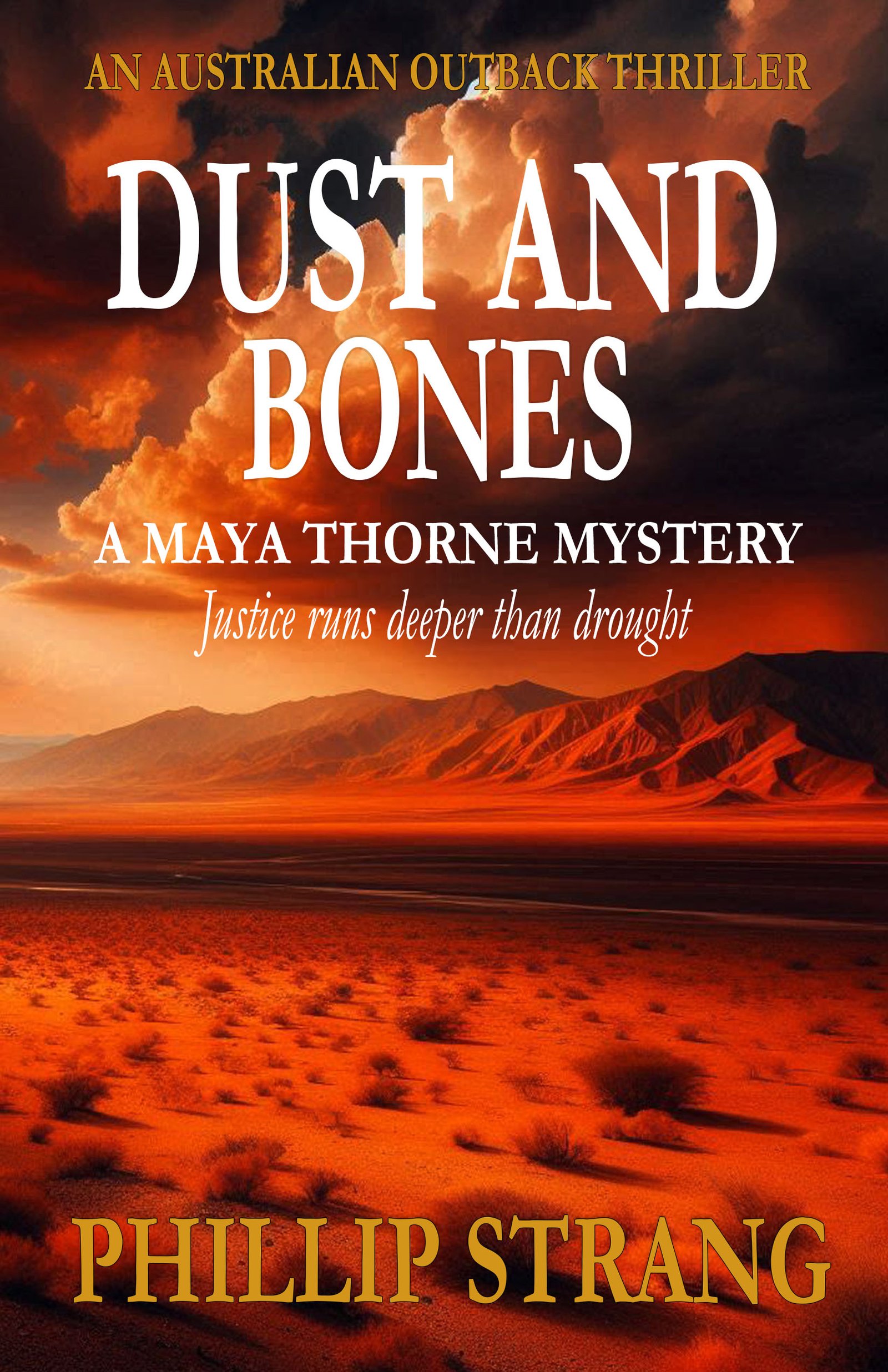
A MAYA THORNE MYSTERY
Get Dust and Bones Free
Justice runs deeper than drought.
Red dust. Shallow graves. A detective who hunts killers where the law runs thin and the nearest help is two hundred miles away.
Send Me the BookYou'll also receive occasional new release emails. Unsubscribe anytime. No spam, ever.
As an Amazon Associate, Phillip Strang earns from qualifying purchases. This page contains affiliate links — buying through them costs you nothing extra.