
The outback noir thriller occupies a unique space in crime fiction, where the landscape becomes both witness and participant in the story. Unlike urban crime where human infrastructure dominates, the outback strips everything down to its essential elements: character, conflict, and the unforgiving environment that amplifies both.
Across eighteen series and more than 150 novels, I have found that outback noir demands a fundamentally different approach to pacing, character development, and atmospheric tension than its urban counterparts. The isolation that defines this subgenre isn’t just geographical—it’s psychological, moral, and often spiritual.
Understanding the Outback as Character
The Australian outback isn’t scenery. It’s an active participant that shapes every decision your characters make. When I developed Maya Thorne and her investigations in remote Australia, I realized early that the landscape needed to drive plot mechanics, not just provide backdrop. The nearest police backup is three hours away. Mobile phones have no signal. Water is precious. These aren’t obstacles to write around—they’re the foundation of your story structure.
Heat becomes a narrative device. Dust infiltrates dialogue. The horizon line affects how characters think and plan. Your protagonist can’t simply call for backup or disappear into a crowd. Every choice carries weight because the margin for error shrinks dramatically when civilization is a distant memory. This constraint forces more deliberate character development and tighter plot construction than you’ll find in most urban crime fiction.
The outback also provides natural metaphor for moral ambiguity. In a landscape where survival often trumps law, your characters operate in ethical gray zones that would seem forced in suburban settings. The isolation strips away social pretense, revealing who people really are when nobody’s watching.
How I Approach Character Development in Isolation
When writing outback noir, I build characters who possess specific competencies that urban detectives never need. Maya Thorne can read weather patterns, track vehicles across hard ground, and recognize the sound of a failing water pump from fifty meters. These aren’t colorful details—they’re plot-relevant skills that directly affect investigation outcomes and survival scenarios.
Character backstory becomes more critical in outback noir because you’re working with smaller casts by necessity. Each character needs sufficient depth to carry extended scenes without support from a large ensemble. I focus on characters who chose isolation deliberately rather than those who simply ended up there. The person who actively seeks remoteness brings different psychological baggage than someone accidentally stranded, and that distinction drives different story possibilities.
Dialogue patterns shift in isolation. Characters who spend weeks alone develop different speech rhythms than city dwellers. They might be overly talkative when they encounter someone, or conversely, they might have lost the habit of explaining themselves. Some have developed one-sided conversations with animals, radio voices, or themselves. These speech patterns become character differentiation tools that feel organic to the setting.
Plot Structure and Pacing in the Heat
Urban crime thrillers often rely on rapid scene changes and multiple subplot threads to maintain momentum. Outback noir generates tension through sustained pressure rather than frequent plot pivots. The pacing resembles the best noir crime thrillers in its building intensity, but the remoteness changes how that pressure accumulates.
Time operates differently in outback settings. A broken vehicle or contaminated water source can transform a routine investigation into a survival scenario within hours. Weather systems become deadline devices—that storm front isn’t just atmosphere, it’s a ticking clock that affects evidence preservation, travel routes, and character safety. I structure chapters around these natural rhythms rather than artificial scene breaks.
The investigation itself follows different rules. Forensic teams don’t arrive within hours. Witness interviews might require day-long drives. Evidence collection becomes more challenging but potentially more significant—that tire track in remote sand might be the only vehicle to pass through in weeks. These logistical realities force different mystery construction than urban procedurals allow.
Subplot integration requires more care in outback noir. You’re working with geographic constraints that limit how many separate story threads can operate simultaneously. I weave subplots through character backstory and relationship dynamics rather than multiple crime scenes or parallel investigations that work well in police procedural novels set in populated areas.
Common Mistakes That Kill Outback Authenticity
The most frequent error involves treating the outback as exotic window dressing rather than integral story element. Writers drop characters into remote settings but maintain urban investigation methods and pacing. Technology doesn’t work the same way. Social dynamics shift. Physical endurance becomes relevant to plot progression. Ignoring these changes produces stories that feel like city crime with desert backgrounds.
Another mistake involves romanticizing isolation. The outback isn’t spiritually cleansing or mysteriously healing. It’s often brutal, uncomfortable, and psychologically challenging. Characters who adapt too easily or find profound meaning in harsh conditions come across as artificial. Real people struggle with isolation, make poor decisions under stress, and suffer from limited resources.
Overwritten landscape description kills momentum. The environment matters, but lengthy passages describing red rocks and endless horizons bog down narrative flow. I integrate environmental details through character actions and plot necessity rather than dedicated descriptive passages. The dust matters when it obscures tire tracks, not when it creates pretty sunsets.
Dialogue mistakes include making everyone sound like movie cowboys or noble savages. Real outback residents speak normally, with regional inflections and practical concerns. They discuss weather, equipment maintenance, and supply runs more than philosophy or local folklore. Their concerns center on concrete problems rather than abstract concepts about land and spirituality.
Building Tension Through Environmental Pressure
Outback noir thriller tension derives from environmental pressure applied to character weaknesses. A city detective might hide drinking problems or relationship issues behind professional competence, but equipment failure in remote locations exposes every character flaw ruthlessly. Physical and psychological vulnerabilities become plot devices in isolation scenarios.
Weather systems provide natural escalation patterns. Rising temperatures, approaching storms, or seasonal changes create organic deadline pressure that feels more immediate than artificial time constraints. I use environmental conditions to compress decision-making timeframes and force character confrontations that might otherwise develop slowly.
Resource management becomes thriller element. Water supplies, fuel reserves, and communication equipment acquire plot significance impossible in urban settings. A satellite phone with dying batteries isn’t just inconvenience—it’s potential death sentence that affects every strategic choice. Vehicle maintenance becomes character competency that directly impacts story outcomes.
The isolation also amplifies interpersonal conflicts. Characters can’t walk away from difficult situations or call friends for support. Personality clashes that would resolve quickly in normal circumstances become dangerous when people depend on each other for survival. This pressure cooker effect drives character development and plot progression naturally.
Conclusion
Writing effective outback noir requires embracing constraint as creative opportunity. The limitations imposed by remote settings force more thoughtful character development, tighter plot construction, and environmental integration that produces distinctly atmospheric crime fiction. The key lies in treating isolation as story engine rather than exotic backdrop.
About Phillip Strang
Phillip Strang is an Australian crime and thriller novelist. Across eighteen series and more than 150 novels, his work spans London police procedurals (DCI Isaac Cook), UK investigations (DI Tremayne), Australian outback crime (Maya Thorne), FBI thrillers (Alex Harlan), Scottish Highland mysteries (DI Sarah Lynch), and espionage (Steve Case). Learn more about Phillip or browse his complete catalogue on Amazon.
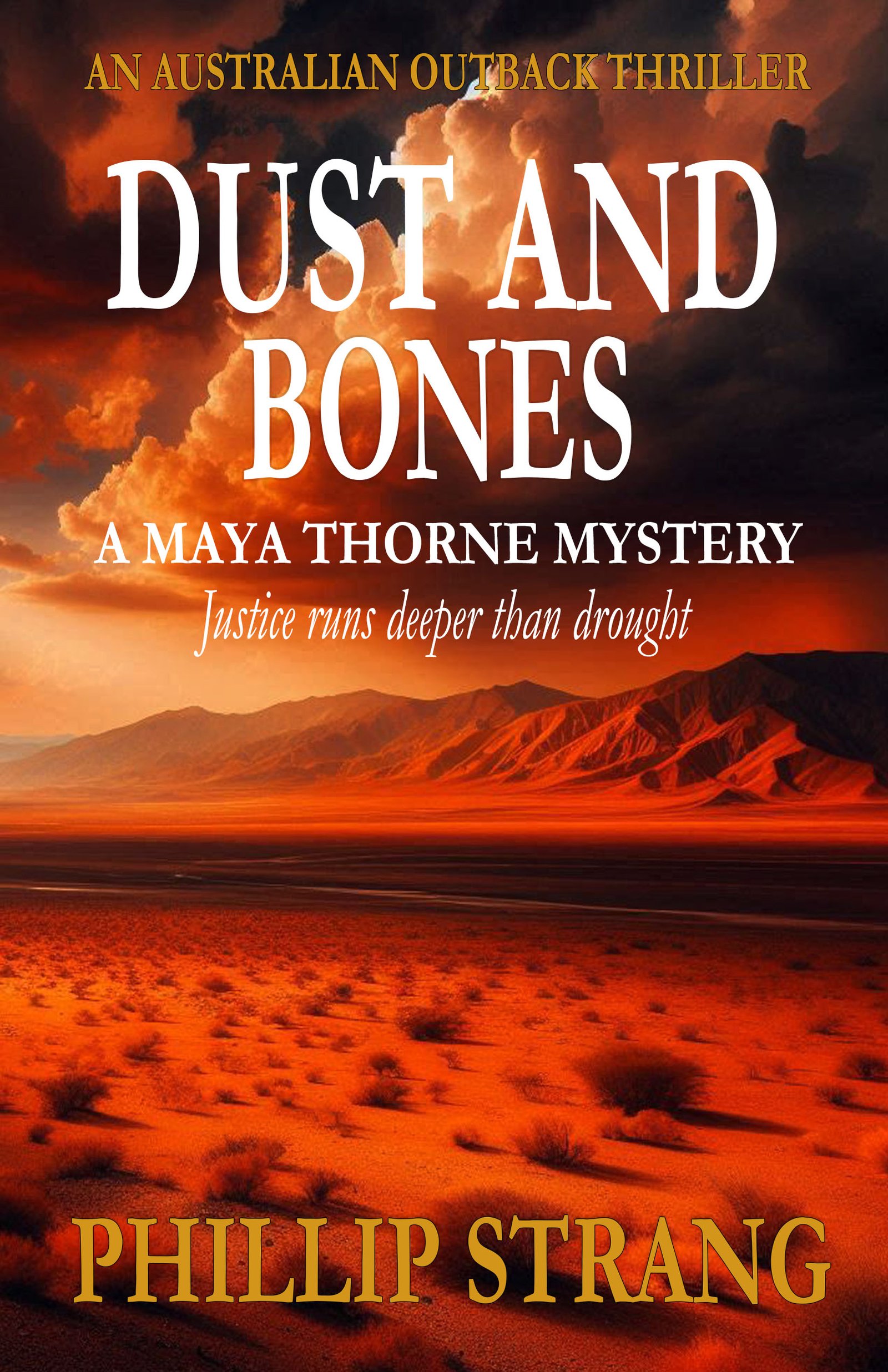
A MAYA THORNE MYSTERY
Get Dust and Bones Free
Justice runs deeper than drought.
Red dust. Shallow graves. A detective who hunts killers where the law runs thin and the nearest help is two hundred miles away.
Send Me the BookYou'll also receive occasional new release emails. Unsubscribe anytime. No spam, ever.
As an Amazon Associate, Phillip Strang earns from qualifying purchases. This page contains affiliate links — buying through them costs you nothing extra.