
The psychological thriller demands a delicate balance between revealing and concealing, between drawing readers into a character’s mind and keeping them questioning everything they think they know. Unlike traditional crime fiction where external action drives the plot, psychological thrillers live in the grey space between perception and reality, where the most dangerous territory is often the human mind itself.
Across eighteen series and more than 150 novels, I’ve found that writing effective psychological thrillers requires a fundamental shift in how you approach character development and narrative structure. The challenge isn’t just creating suspense through external events, but building tension through the very unreliability of human perception and memory.
The Architecture of Interiority
Interiority in psychological thrillers isn’t about endless navel-gazing or stream-of-consciousness rambling. It’s about creating a specific kind of intimacy with characters whose internal landscapes become the primary setting of your story. When I developed the character dynamics in my DI Sarah Lynch series, I had to learn how to make a character’s thought processes as compelling as any crime scene.
The key is selectivity. Not every thought deserves page time, but the thoughts you choose to reveal must serve multiple purposes simultaneously. They need to advance plot, deepen character understanding, and most importantly, create that sense of unease that defines the psychological thriller. I’ve learned to focus on moments where a character’s internal reality conflicts with external evidence, or where their certainty about past events begins to fracture.
Effective interiority also requires understanding the difference between what characters think they know about themselves and what their actions reveal. This gap becomes fertile ground for psychological tension. The most interesting psychological thriller protagonists are often the ones who lie to themselves as convincingly as they might lie to others.
Constructing the Unreliable Narrator
Unreliability isn’t simply about lying to readers or withholding information arbitrarily. True unreliability stems from genuine character flaws, psychological blind spots, or the inherent limitations of human perception and memory. The unreliable narrator must be unreliable for reasons that make sense within the story’s psychological framework.
I’ve experimented with different types of unreliability across my various series. Sometimes it’s deliberate deception, where characters consciously omit or distort information. Other times it’s unconscious distortion, where trauma, guilt, or self-protection mechanisms alter how characters process and remember events. The most effective approach often combines both, creating narrators who are unreliable even to themselves.
The craft challenge lies in planting enough contradictions and inconsistencies to signal unreliability without making the narrative incomprehensible. Readers need enough solid ground to stand on, even as you’re shifting the foundations beneath them. This requires careful pacing of revelations and a clear understanding of what information serves the story versus what merely confuses it.
Managing Reader Trust and Betrayal
Reader trust in psychological thrillers operates on a different principle than in traditional crime fiction. Instead of building trust through reliable information, you’re building engagement through controlled uncertainty. Readers need to trust that their confusion and doubt are intentional and will ultimately serve the story, even when they can’t trust the characters providing the information.
This requires what I call ‘fair play unreliability.’ The lies, distortions, and omissions must be psychologically consistent and retrospectively logical. When readers reach the story’s resolution, they should be able to trace back through the narrative and see how the unreliability was constructed. The betrayal of their expectations must feel earned rather than arbitrary.
In my experience with character driven novels, the most effective psychological thrillers maintain an undercurrent of genuine emotional truth even when surface facts prove unreliable. Readers may discover that events didn’t happen as described, but the emotional core of why characters acted or reacted in certain ways should remain valid.
My Working Method: Layering Psychological Complexity
When I’m crafting a psychological thriller, I work in what I call psychological layers. The first layer is the surface story, what appears to be happening based on the narrator’s account. The second layer involves the contradictions and gaps that hint at deeper truths. The third layer contains the actual psychological reality driving the character’s behavior.
I map out not just plot points but psychological pressure points, moments where a character’s mental state will crack or shift in ways that reveal new information or cast previous events in different light. In my Steve Case series, which often deals with the psychological toll of espionage work, I’ve learned that these pressure points must feel organic to the character’s psychological makeup, not imposed by plot necessity.
My drafting process involves writing scenes multiple times from different psychological perspectives. A confrontation between two characters might be written first as Character A experiences it, then as Character B remembers it, then as it actually occurred. This technique helps me understand where natural distortions and unreliabilities would emerge, making them feel authentic rather than contrived.
Common Pitfalls in Psychological Thriller Construction
The biggest mistake I see in psychological thrillers is what I call ‘gotcha unreliability,’ where authors withhold information or distort reality purely for shock value rather than psychological authenticity. A narrator who suddenly reveals they’ve been dead all along or that everything was a dream betrays reader investment without serving genuine psychological exploration. These techniques feel cheap because they don’t emerge from character psychology.
Another frequent error is inconsistent unreliability. If a character demonstrates detailed, accurate memory about some events but conveniently forgets crucial information about others, readers sense manipulation rather than psychological authenticity. The pattern of what characters remember, distort, or forget must follow psychological logic, not plot convenience.
Many writers also underestimate the importance of anchoring psychological complexity in physical, observable details. The best espionage thrillers understand that psychological tension needs external manifestation. A character’s internal turmoil should influence how they interact with their environment, other characters, and even their own physical responses to stress.
Perhaps most critically, some psychological thrillers lose sight of forward momentum while exploring internal landscapes. Interiority and unreliability must serve the story’s progression, not replace it. Even the most character-driven psychological thriller needs to maintain narrative drive and give readers reasons to continue beyond mere curiosity about the narrator’s mental state.
Conclusion
Writing effective psychological thrillers requires mastering the delicate balance between revelation and concealment, between psychological authenticity and narrative momentum. The goal isn’t simply to confuse readers but to create genuine psychological complexity that enhances rather than obscures the story’s emotional and dramatic core.
About Phillip Strang
Phillip Strang is an Australian crime and thriller novelist. Across eighteen series and more than 150 novels, his work spans London police procedurals (DCI Isaac Cook), UK investigations (DI Tremayne), Australian outback crime (Maya Thorne), FBI thrillers (Alex Harlan), Scottish Highland mysteries (DI Sarah Lynch), and espionage (Steve Case). Learn more about Phillip or browse his complete catalogue on Amazon.
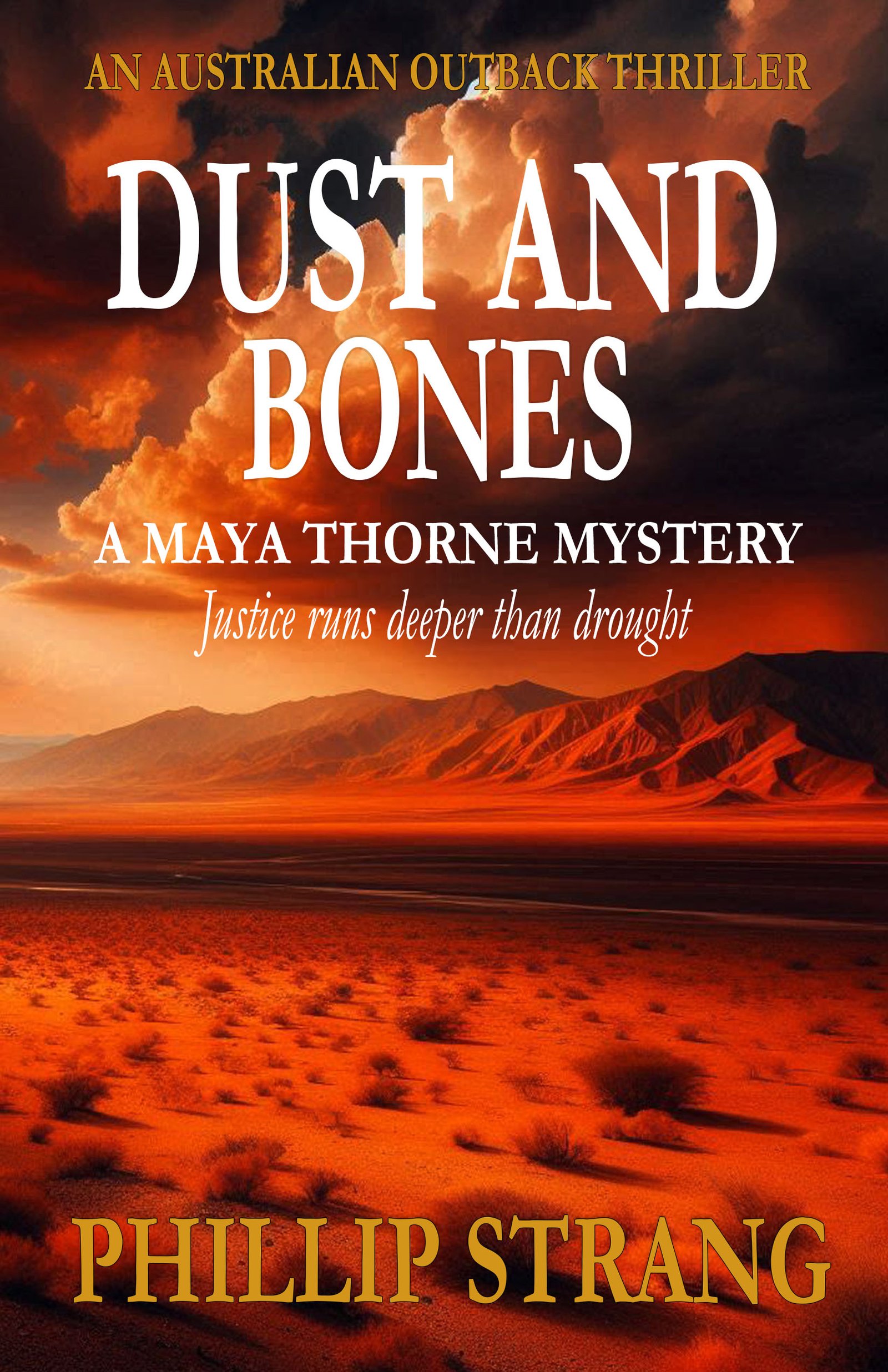
A MAYA THORNE MYSTERY
Get Dust and Bones Free
Justice runs deeper than drought.
Red dust. Shallow graves. A detective who hunts killers where the law runs thin and the nearest help is two hundred miles away.
Send Me the BookYou'll also receive occasional new release emails. Unsubscribe anytime. No spam, ever.
As an Amazon Associate, Phillip Strang earns from qualifying purchases. This page contains affiliate links — buying through them costs you nothing extra.