
Espionage fiction demands a delicate balance between authenticity and entertainment, where the wrong detail can shatter credibility and the right one can elevate tension to unbearable levels. Unlike straightforward crime fiction, spy novels operate in a world of shadows where nothing is quite what it seems, and readers expect both the thrill of discovery and the satisfaction of believable tradecraft. The challenge lies not just in creating compelling characters, but in building a world where deception feels authentic and every revelation serves the larger machinery of suspense.
Across eighteen series and more than 150 novels I have found that espionage fiction succeeds or fails on three fundamental pillars: the authenticity of its operational details, the sustainability of its tension, and the writer’s ability to deliver what readers crave while surprising them in ways they never saw coming. Get any of these wrong, and even the most intricate plot will collapse under scrutiny.
The Architecture of Authentic Tradecraft
Real espionage work is often tedious, methodical, and decidedly unglamorous. The art of writing it lies in extracting the essence of authentic procedures while maintaining narrative momentum. Surveillance isn’t car chases through narrow European streets; it’s patient observation, note-taking, and the grinding discipline of watching someone buy groceries for the third consecutive Tuesday. Yet readers don’t want grocery lists—they want the tension of knowing that one wrong move during that mundane surveillance could blow an operation.
In my Steve Case series, I’ve learned that tradecraft authenticity comes from understanding the psychology behind the procedures rather than memorizing technical manuals. Dead drops work not because they’re clever hiding spots, but because they exploit human psychology—the reluctance to disturb routine objects, the predictability of human movement patterns. When Case sets up a brush pass in a crowded market, the tension doesn’t come from the complexity of the maneuver but from the stakes riding on split-second timing and the consequences of failure.
The key is selecting details that serve double duty: they must feel authentic to readers familiar with the genre while advancing either plot or character development. A seasoned operative checking for surveillance doesn’t just look over their shoulder—they use reflective surfaces, vary their pace, make unexpected stops. These details create verisimilitude while revealing character traits like paranoia, experience level, or operational discipline.
Sustaining Tension Without Exhausting Your Reader
Espionage fiction faces a unique tension challenge: the genre promises sustained paranoia and mistrust, but readers can’t maintain peak anxiety for three hundred pages. The solution lies in what I call tension architecture—building structured peaks and valleys that allow for moments of apparent safety while maintaining an underlying current of unease.
The best espionage thrillers understand that tension comes from anticipation, not just action. A character sitting in a café, waiting for a contact who may or may not be compromised, generates more sustained anxiety than a shootout, because the reader’s imagination fills the silence with possibilities. The uncertainty becomes more terrifying than any concrete threat.
I structure tension in layers: immediate physical danger, medium-term operational concerns, and long-term strategic implications. When Case is extracting an asset from hostile territory, he’s simultaneously worried about the checkpoint ahead (immediate), whether his extraction route is compromised (medium-term), and what the asset’s intelligence means for ongoing operations (long-term). This layering prevents the narrative from becoming a simple sequence of obstacles overcome.
The mistake many writers make is confusing activity with tension. Car chases and gunfights are activities; tension comes from the reader understanding what’s at stake and fearing specific, credible consequences. The most effective scenes often involve characters doing ordinary things while extraordinary pressures build beneath the surface.
What Readers Expect and How to Surprise Them
Espionage readers are sophisticated consumers who’ve absorbed decades of spy fiction conventions. They expect certain elements—betrayals, technological gadgets, exotic locations, moral ambiguity—but they also crave innovation within those familiar frameworks. The challenge is delivering expected pleasures while subverting expectations in meaningful ways.
Readers expect competent professionals, but they’re fascinated by how competence breaks down under pressure. They expect betrayals, but they want those betrayals to feel inevitable in hindsight rather than arbitrary plot twists. They expect exotic locations, but they want those locations to feel integral to the story rather than mere tourist backdrops.
The most effective surprises come from character choices that feel both unexpected and inevitable. When a supposedly loyal operative turns, readers should be able to trace the psychological journey that led to that moment, even if they didn’t see it coming. The betrayal works because it emerges from character development, not plot convenience.
In developing my approach to reader expectations, I’ve found that the best action thriller novels understand that modern readers are genre-savvy. They know the tropes, they’ve seen the twists, and they’re looking for writers who can honor the conventions while finding fresh angles. This means developing characters with genuine psychological complexity, creating operational scenarios that feel both familiar and fresh, and building toward revelations that recontextualize everything the reader thought they understood.
How I Actually Write Espionage Scenes
My practical approach to writing espionage scenes begins with research, but not the kind most writers imagine. I don’t memorize CIA manuals or study surveillance techniques. Instead, I research the emotional and psychological realities of people who live with secrets professionally. How does constant deception affect personal relationships? What does it feel like to maintain multiple identities? How do you trust anyone when your profession is built on mistrust?
When I’m writing an operational scene, I start with the emotional core. What is each character feeling, and how do those emotions drive their behavior? Fear makes people careful but also prone to overthinking. Confidence leads to smooth execution but also dangerous assumptions. Desperation breeds innovation but also reckless choices. The tradecraft details serve these emotional realities rather than dominating them.
I write espionage scenes in layers, beginning with basic blocking—who goes where, when, and why. Then I add the operational details that create authenticity. Finally, I layer in the psychological elements that create tension and character development. A simple dead drop becomes an exercise in paranoia management, technological awareness, and risk assessment.
The revision process focuses heavily on pacing and information management. Espionage fiction requires careful control of what the reader knows and when they learn it. I map out revelation sequences to ensure that each new piece of information either raises new questions or provides satisfying answers to previously established mysteries. The goal is to keep readers slightly off-balance without losing them entirely.
Common Pitfalls and How to Avoid Them
The most frequent mistake I see in espionage fiction is what I call ‘gadget worship’—writers become so enamored with technical details that they forget character and story. A detailed explanation of encrypted communication protocols might feel authentically spy-like, but unless it serves character development or plot advancement, it’s just technical writing masquerading as fiction. When I have characters use sophisticated equipment in my novels, the focus stays on how the technology affects their decision-making and emotional state rather than how the technology works.
Another common pitfall is the ‘superhuman operative’ syndrome. Writers create characters who never make mistakes, never feel genuine fear, and always have the perfect solution. Real professionals make calculated risks based on incomplete information, and they live with the consequences. When Case faces a choice between bad options, he makes the best decision he can with available information, but he doesn’t always choose correctly, and those failures have lasting consequences.
The tendency to over-complicate plots is particularly dangerous in espionage fiction. Writers often assume that complexity equals sophistication, creating byzantine schemes with multiple double-crosses and elaborate deceptions. The most effective espionage plots are often elegantly simple at their core, with complexity emerging from character psychology and operational reality rather than unnecessary plot machinations.
Many writers also fall into the trap of treating espionage work as perpetually exciting. Real intelligence work involves extensive periods of routine surveillance, analysis, and preparation. The challenge is finding drama in these quieter moments without boring readers. The solution lies in maintaining psychological tension even during operational downtime—characters can be filing reports while worrying about blown covers, or conducting routine surveillance while processing personal betrayals.
Conclusion
Successful espionage fiction emerges from the intersection of authentic operational detail, sustainable psychological tension, and deep understanding of reader expectations. The genre rewards writers who can balance technical credibility with emotional truth, creating stories that feel both professionally authentic and dramatically compelling. Master these elements, and you’ll deliver the sophisticated entertainment that espionage readers demand.
About Phillip Strang
Phillip Strang is an Australian crime and thriller novelist. Across eighteen series and more than 150 novels, his work spans London police procedurals (DCI Isaac Cook), UK investigations (DI Tremayne), Australian outback crime (Maya Thorne), FBI thrillers (Alex Harlan), Scottish Highland mysteries (DI Sarah Lynch), and espionage (Steve Case). Learn more about Phillip or browse his complete catalogue on Amazon.
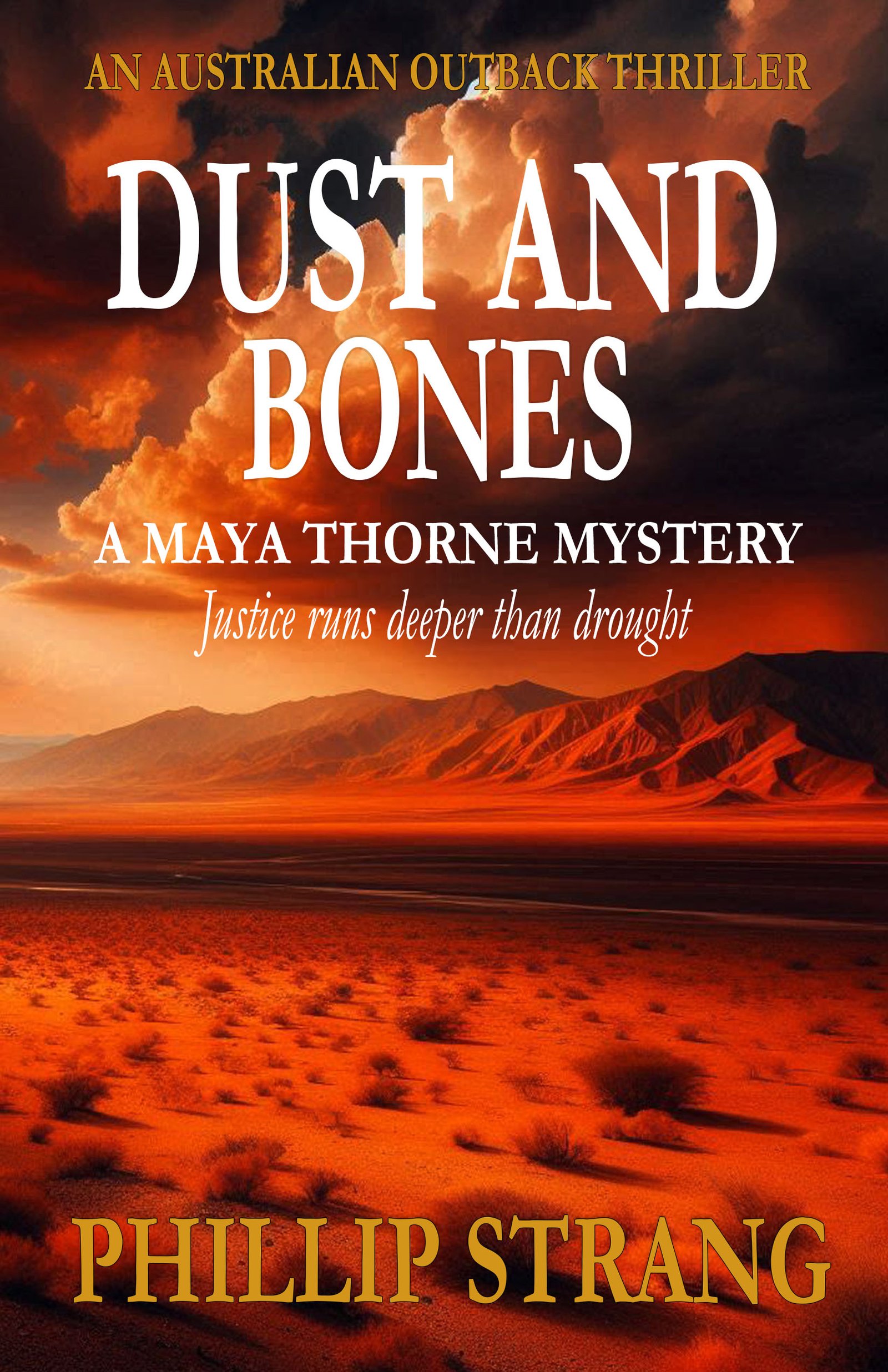
A MAYA THORNE MYSTERY
Get Dust and Bones Free
Justice runs deeper than drought.
Red dust. Shallow graves. A detective who hunts killers where the law runs thin and the nearest help is two hundred miles away.
Send Me the BookYou'll also receive occasional new release emails. Unsubscribe anytime. No spam, ever.
As an Amazon Associate, Phillip Strang earns from qualifying purchases. This page contains affiliate links — buying through them costs you nothing extra.