
The in-media-res opening—starting your crime novel mid-scene rather than with background or setup—remains one of the most powerful tools for grabbing readers immediately. Too many crime writers still believe they need to establish character history or setting details before diving into action, but this approach often kills momentum before it builds.
Across eighteen series and more than 150 novels, I have found that the most effective crime openings throw readers directly into a moment of tension, conflict, or discovery. The art lies not in confusing your audience, but in creating immediate investment while maintaining enough clarity to ground them in your story world.
The Mechanics of Mid-Scene Entry
An effective in-media-res opening requires three essential elements working simultaneously: immediate physical or emotional stakes, a character with agency in the moment, and enough sensory detail to anchor the reader without drowning them in description. The key mistake many writers make is starting too late in the action, creating confusion instead of intrigue.
In my DI Tremayne series, I often open with Tremayne already at a crime scene, mid-investigation, rather than showing him receiving the call or traveling to the location. This technique immediately establishes his competence while dropping the reader into the investigative mindset. The reader doesn’t need to know how he got there—they need to care about what he’s discovering.
The strongest mid-scene openings establish genre expectations within the first paragraph. Crime readers want to know they’re in capable hands, that the author understands the conventions while bringing fresh perspective to familiar territory.
Balancing Information and Mystery
The most challenging aspect of in-media-res openings is calibrating how much information to withhold versus reveal. Readers need enough context to follow the action, but revealing too much eliminates the forward momentum that makes this technique effective.
I’ve learned to focus on the character’s immediate objective rather than their background. In one Maya Thorne opening, she’s already deep in the Australian outback, tracking signs of foul play, when she discovers evidence that changes everything. The reader doesn’t need her life story—they need to understand what she’s looking for and why finding it matters.
The most successful police procedural novels often employ this selective information approach, giving readers just enough detail to follow the investigation without overwhelming them with procedure or backstory that can be woven in later.
Creating Character Investment Without Backstory
One persistent myth about in-media-res openings is that readers can’t connect with characters they don’t know. This fundamentally misunderstands how reader engagement works. Readers connect with characters through witnessing competence, vulnerability, or determination in action, not through learning their personal history.
Character investment happens through showing decision-making under pressure. When I write Alex Harlan making split-second choices during an FBI operation, readers understand his character through his actions and internal reactions, not through exposition about his training or past cases.
The strongest character moments in mid-scene openings come from revealing personality through conflict response. How does your detective react when evidence doesn’t match expectations? How does your protagonist handle unexpected danger? These moments create connection more effectively than any amount of backstory.
How I Actually Write In-Media-Res Openings
My practical approach to crafting these openings starts with identifying the most compelling moment in the first chapter—usually a discovery, confrontation, or decision point—then working backward to find the latest possible entry point. I write the full scene first, then cut everything before the moment of highest tension.
I test each opening by reading it aloud to ensure the rhythm creates momentum rather than confusion. The best in-media-res openings have a musical quality, with sentence length and structure that pulls readers forward. Short, punchy sentences for action and tension, longer ones for internal processing or atmospheric detail.
During revision, I specifically look for opportunities to convert exposition into action or dialogue. Instead of telling readers that Detective Lynch knows the Scottish Highlands well, I show her navigating treacherous terrain or recognizing local customs that others miss. This approach strengthens both characterization and setting while maintaining the forward drive.
Common Pitfalls and How to Avoid Them
The most frequent mistake I see in attempted in-media-res openings is starting with generic action that could belong to any story. A car chase or fight scene without specific character stakes or unique details fails to distinguish your novel from countless others. Effective openings are specific to your story and genre.
Another common error involves starting so deep in the action that readers lack sufficient grounding to follow events. When I read opening lines like ‘The bullet missed his head by inches as he dove behind the overturned table,’ I immediately wonder who ‘he’ is, why someone is shooting, and what stakes are involved. Without at least minimal context, drama becomes meaningless noise.
Equally problematic is the false in-media-res opening that begins mid-scene but then immediately jumps backward to explain how the character arrived there. This technique, sometimes called the ‘flashback fake-out,’ breaks the narrative momentum that the opening was designed to create. The most effective action thriller novels commit fully to the timeline they establish in the opening scene.
Many writers also fall into the trap of making their in-media-res openings too clever, focusing more on creating a puzzle than engaging readers emotionally. While intrigue is valuable, confusion is not. Readers should feel pulled into the story, not stopped to decode what’s happening.
Building Momentum Through Scene Selection
The most critical decision in crafting an in-media-res opening is choosing which moment to begin with. Not every tense moment makes an effective opening. The best starting points combine immediate stakes with longer-term story relevance.
I look for scenes that establish both the central mystery and the protagonist’s relationship to it. In my espionage thrillers, the opening might show an agent discovering intelligence that will drive the entire plot, rather than starting with a generic action sequence that happens to involve the same character.
Effective scene selection also considers pacing throughout the entire first chapter. An explosive opening needs somewhere to go—either deeper into the immediate crisis or into the investigation that follows. The strongest openings create momentum that sustains beyond the initial hook.
Conclusion
The in-media-res opening succeeds when it creates immediate investment while promising sustained engagement. Master this technique by focusing on character agency, specific stakes, and forward momentum rather than trying to create confusion or false complexity. Your readers will thank you for respecting their intelligence and their time.
About Phillip Strang
Phillip Strang is an Australian crime and thriller novelist. Across eighteen series and more than 150 novels, his work spans London police procedurals (DCI Isaac Cook), UK investigations (DI Tremayne), Australian outback crime (Maya Thorne), FBI thrillers (Alex Harlan), Scottish Highland mysteries (DI Sarah Lynch), and espionage (Steve Case). Learn more about Phillip or browse his complete catalogue on Amazon.
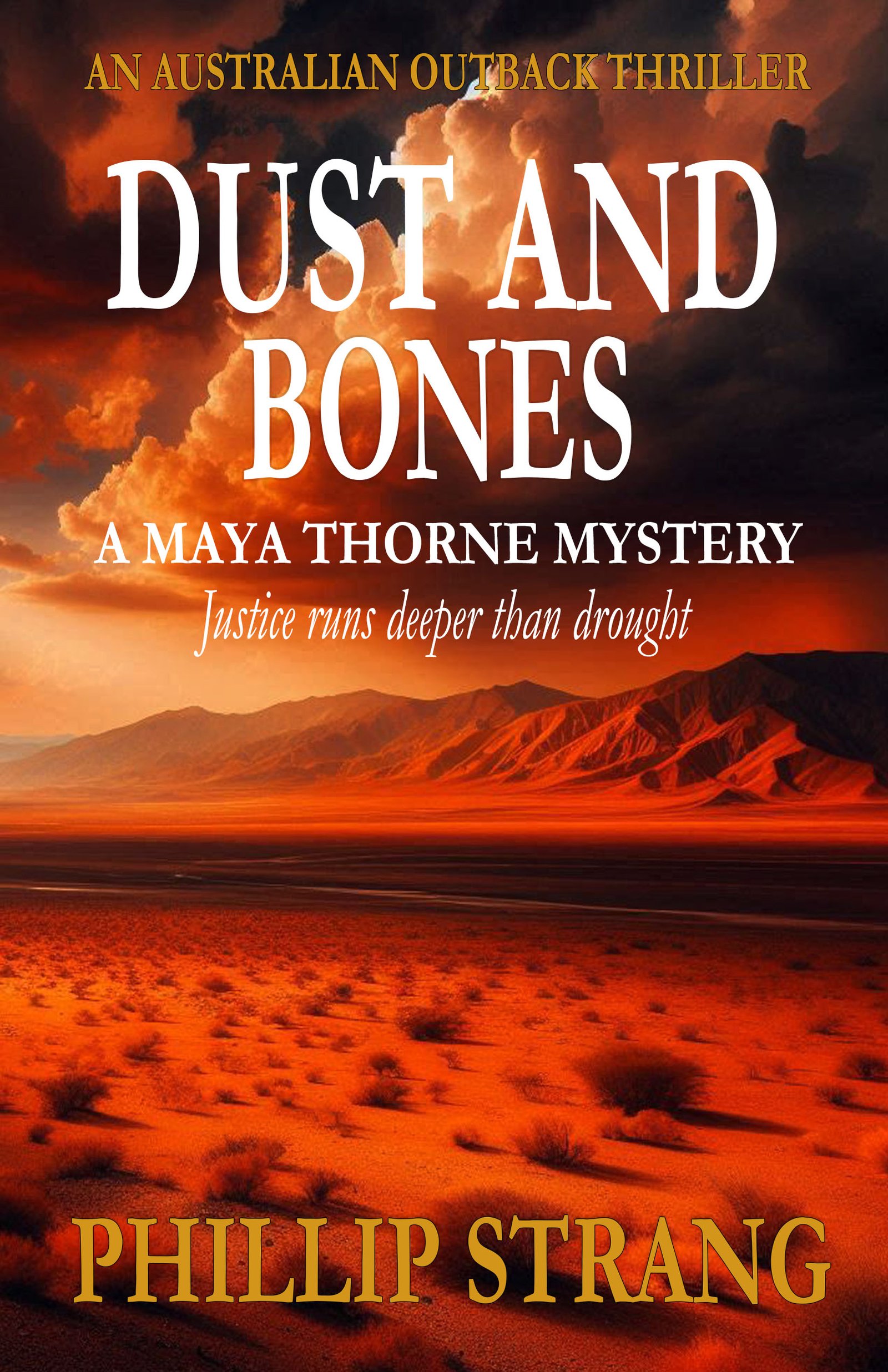
A MAYA THORNE MYSTERY
Get Dust and Bones Free
Justice runs deeper than drought.
Red dust. Shallow graves. A detective who hunts killers where the law runs thin and the nearest help is two hundred miles away.
Send Me the BookYou'll also receive occasional new release emails. Unsubscribe anytime. No spam, ever.
As an Amazon Associate, Phillip Strang earns from qualifying purchases. This page contains affiliate links — buying through them costs you nothing extra.