
The choice between Inner City vs Suburbs in Crime Fiction isn’t merely geographical—it’s a fundamental decision that shapes every aspect of your narrative, from pacing to character development to the very nature of the crimes your protagonist investigates. Each setting demands different techniques, different rhythms, and completely different approaches to building tension.
Across eighteen series and more than 150 novels, I’ve discovered that this choice determines not just where your story unfolds, but how it unfolds, who populates it, and what crimes feel authentic within that world.
The Pace and Rhythm Revolution
Inner cities pulse with immediate energy. Crimes happen fast, responses are rapid, and the environment itself creates urgency. When I write my DCI Isaac Cook series set in London, the city’s density allows for quick scene changes, multiple witnesses within blocks, and the constant background hum of activity that keeps readers on edge. Urban settings naturally compress time and space, making everything feel more immediate.
Suburban crime fiction operates on entirely different principles. The isolation works in your favor—when something goes wrong in suburbia, it feels more sinister precisely because it’s unexpected. The manicured lawns and quiet streets create a contrast that amplifies the horror when violence intrudes. But this setting demands patience from both writer and reader. You can’t rely on the city’s natural energy; you must build tension through character observation, domestic details, and the gradual revelation that something fundamental is wrong beneath the surface calm.
Character Types and Social Dynamics
Urban crime fiction gives you a broader palette of characters by necessity. Street vendors, homeless individuals, corporate executives, immigrants, long-time residents, transients—the city naturally provides the social mixing that creates interesting conflicts and unexpected alliances. The anonymity of city life means people can reinvent themselves, hide their pasts, or operate in shadows more easily.
Suburban settings offer different advantages. Everyone knows everyone, which means secrets carry more weight and gossip becomes a legitimate investigative tool. The social hierarchies are more defined but also more fragile. When I developed the character dynamics for small-town investigations, I realized that suburban crime often involves the disruption of established social order—the pillar of the community who’s embezzling, the perfect family hiding abuse, the respected teacher with a dark side.
The Crime Itself: Urban Chaos vs Suburban Secrets
Cities generate certain types of crimes naturally. Drug-related violence, gang activity, crimes of opportunity, human trafficking—these flow organically from urban environments. The complexity of city life allows for more intricate criminal enterprises and provides cover for ongoing illegal activities. Urban crime can be random, professional, or deeply personal, often simultaneously.
Suburban crime tends toward the personal and premeditated. The isolation that defines suburban life means crimes are often more intimate—domestic violence that escalates, neighbor disputes that turn deadly, or carefully planned murders by people who thought they could get away with it in their quiet community. The crime disrupts normalcy rather than adding to existing chaos.
How I Navigate the Inner City vs Suburbs in Crime Fiction Decision
When starting a new series, I first determine what type of story I want to tell, then choose the setting that best serves that narrative. For Maya Thorne, I needed the Australian outback’s isolation to create stories where help is hours away and characters must rely entirely on their own resources. The setting became a character itself, influencing every plot decision.
I also consider the investigative approach. Urban settings suit police procedurals where multiple agencies, forensic resources, and specialist teams are readily available. Suburban and rural settings work better for stories focusing on individual investigators who must rely on personal relationships, local knowledge, and intuition rather than high-tech resources.
The key is authenticity. Urban writers must understand the rhythm of city life, the way different neighborhoods connect, and how law enforcement actually operates in dense populations. Suburban writers need to grasp the social dynamics of smaller communities, the way information travels, and how isolation affects both victims and perpetrators.
Common Mistakes That Kill Credibility
The biggest error I see is writers choosing settings for superficial reasons rather than story-driven ones. Writing urban crime because it seems more exciting, or suburban mysteries because they appear easier, misses the fundamental point—the setting must serve the story, not the reverse.
Another frequent mistake is misunderstanding police resources and response times. Urban departments have specialized units and quick response capabilities that don’t exist in smaller jurisdictions, while suburban and rural areas often have advantages in community cooperation and local knowledge that cities lack. Writers who ignore these realities create unbelievable scenarios that pull readers out of the story.
Many authors also fail to recognize that crimes carry different social implications in different settings. A murder in Manhattan might warrant a paragraph in local news; the same crime in a suburb of twenty thousand becomes the defining event of the year. The community response, media attention, and investigation priorities shift dramatically based on setting, and your story must reflect these differences authentically.
Finally, there’s the trap of setting stereotypes. Not all urban crime involves drugs and gangs; not all suburban crime involves bored housewives or corrupt politicians. The most compelling crime thrillers subvert expectations while remaining true to their settings’ authentic possibilities.
Conclusion
The choice between urban and suburban settings isn’t about which is better—it’s about which serves your particular story most effectively. Each offers unique advantages and demands different skills from the writer, but both can produce compelling crime fiction when matched thoughtfully to the narrative you want to tell.
About Phillip Strang
Phillip Strang is an Australian crime and thriller novelist. Across eighteen series and more than 150 novels, his work spans London police procedurals (DCI Isaac Cook), UK investigations (DI Tremayne), Australian outback crime (Maya Thorne), FBI thrillers (Alex Harlan), Scottish Highland mysteries (DI Sarah Lynch), and espionage (Steve Case). Learn more about Phillip or browse his complete catalogue on Amazon.
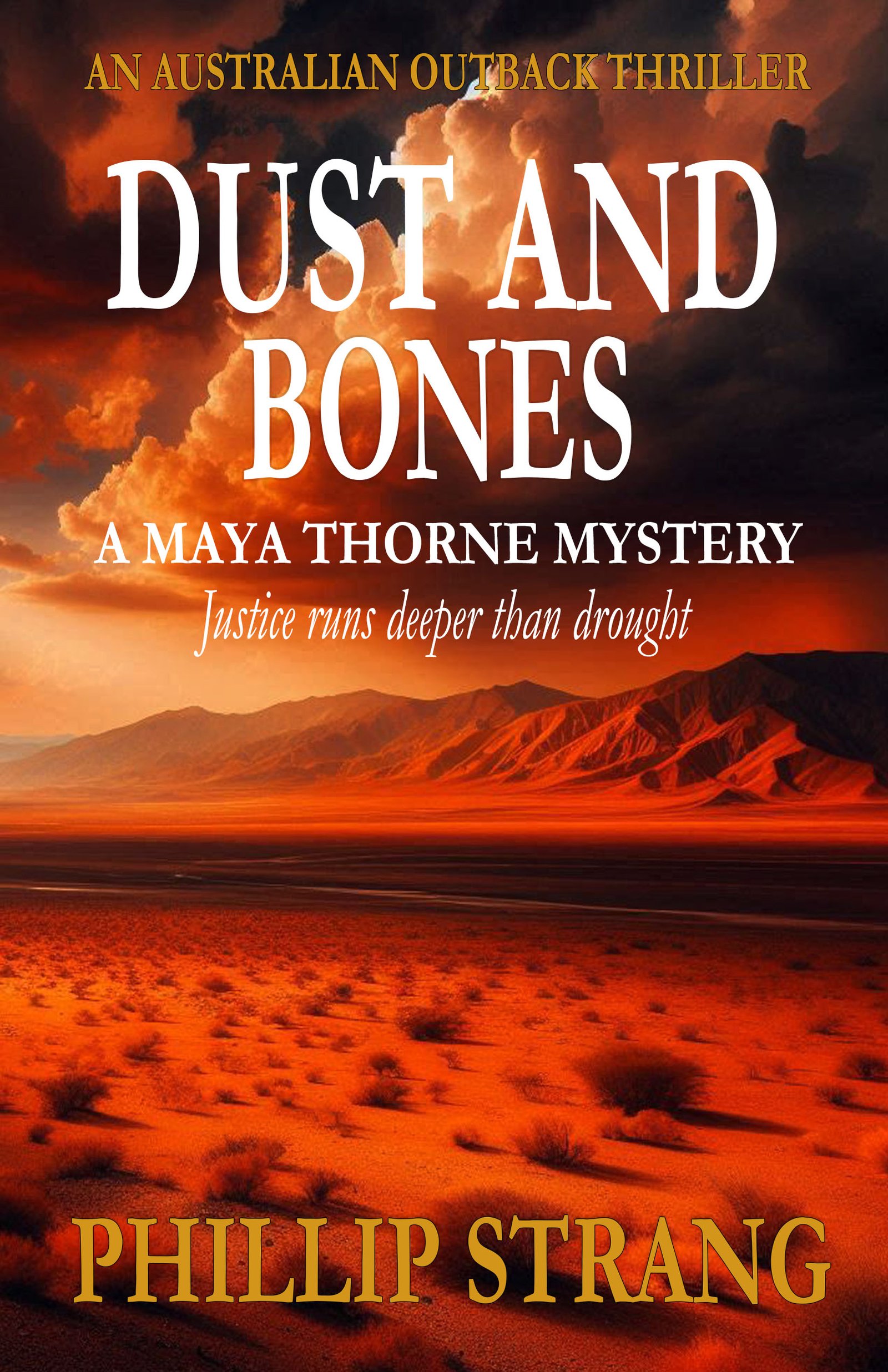
A MAYA THORNE MYSTERY
Get Dust and Bones Free
Justice runs deeper than drought.
Red dust. Shallow graves. A detective who hunts killers where the law runs thin and the nearest help is two hundred miles away.
Send Me the BookYou'll also receive occasional new release emails. Unsubscribe anytime. No spam, ever.
As an Amazon Associate, Phillip Strang earns from qualifying purchases. This page contains affiliate links — buying through them costs you nothing extra.