
Irony in crime fiction operates as the engine that transforms predictable investigation into pulse-pounding revelation. The gap between what appears to be true and what actually is creates the fundamental tension that keeps readers turning pages. When deployed strategically, irony doesn’t just surprise—it makes the inevitable feel shocking.
Across eighteen series and more than 150 novels, I’ve discovered that mastering the three forms of irony—dramatic, situational, and verbal—separates competent crime writers from those who craft truly memorable thrillers. Each type serves a distinct purpose in building suspense, developing character, and delivering that perfect gut-punch ending that readers never see coming but immediately recognize as inevitable.
Dramatic Irony: The Reader’s Privileged Position
Dramatic irony places readers in the uncomfortable position of knowing more than the protagonist, creating tension through anticipation rather than surprise. In crime fiction, this technique proves most effective when revealing information that makes the detective’s investigation feel increasingly dangerous or futile. The reader watches helplessly as the protagonist walks into what we recognize as a trap.
The key to effective dramatic irony lies in timing the revelation carefully. Reveal too early, and the tension deflates. Reveal too late, and it feels like a cheap trick. In my DCI Isaac Cook series, I often show the killer’s identity or method through an early scene, then watch Isaac methodically work through evidence that readers know will lead him into danger. This creates a mounting sense of dread as competent police work becomes a countdown to confrontation.
The technique works because it inverts the traditional mystery structure. Instead of wondering who committed the crime, readers wonder how the detective will survive discovering it. This shift transforms investigation scenes into potential last moments, charging even routine interviews with lethal possibility.
Situational Irony: When Reality Contradicts Expectation
Situational irony delivers the opposite of what characters and readers expect, but unlike mere plot twists, effective ironic situations feel both surprising and inevitable upon reflection. The best situational irony in crime fiction emerges from character flaws or societal contradictions that the investigation exposes.
I’ve found that the strongest situational irony often centers on the very qualities that make someone appear above suspicion. The grieving spouse who hired the detective turns out to be the killer. The corrupt cop who’s been feeding information to criminals is actually working undercover for internal affairs. The victim everyone mourns staged their own death to escape prosecution.
In constructing these revelations, I focus on planting clues that support both the surface interpretation and the ironic truth. The grieving spouse’s behavior reads as profound loss until reexamined as profound relief. This double-duty evidence makes the ironic revelation feel earned rather than arbitrary. Readers should be able to reread and see how the truth was hiding in plain sight, masked by their own assumptions about human behavior.
The most effective situational irony often reflects larger themes about justice, morality, or human nature. When the revelation forces characters and readers to question their fundamental assumptions about right and wrong, the story transcends simple plot mechanics to become genuinely unsettling.
Verbal Irony: The Art of Meaningful Misdirection
Verbal irony in crime fiction extends beyond simple sarcasm into the realm of loaded dialogue where characters say one thing while meaning another. This technique proves particularly effective in interrogation scenes, where suspects and witnesses deploy verbal irony as both shield and weapon. The detective who truly understands what’s being said gains crucial insight, while missing the subtext can prove fatal.
Effective verbal irony requires establishing clear character voices and motivations. When a suspect says ‘I’d never hurt her,’ the irony only works if we understand their definition of ‘hurt’ differs from the conventional meaning. Perhaps they genuinely believe murder was an act of mercy, or they’re technically telling the truth because someone else delivered the fatal blow.
I’ve learned to layer verbal irony throughout dialogue rather than saving it for dramatic confrontations. In casual conversations, characters reveal their true nature through seemingly innocent comments that carry double meanings. A police commander praising an officer’s ‘flexible interpretation of procedure’ might be acknowledging corruption or commending creative thinking—the ambiguity creates tension until context clarifies the intent.
The technique works best when dialogue serves multiple purposes simultaneously: advancing plot, revealing character, and maintaining the ironic tension between surface meaning and deeper truth. When Maya Thorne interviews suspects in the Australian outback, their responses often reflect cultural codes and personal loyalties that contradict their literal words, creating layers of meaning that mirror the complexity of the crimes themselves.
My Working Approach to Ironic Structure
When planning a novel, I map out ironic elements before writing the first chapter. Each major character gets assigned a core contradiction—something about their public persona that masks their true nature or motivations. These contradictions become the foundation for all three types of irony throughout the story.
I deliberately plant what I call ‘ironic seeds’—details that support multiple interpretations depending on what the reader knows. A character’s nervous laughter during questioning might indicate guilt about the crime under investigation, or guilt about an unrelated secret, or simply social anxiety. The ambiguity remains productive until the revelation clarifies which interpretation was correct, at which point readers can trace back and see how the truth was always present.
The most crucial element in my process involves testing each ironic moment against character motivation. If the irony exists purely for shock value without serving character development or thematic purpose, it gets cut. The best ironic revelations illuminate something fundamental about human nature while advancing the plot toward its inevitable conclusion.
I also ensure that ironic elements serve the specific demands of different subgenres. In police procedurals, irony often emerges from the gap between legal justice and moral justice. In espionage thrillers, it typically centers on questions of loyalty and betrayal where nothing is what it seems.
Common Mistakes That Drain Ironic Power
The most frequent error involves confusing surprise with irony. A revelation that comes completely out of nowhere isn’t ironic—it’s arbitrary. True irony requires setup that supports multiple interpretations, so the reveal feels both unexpected and inevitable. When a seemingly random character turns out to be the killer without proper foundation, readers feel cheated rather than impressed by the author’s cleverness.
Another trap involves overexplaining the ironic elements once they’re revealed. If you’ve done the work properly, readers will recognize the irony without extensive exposition about how the clues pointed to this conclusion all along. Trust your audience to make the connections—heavy-handed explanation kills the impact of well-crafted irony.
Many writers also mistake verbal irony for mere sarcasm, missing opportunities to create genuine tension through dialogue. When every character speaks in knowing quips, actual ironic moments lose their power. Verbal irony works best when deployed sparingly by specific characters in specific situations where the gap between what they say and what they mean serves clear dramatic purpose.
The final common mistake involves using irony as a crutch to avoid properly developing character motivation. If the only explanation for a character’s actions is ‘it’s ironic,’ you haven’t created genuine irony—you’ve created plot contrivance. True ironic revelations emerge from deep character work that establishes believable reasons for the gap between appearance and reality.
Conclusion
Mastering irony in crime fiction requires understanding that each type serves different narrative functions while working together to create the complex layering that separates memorable thrillers from forgettable page-turners. When dramatic, situational, and verbal irony operate in harmony, they transform simple whodunits into profound examinations of human nature where justice and truth prove more complicated than they initially appear.
About Phillip Strang
Phillip Strang is an Australian crime and thriller novelist. Across eighteen series and more than 150 novels, his work spans London police procedurals (DCI Isaac Cook), UK investigations (DI Tremayne), Australian outback crime (Maya Thorne), FBI thrillers (Alex Harlan), Scottish Highland mysteries (DI Sarah Lynch), and espionage (Steve Case). Learn more about Phillip or browse his complete catalogue on Amazon.
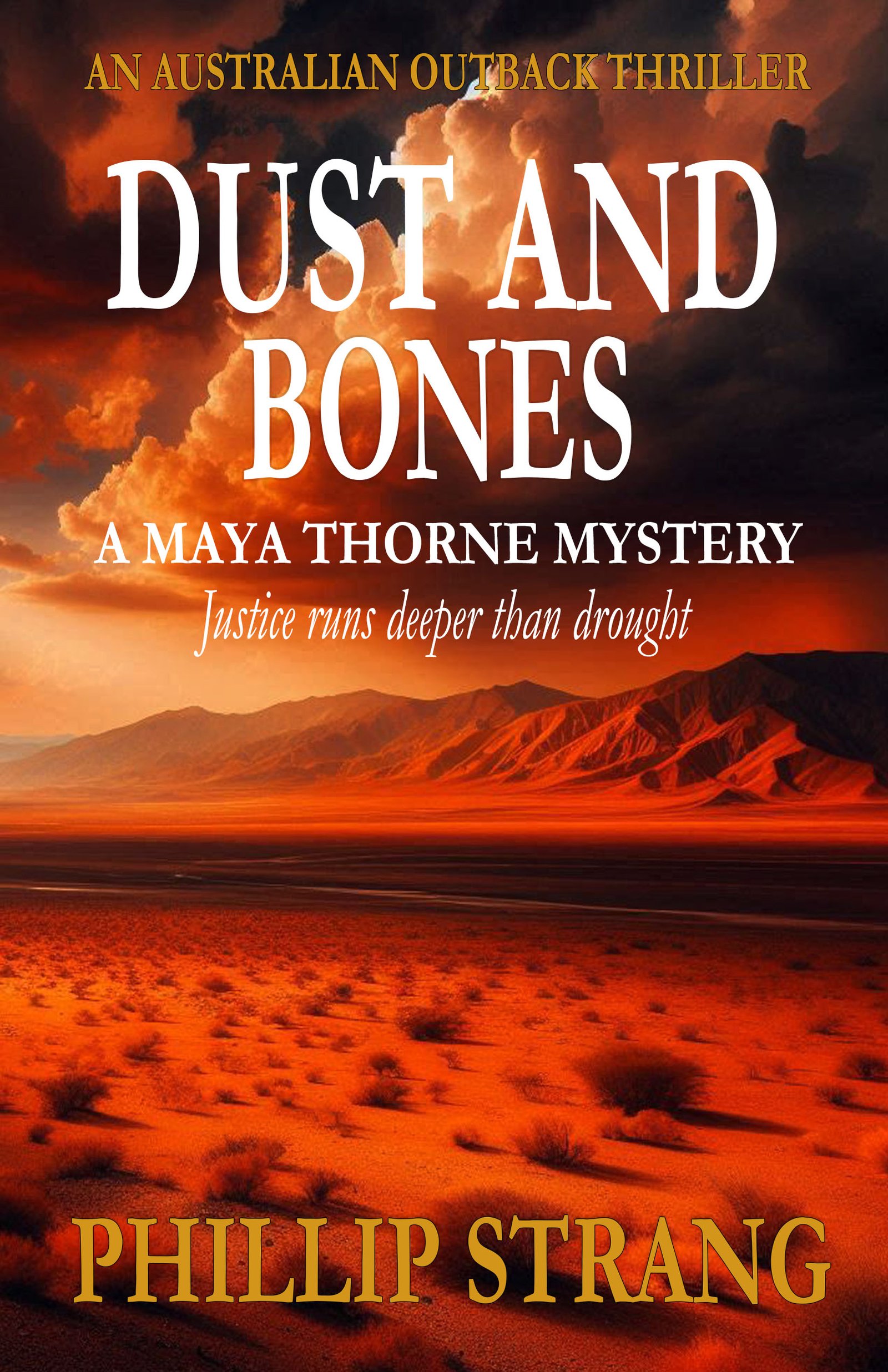
A MAYA THORNE MYSTERY
Get Dust and Bones Free
Justice runs deeper than drought.
Red dust. Shallow graves. A detective who hunts killers where the law runs thin and the nearest help is two hundred miles away.
Send Me the BookYou'll also receive occasional new release emails. Unsubscribe anytime. No spam, ever.
As an Amazon Associate, Phillip Strang earns from qualifying purchases. This page contains affiliate links — buying through them costs you nothing extra.