
Isolated communities in crime fiction function as more than atmospheric backdrops—they become active participants in the narrative machinery. The closed system of an isolated setting creates natural pressure points where secrets fester and violence erupts with inevitable force. When every character knows every other character’s business, yet fundamental truths remain hidden, you’ve constructed the perfect engine for sustained tension.
Across eighteen series and more than 150 novels, I’ve discovered that isolation strips away the convenient escapes that modern life provides, forcing characters into confrontation with both their crimes and their consequences. The technique demands precision because there’s nowhere for weak plotting to hide.
The Geography of Guilt
Physical isolation creates psychological pressure in ways that urban settings simply cannot match. When your detective arrives in a remote village where the nearest backup is hours away, every interaction carries weight. The criminal knows the terrain, the locals may or may not cooperate, and standard police procedures often prove inadequate.
In my Maya Thorne series, set in the Australian outback, isolation becomes a character itself. The vast distances between settlements mean that when violence occurs, it often festers undetected. Characters must confront their situations directly because calling for help isn’t always an option. This geographical reality shapes every story decision—from how evidence is preserved to how suspects are contained.
The key is understanding that isolation must serve the story, not merely provide exotic flavor. When I place DI Sarah Lynch in the Scottish Highlands, the remote setting isn’t tourism—it’s tactical. The mountains and weather patterns affect how crimes unfold and how they’re investigated. The isolation reveals character under pressure while constraining the detective’s resources in ways that force creative problem-solving.
Social Architecture in Confined Spaces
Small communities operate on different social rules than cities. Everyone knows everyone’s history, business, and secrets—or believes they do. This creates a complex web of relationships that crime writers can exploit. The murderer might be the person who delivers your mail, taught your children, or sits beside you in church every Sunday.
This familiarity breeds a particular type of suspicion. Unlike police procedurals set in anonymous urban environments, isolated community crime fiction thrives on the violation of trust. The closer the relationships, the more devastating the betrayal when violence intrudes.
What makes this challenging is avoiding the cliché of the quaint village harboring dark secrets. The darkness must emerge from genuine character motivations, not from authorial manipulation. Real small communities aren’t inherently sinister—they’re human scale environments where individual actions have magnified consequences because everyone affects everyone else.
How I Structure Isolated Communities in Crime Fiction
When I develop an isolated setting, I begin with the community’s economic foundation. What keeps this place alive? Fishing, farming, mining, tourism—the economic reality shapes the social hierarchy and creates the fault lines where conflict naturally occurs. A failing industry creates desperation. A thriving one creates competition and greed.
I map the power structures before I plot the crime. Who makes decisions? Who holds grudges? Who depends on whom for survival? In isolated communities, these relationships are often more visible and more rigid than in larger settings. The bank manager, the major employer, the local doctor—these positions carry weight that city dwellers might not fully appreciate.
The crime must emerge from these established dynamics, not be imposed upon them. When I placed a murder in a remote Scottish fishing village for the DI Sarah Lynch series, the solution grew from the community’s dependence on fishing licenses and territorial waters. The isolation wasn’t decorative—it was integral to how the crime could occur and be concealed.
Common Failures in Isolated Settings
The most frequent mistake is treating isolation as a simple plot convenience—cutting phone lines, washing out bridges, or creating blizzards to trap characters together. These mechanical approaches ignore the deeper storytelling possibilities that genuine isolation provides. Real isolated communities aren’t cut off from the world by accident; they’re isolated by choice, geography, economics, or necessity.
Another error is populating the community with stereotypes rather than individuals. The gossipy shopkeeper, the secretive hermit, the corrupt local official—these caricatures signal lazy worldbuilding. Actual small communities contain the same range of human complexity as larger places, just concentrated and more interdependent.
Writers also frequently misunderstand the pace of life in isolated settings. Events that might pass unnoticed in a city become significant when they occur in a community of a few hundred people. A stranger’s arrival, an unusual purchase, a missed appointment—these details matter differently when everyone notices them. The investigation must acknowledge this different rhythm, not impose urban investigative techniques without considering local realities.
Perhaps most problematically, some writers use isolation to justify implausible behavior. Characters don’t suddenly become more violent, more secretive, or more paranoid simply because they live in remote areas. The isolation might amplify existing tensions or limit resolution options, but it shouldn’t fundamentally alter human nature. The best action thrillers understand that geography influences behavior without determining it.
The Detective’s Disadvantage
Isolated settings naturally handicap investigators in ways that create story tension. Local knowledge becomes crucial, but outsider detectives must earn access to it. Community loyalty often trumps cooperation with law enforcement, especially when the detective represents distant authority.
This dynamic works particularly well when the detective understands their disadvantage and must adapt. In my experience writing various series, the most compelling investigations occur when detectives recognize they cannot simply impose external procedures on insular communities. They must negotiate, compromise, and sometimes accept partial solutions rather than complete justice.
The isolation also affects evidence gathering, witness protection, and suspect containment in ways that urban crime fiction doesn’t address. When the nearest forensics lab is hours away, when witness safety cannot be guaranteed through relocation, when suspects cannot be easily held—these constraints force both characters and writers to find alternative approaches.
Conclusion
Isolated communities in crime fiction succeed when they function as integrated story elements rather than mere settings. The isolation must create genuine consequences that shape how crimes occur, how they’re investigated, and how they’re resolved. When done properly, the community itself becomes as important as any individual character in determining the story’s outcome.
About Phillip Strang
Phillip Strang is an Australian crime and thriller novelist. Across eighteen series and more than 150 novels, his work spans London police procedurals (DCI Isaac Cook), UK investigations (DI Tremayne), Australian outback crime (Maya Thorne), FBI thrillers (Alex Harlan), Scottish Highland mysteries (DI Sarah Lynch), and espionage (Steve Case). Learn more about Phillip or browse his complete catalogue on Amazon.
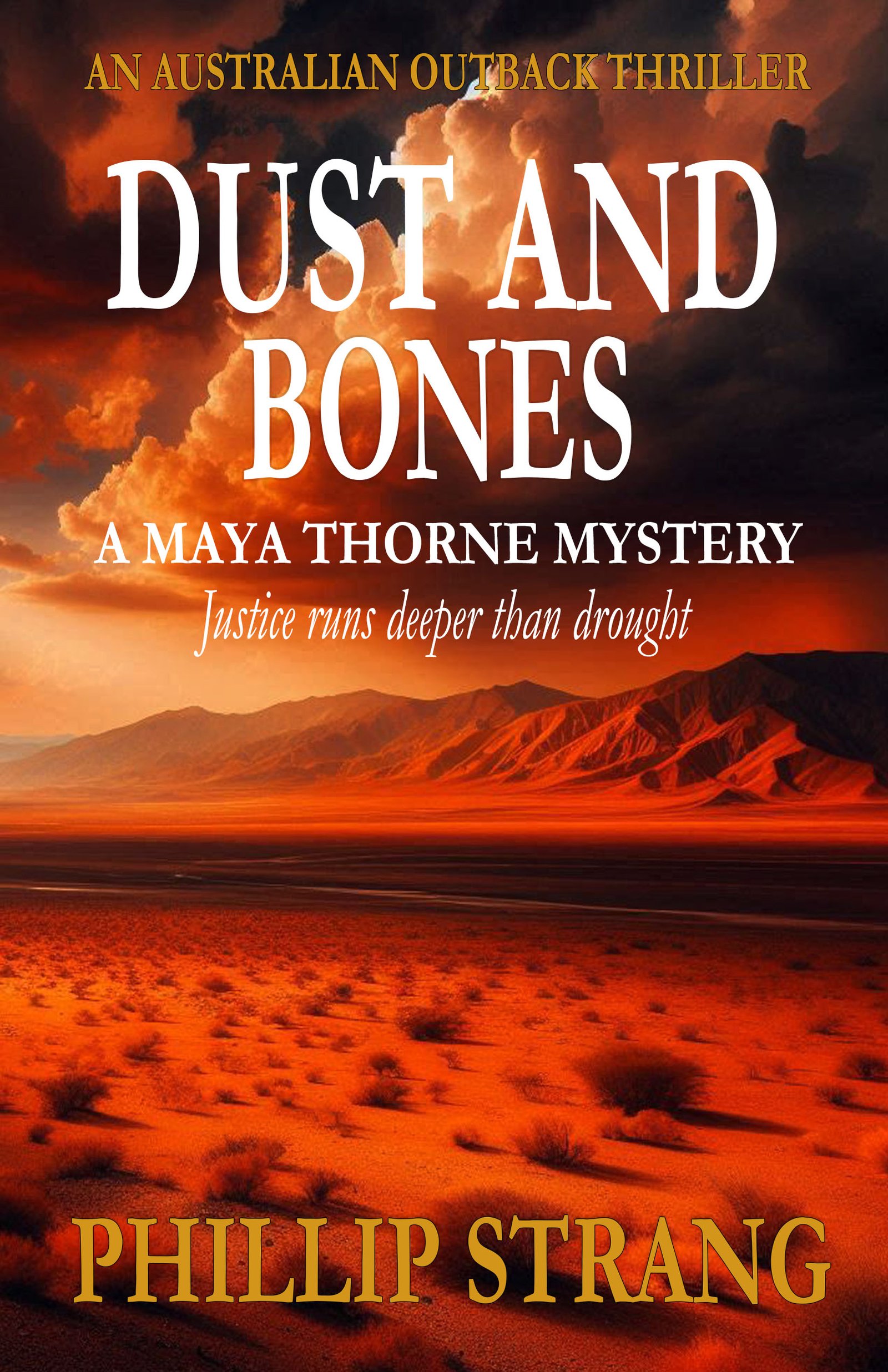
A MAYA THORNE MYSTERY
Get Dust and Bones Free
Justice runs deeper than drought.
Red dust. Shallow graves. A detective who hunts killers where the law runs thin and the nearest help is two hundred miles away.
Send Me the BookYou'll also receive occasional new release emails. Unsubscribe anytime. No spam, ever.
As an Amazon Associate, Phillip Strang earns from qualifying purchases. This page contains affiliate links — buying through them costs you nothing extra.