
Moral ambiguity isn’t about making your protagonist unlikeable or your villain sympathetic for the sake of literary complexity. It’s about recognizing that readers come to crime fiction precisely because they want to explore the uncomfortable spaces between right and wrong, where justice and law diverge, and where good people make terrible choices for defensible reasons.
Across eighteen series and more than 150 novels, I have found that readers don’t want moral confusion—they want moral clarity about morally complex situations. The difference between these two approaches determines whether your noir delivers the psychological satisfaction readers crave or leaves them feeling manipulated by authorial cleverness.
The Real Noir Contract With Readers
When readers pick up noir fiction, they’re entering an implicit contract. They expect protagonists who operate in grey areas not because the author wants to be edgy, but because the story’s central conflict demands it. The moral ambiguity must serve the plot’s engine, not decorate it.
In my Steve Case series, the protagonist regularly faces situations where following protocol means innocent people die, while breaking it means compromising everything he’s sworn to protect. This isn’t moral relativism—it’s recognition that real-world justice often requires choices between competing moral goods, not between obvious right and wrong.
Readers want to feel the weight of these choices alongside your character. They want to understand why someone would cross ethical lines, even if they wouldn’t make the same choice themselves. This understanding creates the tension that drives noir crime thriller novels forward.
Building Authentic Moral Complexity
Authentic moral ambiguity grows from character motivation, not authorial manipulation. Your protagonist’s ethical compromises must feel inevitable given their background, circumstances, and the specific pressures of your story. The ambiguity emerges naturally when characters with strong moral codes encounter situations where that code provides no clear guidance.
Consider how you establish your character’s baseline ethics early in the story. What lines have they never crossed? What principles do they consider non-negotiable? Only when readers understand these boundaries can they feel the impact when circumstances force your character to question or violate them.
The most effective moral complexity comes from characters who maintain their core values while being forced to express them through increasingly compromised actions. They’re not abandoning their principles—they’re discovering that adhering to those principles in an imperfect world requires moral flexibility they never anticipated needing.
How I Actually Approach Moral Ambiguity
When developing morally complex characters, I start with their professional obligations versus their personal convictions. Law enforcement officers, intelligence operatives, and private investigators all face institutional pressures that can conflict with individual moral judgment. This professional framework provides a natural source of ethical tension without requiring artificial moral dilemmas.
In my DCI Isaac Cook series, the protagonist regularly navigates between what the law requires and what justice demands. These aren’t abstract philosophical questions—they’re practical problems that arise from the specific circumstances of each investigation. The moral complexity emerges from the gap between legal procedure and moral imperative.
I focus on consequences rather than intentions. Morally ambiguous characters often make decisions with the best intentions that produce terrible outcomes, or make questionable choices that ultimately serve justice. This focus on results rather than motivation creates the kind of ethical complexity that feels authentic to readers familiar with real-world moral decision-making.
The key is ensuring that your character’s moral compromises advance the plot while revealing character. Every ethical choice should both complicate the investigation and deepen our understanding of who your protagonist is when pushed beyond their comfort zone.
Common Mistakes That Undermine Moral Ambiguity
Many writers confuse moral ambiguity with moral equivalence, creating protagonists who are neither heroes nor villains but simply bland. This approach misunderstands what readers want from noir fiction. They don’t want characters who lack moral conviction—they want characters whose strong moral convictions are tested by impossible circumstances.
Another frequent error involves making protagonists morally ambiguous through personal failings rather than professional dilemmas. Having your detective struggle with alcoholism or failed relationships doesn’t create moral complexity—it creates character flaws. True moral ambiguity emerges from the choices characters make in pursuit of justice, not from their inability to manage their personal lives.
Some authors also mistake cynicism for moral sophistication, creating worlds where everyone is corrupt and nothing matters. This approach actually eliminates moral ambiguity by removing moral stakes entirely. If everyone is equally compromised, then no one’s choices carry ethical weight. Effective noir requires that moral choices matter, even when—especially when—all available options are imperfect.
Perhaps the most damaging mistake is using moral ambiguity as a substitute for plot development. Ethical complexity should emerge from story events, not replace them. Readers don’t engage with abstract moral philosophy—they engage with characters facing specific, concrete dilemmas that require immediate decisions with lasting consequences. The principles that guide police procedural novels apply here: character development must serve story development, not the reverse.
The Payoff Readers Actually Seek
Successful moral ambiguity provides readers with a specific type of satisfaction: the recognition that justice and law, while related, are not identical. Readers want to see characters who understand this distinction and act accordingly, even when doing so requires personal sacrifice or professional compromise.
The best morally ambiguous protagonists help readers explore their own ethical boundaries without preaching or judging. They demonstrate how good people can disagree about right action while sharing fundamental values about human dignity and justice. This exploration feels safe within fiction while providing genuine insight into real-world moral decision-making.
When done effectively, moral ambiguity creates protagonists readers trust even when they don’t approve of every choice. This trust develops because readers understand the reasoning behind controversial decisions, even if they would choose differently. The character’s moral struggle becomes the reader’s moral engagement, creating the psychological investment that keeps readers returning to a series.
Conclusion
Moral ambiguity in crime fiction succeeds when it grows naturally from story circumstances rather than authorial intent to create complexity. Readers want protagonists who face genuine ethical dilemmas with real stakes, not characters who lack moral conviction or operate in morally neutral universes. The goal is helping readers explore justice through characters who understand that doing right sometimes requires doing wrong.
About Phillip Strang
Phillip Strang is an Australian crime and thriller novelist. Across eighteen series and more than 150 novels, his work spans London police procedurals (DCI Isaac Cook), UK investigations (DI Tremayne), Australian outback crime (Maya Thorne), FBI thrillers (Alex Harlan), Scottish Highland mysteries (DI Sarah Lynch), and espionage (Steve Case). Learn more about Phillip or browse his complete catalogue on Amazon.
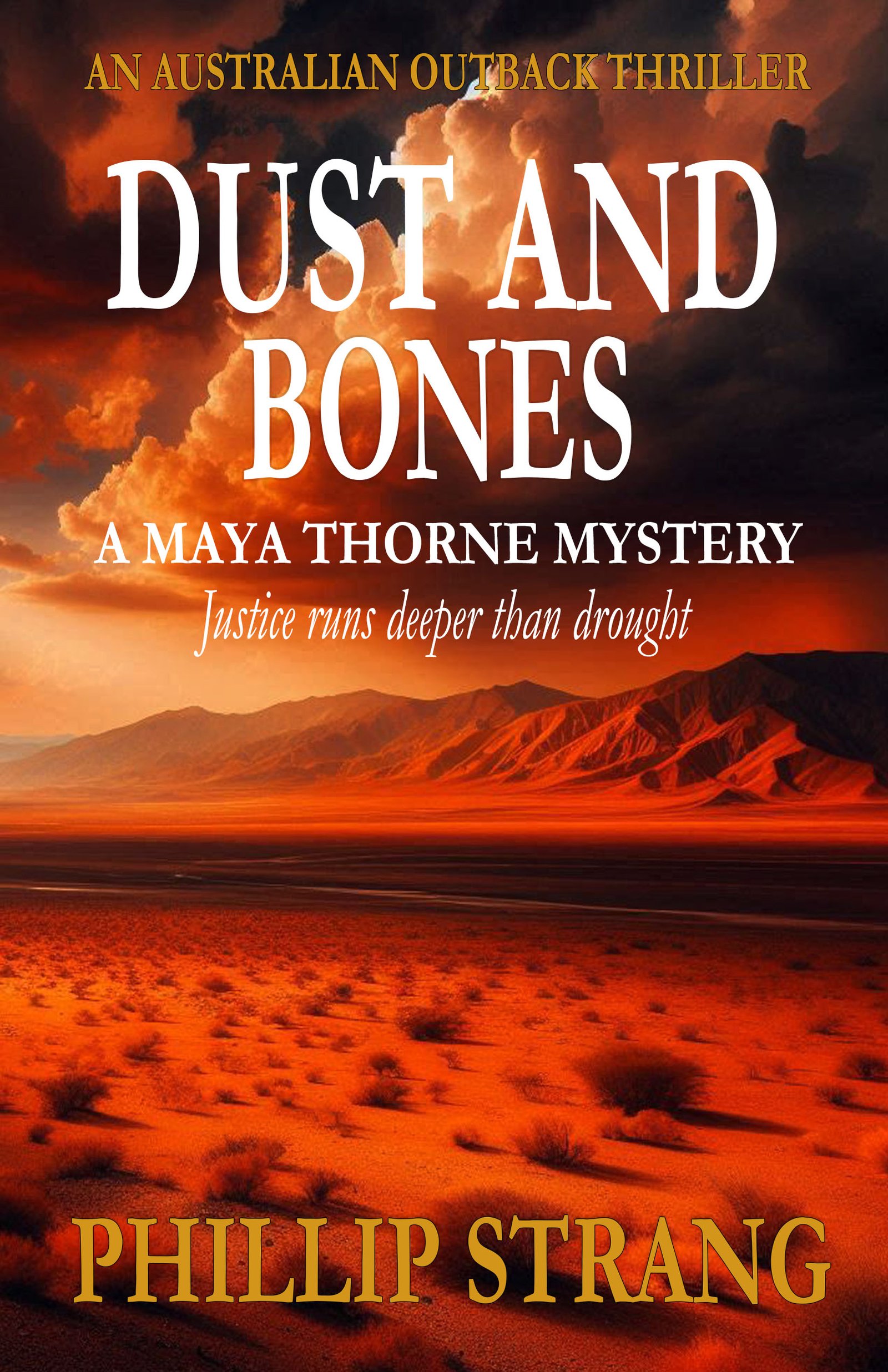
A MAYA THORNE MYSTERY
Get Dust and Bones Free
Justice runs deeper than drought.
Red dust. Shallow graves. A detective who hunts killers where the law runs thin and the nearest help is two hundred miles away.
Send Me the BookYou'll also receive occasional new release emails. Unsubscribe anytime. No spam, ever.
As an Amazon Associate, Phillip Strang earns from qualifying purchases. This page contains affiliate links — buying through them costs you nothing extra.