
New South Wales offers crime writers an unmatched palette of settings, from Sydney’s urban sprawl to the red dirt isolation of the far west. Yet most authors barely scratch the surface of this geographic goldmine, defaulting to familiar city streets when the state’s regional diversity could elevate their narratives exponentially.
Across eighteen series and more than 150 novels, I’ve discovered that NSW’s regional variations aren’t just backdrops—they’re active participants in the criminal ecosystem. Each zone operates under different social pressures, economic realities, and cultural codes that directly influence how crimes unfold and investigations proceed.
The Coastal Strip: More Than Beaches and Tourism
The NSW coastal regions from Byron Bay to Eden present unique criminal opportunities that extend far beyond drug smuggling clichés. These areas function as economic pressure cookers where seasonal tourism creates stark wealth disparities, transient populations, and infrastructure stretched beyond capacity. In my Maya Thorne series, I’ve explored how police procedural novels can exploit these tensions.
The coastal setting demands understanding of tidal patterns, seasonal populations, and the complex relationship between locals and tourists. A murder in Coffs Harbour during peak season operates under entirely different investigative constraints than the same crime in winter when the population drops by seventy percent. The temporary workers, the cash economies, the jurisdictional complexities between state and federal agencies—all of these elements become plot drivers rather than mere atmospheric details.
Small coastal towns harbor secrets differently than cities. Everyone knows everyone, but the seasonal influx provides perfect cover for criminal enterprises. The geography itself—isolated beaches, cliff faces, dense coastal scrub—offers both concealment and exposure depending on the season and weather patterns.
Western Plains: Where Distance Becomes Character
The western regions of NSW present crime writers with challenges that urban settings simply cannot match. Out here, the nearest neighbor might be fifty kilometers away, mobile phone coverage is patchy, and help arrives measured in hours rather than minutes. These aren’t obstacles to write around—they’re the very foundation of tension.
In towns like Broken Hill or Cobar, everyone’s business is public knowledge, yet the vast distances create perfect conditions for crimes that might remain undiscovered for weeks. The harsh environment becomes both weapon and witness. Heat stroke, dehydration, and equipment failure aren’t just background hazards—they’re active participants in the criminal narrative.
The mining heritage of these regions creates its own criminal ecosystem. Environmental crimes, workplace safety violations that cross into criminal negligence, and the complex web of multinational corporations operating in sparsely populated areas provide rich material. The isolation that once protected these communities now makes them vulnerable to corporate exploitation and environmental degradation.
My Working Method: Research Beyond Google Street View
I’ve learned that authentic NSW regional crime settings require boots-on-ground research that goes beyond tourism websites and satellite imagery. Each region has its own criminal vernacular, its own relationship with law enforcement, and its own unwritten rules about what constitutes acceptable behavior.
When developing settings for the Maya Thorne books, I spend time in local pubs, attend council meetings, and talk to retired police officers who understand how crimes actually unfold in these environments. The way a drug dealer operates in Wagga Wagga differs fundamentally from their Sydney counterpart—not just in scale, but in methodology, customer base, and relationship with local authorities.
Regional newspapers become invaluable resources. They report on crimes that metropolitan media ignores, revealing patterns of criminal behavior unique to specific geographic areas. Court listings show the recurring themes—domestic violence spikes during drought years, property crimes increase during mining booms, and environmental violations cluster around specific industries.
Weather patterns, seasonal work cycles, and local economic pressures all influence criminal activity in ways that action thriller novels can exploit. A crime set during wheat harvest operates under different time pressures than one occurring during the quiet winter months.
Common Mistakes: When Regional Settings Ring False
Too many crime writers treat NSW regional settings as generic rural backdrops, missing the specific characteristics that make each area unique. A crime novel set in the Hunter Valley that could just as easily take place in Queensland’s Darling Downs hasn’t utilized the setting effectively.
The worst offenders rely on stereotypical outback imagery—red dirt, flies, and laconic characters—without understanding the modern realities of regional NSW. Towns like Orange or Bathurst are sophisticated regional centers with complex social dynamics, not dusty frontier settlements. Getting this wrong immediately signals to readers that the author hasn’t done proper research.
Another frequent error involves misunderstanding jurisdictional realities. Regional crime often involves multiple agencies—local police, state crime units, federal departments—each with different priorities and resources. Authors who ignore these complexities miss opportunities for conflict and tension while creating plot holes that informed readers will spot immediately.
Distance and communication challenges get routinely underestimated. In my DI Tremayne series, though set in the UK, I’ve learned similar principles apply—investigators can’t simply call for backup or access databases with urban efficiency. Regional settings demand different investigative approaches, and authors who ignore this create unrealistic procedural narratives.
Economic Drivers: Understanding Regional Crime Motivations
Each NSW region operates under distinct economic pressures that directly influence criminal activity. The wheat belt faces different challenges than wine country, mining towns, or pastoral regions. Understanding these economic drivers provides authentic motivation for criminal behavior.
Drought creates desperation that leads to insurance fraud, stock theft, and environmental crimes. Mining booms attract organized crime, human trafficking, and large-scale drug operations. Wine regions deal with seasonal labor exploitation and intellectual property theft. These aren’t interchangeable criminal ecosystems—each requires specific knowledge to portray authentically.
Regional banks, real estate markets, and local government corruption operate differently than their metropolitan equivalents. Smaller communities mean fewer players, higher stakes, and longer-running criminal enterprises. The relationships between criminals, victims, and investigators become more complex when everyone’s children attend the same school.
Environmental crime offers particularly rich material in regional NSW settings. Water theft, illegal clearing, pollution, and wildlife trafficking all thrive in areas where oversight is limited and economic pressures are high. These crimes affect entire communities and provide opportunities for espionage thriller elements as corporate interests clash with environmental protection.
Conclusion
NSW’s regional diversity offers crime writers unlimited opportunities to create authentic, compelling narratives that couldn’t exist anywhere else. The key lies in understanding that geography shapes character, influences criminal behavior, and determines investigative approaches in ways that generic rural settings simply cannot match.
About Phillip Strang
Phillip Strang is an Australian crime and thriller novelist. Across eighteen series and more than 150 novels, his work spans London police procedurals (DCI Isaac Cook), UK investigations (DI Tremayne), Australian outback crime (Maya Thorne), FBI thrillers (Alex Harlan), Scottish Highland mysteries (DI Sarah Lynch), and espionage (Steve Case). Learn more about Phillip or browse his complete catalogue on Amazon.
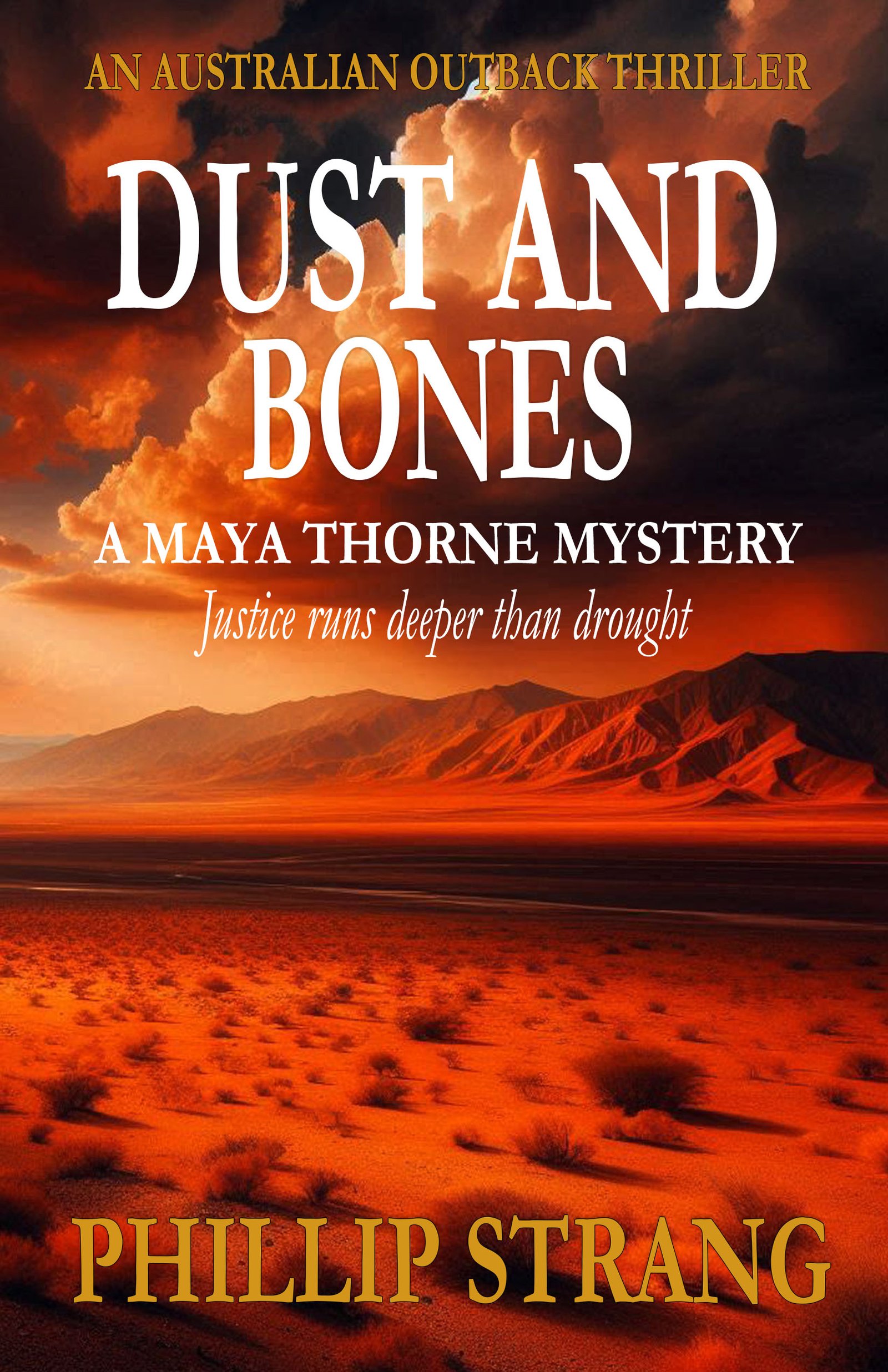
A MAYA THORNE MYSTERY
Get Dust and Bones Free
Justice runs deeper than drought.
Red dust. Shallow graves. A detective who hunts killers where the law runs thin and the nearest help is two hundred miles away.
Send Me the BookYou'll also receive occasional new release emails. Unsubscribe anytime. No spam, ever.
As an Amazon Associate, Phillip Strang earns from qualifying purchases. This page contains affiliate links — buying through them costs you nothing extra.