
Pacing the crime novel is the difference between readers turning pages compulsively and abandoning your book halfway through. The rhythm of revelation, tension, and release determines whether your carefully plotted murder mystery becomes a page-turner or a paperweight.
Across eighteen series and more than 150 novels, I have found that pacing is not about maintaining constant breakneck speed—it’s about knowing precisely when to press the accelerator and when to ease off the throttle. The best crime novels breathe like living organisms, expanding and contracting in calculated ways that serve both story and reader experience.
The Architecture of Acceleration
Acceleration in crime fiction should feel inevitable, not arbitrary. The moments that demand speed are typically revelations that change everything, chase sequences, confrontations between protagonist and antagonist, and the final convergence where all plot threads collide. But acceleration is not just about shorter sentences and rapid-fire dialogue—it’s about information density and consequence velocity.
In my DCI Isaac Cook series, I learned that acceleration works best when it follows a period of deliberate deceleration. When Cook finally connects the dots between seemingly unrelated victims, the acceleration comes from the rapid succession of logical leaps, each one building on the last. The sentences might actually be longer during these moments, but they’re packed with forward momentum because each clause advances the investigation.
The key is understanding that readers accelerate their reading naturally when stakes escalate and consequences become immediate. Your job is not to force this with stylistic tricks but to create genuine urgency through plot development. When your protagonist realizes the killer is targeting their family member next, the pacing accelerates because the emotional stakes have spiked, not because you’ve switched to sentence fragments.
Strategic Deceleration Points
Knowing when to slow down is perhaps more crucial than knowing when to speed up. Deceleration serves specific purposes in crime fiction: allowing readers to absorb complex information, building dread through atmospheric detail, developing character motivation, and creating space for the protagonist’s analytical process.
The post-discovery scenes are natural deceleration points. After your detective finds the body, the pacing should slow to allow forensic observation, initial witness interviews, and procedural groundwork. These slower sections are not filler—they’re the foundation that makes later accelerations meaningful. Readers need to understand the crime scene intimately before they can appreciate the significance of later revelations.
Character backstory also demands careful pacing control. In my Maya Thorne series, the harsh outback setting requires atmospheric description that naturally slows the pace. But this deceleration serves double duty: it establishes the isolation that makes the crimes more threatening while giving Maya space to reflect on past cases that inform her current investigation. The slower pace becomes a tool for both world-building and character development.
Interrogation scenes benefit from varied pacing within the scene itself. The initial approach might be slow and methodical, then accelerate as contradictions emerge, then decelerate again as the suspect constructs their defense. This rhythmic variation within a single scene creates tension through pacing manipulation rather than through external action.
My Working Method for Pacing Control
When I’m drafting, I think about pacing in terms of scene energy rather than word count or sentence length. Each scene gets an energy designation: low, medium, high, or peak. A well-paced crime novel typically follows a pattern where you never have more than two consecutive scenes at the same energy level, and peak energy scenes are earned through proper building.
I map this energy flow during the plotting stage. The opening murder might be high energy, followed by a medium energy discovery scene, then a low energy procedural setup, then medium energy witness interviews building to a high energy confrontation. The pattern is never mechanical, but it ensures variety and prevents the reader from becoming numb to constant high intensity.
During revision, I read specifically for pacing problems. If I find myself skimming during a reread, that section needs acceleration through tighter focus or higher stakes. If I feel breathless or confused, that section needs deceleration through clearer transitions or more grounding detail. The manuscript tells you where the pacing is wrong if you listen to your reading experience.
I also track subplot integration carefully. Subplots should have their own pacing rhythm that complements rather than competes with the main investigation. In my DI Tremayne books, the personal dynamics between Tremayne and his sergeant develop at a different pace than the murder investigation, but the two rhythms intersect at crucial moments to create compound acceleration.
Common Pacing Pitfalls
The most frequent mistake I see in crime manuscripts is the belief that constant action equals good pacing. Writers will chain together car chases, shootouts, and dramatic revelations without allowing breathing room, creating what I call action fatigue. Readers become numb to excitement when every scene operates at maximum intensity.
Equally problematic is the saggy middle where writers lose confidence in their plot and pad with unnecessary scenes. These often manifest as repetitive investigation sequences where the protagonist visits multiple witnesses who provide essentially the same information, or extended internal monologue sections that rehash information the reader already knows. The cure is ruthless editing focused on scene purpose.
Information dumping disguised as dialogue creates pacing dead zones. When characters explain background or recap previous events through conversation, the forward momentum stops completely. This is particularly tempting in series fiction where you want to catch up new readers, but exposition must be woven into active scenes rather than delivered through static dialogue.
Another trap is the false acceleration created by jumping between multiple plot threads rapidly. Some writers think that switching viewpoints frequently creates pace, but actually it fragments the reader’s engagement. True acceleration comes from deepening focus, not scattering it. When you need speed, stay with your protagonist and let the tension build through their escalating urgency.
The ending rush is equally problematic—trying to resolve too many plot elements too quickly in the final chapters. Readers need time to process revelations and understand the villain’s motivation. The best crime novels accelerate toward the climax but then allow proper resolution time rather than cramming everything into a frantic final scene.
Pacing Across Subgenres
Different crime subgenres demand different pacing approaches, and understanding these distinctions is crucial for meeting reader expectations. Police procedurals typically require more methodical pacing that reflects actual investigative work, with acceleration points tied to breakthrough moments in evidence analysis or witness testimony.
Psychological thrillers, by contrast, often use irregular pacing to create unease. The rhythm itself becomes a tool for building psychological tension. Extended slow sections allow dread to accumulate, followed by sudden acceleration when the psychological pressure explodes into action.
Espionage thrillers require careful balance between complex plotting and forward momentum. The numerous plot threads and international scope demand periodic deceleration for clarity, but the genre expectations include regular action beats that require skillful acceleration. The challenge is maintaining clarity while delivering the sophisticated plotting that espionage readers expect.
Domestic crime fiction allows for more character-focused pacing, where the rhythm follows emotional development rather than external action. These stories often accelerate through dialogue and internal realization rather than physical confrontation, requiring subtle control of dramatic tension.
Conclusion
Mastering crime novel pacing means understanding that rhythm serves story, not the reverse. The best pacing feels natural and inevitable, guiding readers through the investigation with calculated variations in intensity that enhance rather than distract from the central mystery. When acceleration and deceleration are properly deployed, readers experience the investigation as a lived journey rather than a mechanical plot delivery system.
About Phillip Strang
Phillip Strang is an Australian crime and thriller novelist. Across eighteen series and more than 150 novels, his work spans London police procedurals (DCI Isaac Cook), UK investigations (DI Tremayne), Australian outback crime (Maya Thorne), FBI thrillers (Alex Harlan), Scottish Highland mysteries (DI Sarah Lynch), and espionage (Steve Case). Learn more about Phillip or browse his complete catalogue on Amazon.
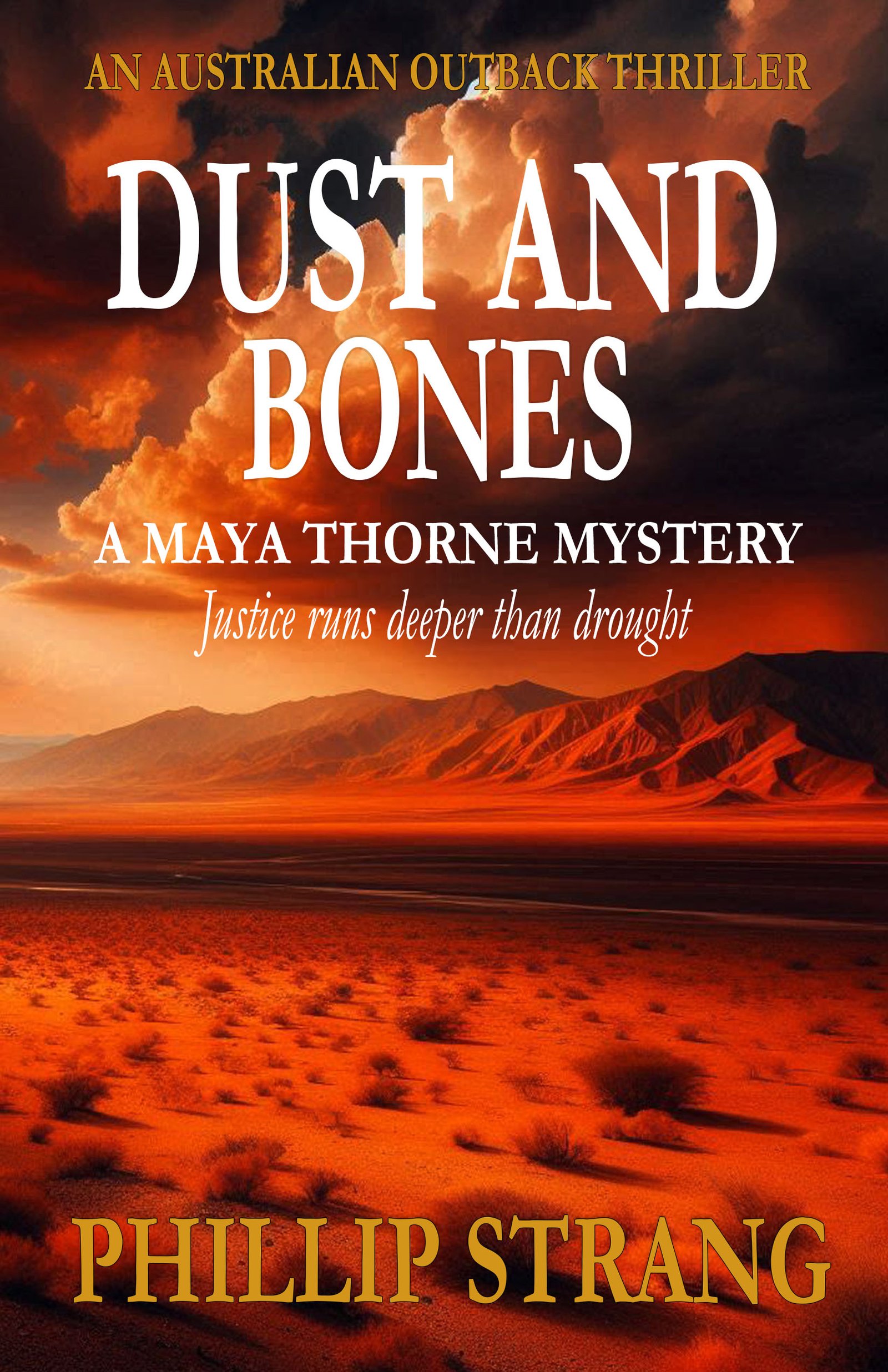
A MAYA THORNE MYSTERY
Get Dust and Bones Free
Justice runs deeper than drought.
Red dust. Shallow graves. A detective who hunts killers where the law runs thin and the nearest help is two hundred miles away.
Send Me the BookYou'll also receive occasional new release emails. Unsubscribe anytime. No spam, ever.
As an Amazon Associate, Phillip Strang earns from qualifying purchases. This page contains affiliate links — buying through them costs you nothing extra.