
The decision to write crime fiction under a pen name extends far beyond simple anonymity—it fundamentally shapes how you approach genre boundaries, reader expectations, and the practical mechanics of building a sustainable writing career. Every crime writer faces this choice at some point, whether launching their first series or expanding into new subgenres that might confuse their established readership.
Across eighteen series and more than 150 novels, I have found that the pen name question becomes less about hiding identity and more about creating clear pathways for readers to find exactly the type of crime fiction they crave. The choice demands careful consideration of both creative freedom and commercial strategy.
Genre Flexibility and Reader Expectations
Crime fiction readers develop fierce loyalties to specific subgenres, and violating those expectations can damage an author’s reputation faster than a poorly plotted alibi. When I developed the Steve Case espionage series, the international terrorism focus required a different tone and pacing than my police procedurals. Readers who expect gritty London investigations don’t necessarily want globe-trotting spy narratives, and attempting to serve both audiences under one name creates confusion.
The psychological thriller writer who suddenly produces cozy mysteries faces a similar challenge. Readers invest in an author’s voice and approach, not just their storytelling ability. A pen name allows you to develop distinct voices for distinct audiences without forcing existing readers to follow you into territory they never signed up for. This isn’t about limiting creativity—it’s about respecting the implicit contract you’ve established with your readership.
Consider the difference between police procedural novels and psychological thrillers. The former demands methodical investigation, institutional hierarchy, and procedural accuracy. The latter thrives on unreliable narrators, psychological manipulation, and internal conflict. Attempting to blend these approaches under one author brand often results in neither audience feeling fully satisfied.
How I Approach the Pen Name Decision
My process starts with a simple question: does this new project serve the same reader who enjoys my established work? When developing the Maya Thorne Australian outback crime series, the remote settings and cultural specificity differed significantly from my London-based investigations, but the core appeal—methodical detection and character-driven mysteries—remained consistent. Same author name worked.
However, when I consider projects that shift toward espionage thrillers with heavy action sequences and international settings, the audience expectations change dramatically. The reader seeking psychological depth in a countryside mystery isn’t necessarily the same person craving high-stakes international intrigue. This divergence signals the need for separate author identities.
I also examine the practical publishing timeline. If you’re producing multiple series simultaneously, pen names allow you to maintain consistent release schedules for each audience without overwhelming any single readership. Publishing a police procedural and a spy thriller in the same month under one name forces readers to choose, potentially reducing sales for both books.
The decision ultimately comes down to sustainable career management. Each author name becomes a distinct brand with its own audience, marketing approach, and creative constraints. This isn’t about deception—it’s about clarity.
Practical Publishing and Marketing Considerations
The mechanics of managing multiple author identities demand serious consideration before you commit to a pen name strategy. Each name requires separate social media presence, author websites, and marketing approaches. This isn’t simply a matter of creating different accounts—you’re building distinct author brands with unique voices and audience engagement strategies.
Distribution becomes more complex when you’re managing multiple author identities across different platforms. Amazon’s algorithms, for instance, don’t automatically connect readers of one pen name to another, even when the same person writes both series. This can work to your advantage by preventing audience crossover confusion, but it also means starting from zero with each new identity.
Financial tracking requires careful organization when royalties arrive under different names. Tax considerations vary by jurisdiction, but maintaining clear records becomes essential when multiple author identities generate income. Professional accounting advice often proves worthwhile when pen name strategies become central to your publishing approach.
The promotional burden multiplies with each additional author identity. Book launches, social media engagement, and reader communication all require separate attention under each name. Consider whether you can realistically maintain the promotional activity that each author brand demands while still producing quality fiction.
Common Mistakes That Undermine Pen Name Strategy
The most frequent error involves choosing pen names too similar to your established identity or to each other. Names like ‘John Parker’ and ‘Jon Parker’ create confusion rather than clarity. Readers notice these similarities, and the strategy backfires by suggesting attempted deception rather than clear genre differentiation.
Many authors underestimate the long-term commitment required to maintain separate identities effectively. Starting strong with distinct social media presence and marketing, then gradually allowing the boundaries to blur, confuses readers and defeats the original purpose. Consistency in maintaining separate author brands proves as important as consistency in writing quality.
Another critical mistake involves failing to consider the legal and contractual implications of multiple author names. Publishing contracts, foreign rights deals, and film option agreements become more complex when they involve pen names. Some authors discover too late that their publisher’s contract language doesn’t adequately address pen name ownership and control.
The temptation to cross-promote between pen names often undermines the entire strategy. Mentioning your police procedural series in your spy thriller author bio defeats the purpose of maintaining separate identities. Readers who wanted clear genre boundaries feel manipulated, and you lose the advantages that justified the pen name approach initially.
Long-term Career Strategy and Identity Management
Successful pen name strategies require thinking beyond individual book releases toward sustainable career development. Each author identity needs room to grow, which means considering not just your current project but the potential for multiple books and series under each name. A pen name that works for one standalone thriller might not support a long-running series with evolving character development and expanding mythology.
The relationship between your various author identities will evolve as your career develops. What begins as clear genre separation might eventually allow for strategic revelation of connections between pen names, but only after each identity has established its own solid readership. This requires patience and long-term thinking that many authors find challenging in an industry that often prioritizes immediate results.
Consider how your pen name strategy aligns with your broader career goals. If you aspire to awards recognition, speaking engagements, or media attention, managing multiple identities becomes more complex. Some opportunities might require revealing connections between pen names, which could alter the dynamics you’ve carefully established with different reader communities.
The digital nature of modern publishing creates permanent records of pen name decisions. Unlike previous generations of authors who could more easily manage separate identities, today’s writers must assume that connections between pen names will eventually become public knowledge. Plan your strategy accordingly, ensuring that any eventual revelation enhances rather than undermines your author brands.
Conclusion
Writing crime fiction under a pen name demands clear strategic thinking about audience expectations, genre boundaries, and practical career management. The decision should serve both creative freedom and commercial sustainability, not merely provide convenient separation between different types of stories.
About Phillip Strang
Phillip Strang is an Australian crime and thriller novelist. Across eighteen series and more than 150 novels, his work spans London police procedurals (DCI Isaac Cook), UK investigations (DI Tremayne), Australian outback crime (Maya Thorne), FBI thrillers (Alex Harlan), Scottish Highland mysteries (DI Sarah Lynch), and espionage (Steve Case). Learn more about Phillip or browse his complete catalogue on Amazon.
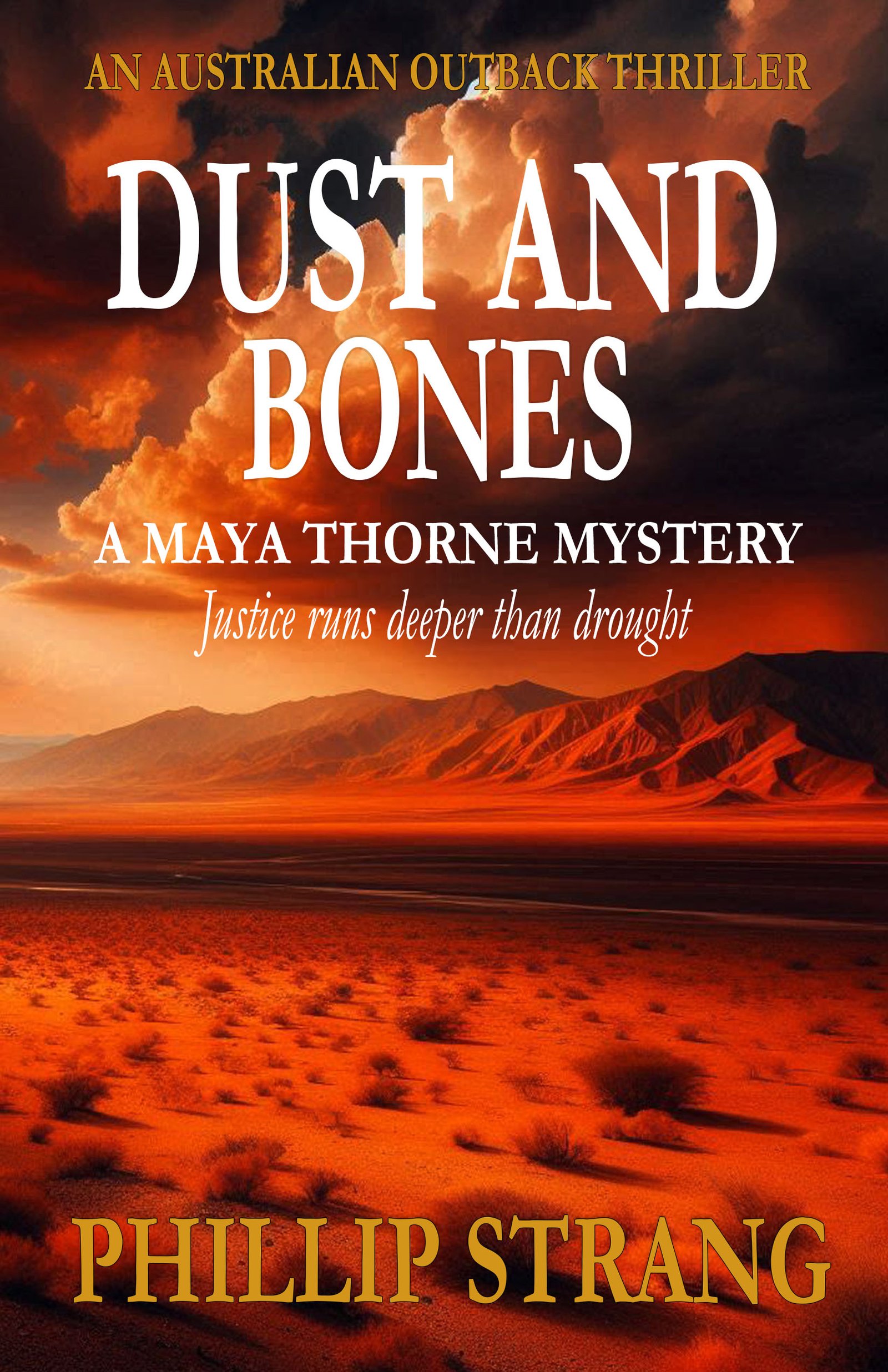
A MAYA THORNE MYSTERY
Get Dust and Bones Free
Justice runs deeper than drought.
Red dust. Shallow graves. A detective who hunts killers where the law runs thin and the nearest help is two hundred miles away.
Send Me the BookYou'll also receive occasional new release emails. Unsubscribe anytime. No spam, ever.
As an Amazon Associate, Phillip Strang earns from qualifying purchases. This page contains affiliate links — buying through them costs you nothing extra.