
Every crime writer faces the same fundamental question: do you plot everything in advance, or do you discover the story as you write? The answer isn’t as simple as choosing one camp over the other, because the best crime novels often emerge from a careful balance between structure and spontaneity.
Across eighteen series and more than 150 novels, I’ve found that the most effective approach combines strategic planning with room for discovery. The key is knowing what must be planned and what can be left to emerge naturally during the writing process.
The Foundation Elements That Demand Planning
Certain elements of a crime novel cannot be left to chance. The crime itself, the method, and the perpetrator’s identity require upfront decisions that will drive every subsequent plot point. I learned this the hard way in my early DI Tremayne novels, where attempting to discover the murderer alongside my detective led to plot holes large enough to drive a forensics van through.
The victim’s backstory and the web of relationships surrounding them need extensive planning. These connections form the foundation of your suspect pool and provide the motives that make your story believable. When I’m developing a new police procedural, I spend considerable time mapping out who had access, opportunity, and reason to commit the crime.
The investigative structure also requires advance planning. Whether you’re writing a police procedural, private detective story, or amateur sleuth mystery, the investigative process must follow logical steps that readers can follow. The clues need to be planted strategically, red herrings positioned deliberately, and the revelation paced to maintain tension without frustrating readers.
Where Discovery Writing Serves Crime Fiction
While the crime’s mechanics demand planning, the emotional journey of your characters benefits from discovery writing. Some of my strongest character moments in the DCI Isaac Cook series emerged spontaneously during writing sessions, when I allowed Isaac to react authentically to unexpected developments rather than forcing predetermined responses.
Dialogue often improves when you let characters speak naturally rather than delivering scripted exposition. During interrogation scenes, I frequently discover that suspects reveal information in ways I hadn’t planned, leading to more authentic exchanges that feel less mechanical than predetermined question-and-answer sequences.
The investigative dead ends and false leads that create realistic police work often emerge through discovery writing. Real investigations rarely proceed in straight lines, and allowing your detective to pursue hunches that don’t pan out adds authenticity to thriller plotting.
My Working Process: Structure with Flexibility
I begin each novel with what I call a ‘skeleton outline’ that establishes the crime, the perpetrator, the primary motive, and three key evidence points that will drive the investigation forward. This gives me enough structure to avoid writing myself into corners while leaving room for organic development.
Next, I map out the victim’s life in detail, creating a timeline of relationships, conflicts, and secrets that extends well beyond what will appear in the finished novel. This background work provides a rich source of material for discovery during writing, but it’s grounded in planned consistency.
For the investigation itself, I plan the major turning points but leave the paths between them flexible. In my Maya Thorne Australian outback crime series, I know where each investigation needs to arrive, but I often discover unexpected routes through the harsh landscape that enhance both the mystery and the setting.
I also maintain what I call a ‘discovery document’ alongside each manuscript, where I record spontaneous insights, character revelations, or plot possibilities that emerge during writing sessions. This prevents good ideas from being lost while maintaining the planned structure.
Common Mistakes That Derail Crime Novels
Over-planning can create wooden, mechanical stories where every conversation feels scripted and every revelation lands with a thud instead of genuine surprise. I’ve seen manuscripts where writers planned every line of dialogue, resulting in characters who sound like they’re reading from legal depositions rather than having authentic human interactions.
Conversely, under-planning leads to investigative chaos where clues appear randomly, suspects emerge without proper setup, and the solution feels arbitrary rather than inevitable. One common error is the ‘surprise perpetrator’ who appears in the final chapters without sufficient groundwork in the story’s first half.
Many writers also mistake complexity for sophistication, creating overly intricate plots with multiple murders, conspiracies, and red herrings that confuse rather than engage readers. The strongest crime novels often feature relatively simple crimes with complex human motivations, not the reverse.
Another frequent mistake is failing to plant evidence and clues consistently throughout the narrative. Discovery writers sometimes forget to establish crucial information early enough, while strict outliners can make clue placement feel too obviously constructed.
Adapting Your Approach to Different Subgenres
Different types of crime fiction benefit from different planning approaches. Psychological thrillers require more character planning and less procedural structure, while espionage thrillers demand extensive world-building and plot coordination that leaves less room for discovery writing.
Cozy mysteries can accommodate more discovery in the personal relationships and community dynamics, but the puzzle elements need careful planning to ensure fair play with readers. Police procedurals require planned forensic details and investigative protocols, but benefit from discovered character interactions and workplace dynamics.
Series writing adds another layer of complexity, as character development arcs spanning multiple books require long-term planning, while individual case details can be discovered book by book. The key is maintaining series consistency while allowing characters to grow and surprise both writer and readers.
Conclusion
The most compelling crime novels emerge from strategic planning that provides solid foundations combined with discovery writing that brings characters and situations to life. Neither pure plotting nor complete discovery serves crime fiction as well as a thoughtful combination of both approaches.
About Phillip Strang
Phillip Strang is an Australian crime and thriller novelist. Across eighteen series and more than 150 novels, his work spans London police procedurals (DCI Isaac Cook), UK investigations (DI Tremayne), Australian outback crime (Maya Thorne), FBI thrillers (Alex Harlan), Scottish Highland mysteries (DI Sarah Lynch), and espionage (Steve Case). Learn more about Phillip or browse his complete catalogue on Amazon.
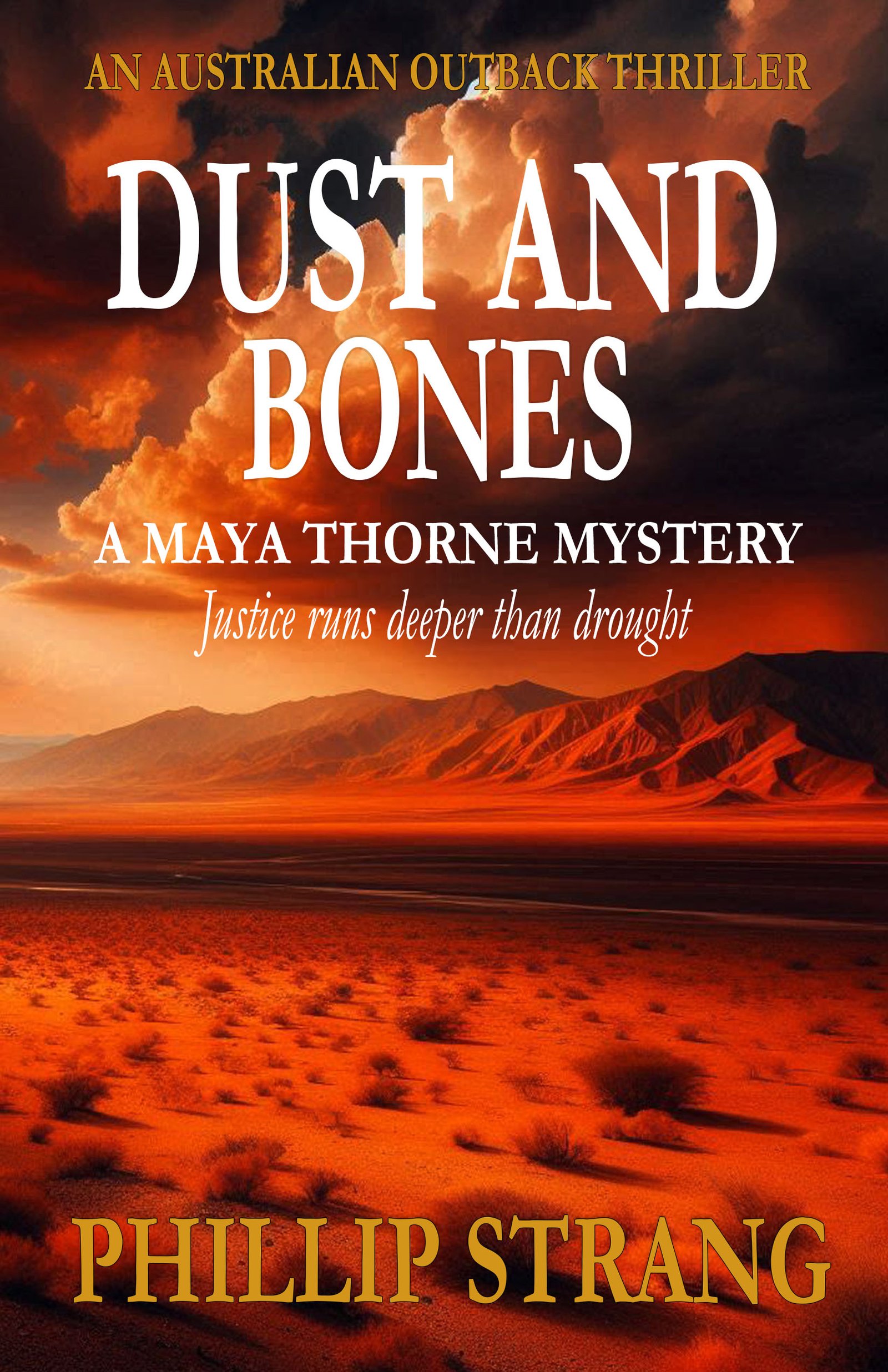
A MAYA THORNE MYSTERY
Get Dust and Bones Free
Justice runs deeper than drought.
Red dust. Shallow graves. A detective who hunts killers where the law runs thin and the nearest help is two hundred miles away.
Send Me the BookYou'll also receive occasional new release emails. Unsubscribe anytime. No spam, ever.
As an Amazon Associate, Phillip Strang earns from qualifying purchases. This page contains affiliate links — buying through them costs you nothing extra.