
The first book in a crime series carries a dual burden: it must function as a complete, satisfying novel while simultaneously laying groundwork for stories that may not unfold for years. Most authors get seduced by the immediate narrative and shortchange the foundation work, creating problems that compound with each subsequent book. The smartest investment you can make is treating your debut volume as architectural blueprints rather than just another standalone story.
Across eighteen series and more than 150 novels, I have found that the decisions made in book one determine whether a series thrives or stumbles by book five. Every choice about character backstory, setting detail, and thematic direction either opens doors or slams them shut for future installments.
Character Architecture Beyond the Surface
Your protagonist needs layers you won’t explore until book three or four, but those layers must exist from day one. When I created DCI Isaac Cook, I didn’t just give him current conflicts—I built a personal history with specific traumas, relationships, and professional mistakes that could surface organically across multiple books. His relationship with his ex-wife wasn’t just backstory flavor; it was a narrative thread I could pull when the series needed emotional depth.
The mistake most authors make is creating characters who are fully resolved by their first outing. Your detective solves the case, conquers their demons, finds love—where do you go from there? Instead, give your protagonist wounds that heal slowly, relationships that evolve messily, and professional challenges that escalate rather than resolve. The best police procedural novels understand that character development is a marathon, not a sprint.
Supporting characters deserve the same treatment. The pathologist who appears for two scenes in book one might become a major player by book six. Build them with enough specificity and contradiction that they can carry larger narrative weight when needed. I’ve learned to create detailed character sheets for even minor players, because you never know which relationships will prove most fertile for future stories.
World-Building with Expansion in Mind
Setting isn’t just backdrop—it’s your series’ renewable resource. Every location should offer multiple story possibilities, every institution should contain enough complexity to generate fresh conflicts. When I developed the Australian outback setting for Maya Thorne, I researched not just the geography but the social dynamics, economic pressures, and cultural tensions that could fuel different types of crimes across multiple books.
Think systematically about your fictional world’s power structures. Who holds influence? What institutions matter? Where do interests conflict? A small town might seem limiting until you map out the relationships between local government, business interests, religious communities, and generational divides. Each intersection represents potential story material.
Geography matters more than most authors realize. Your detective’s beat should contain variety—upscale neighborhoods and rough areas, commercial districts and residential zones, old architecture and new development. This isn’t just scenic diversity; different environments generate different types of crimes and attract different character types. Plan your territory like you’re going to be working it for twenty books.
How I Actually Approach Series Planning
My process begins before I write a single scene. I create what I call a series bible—a document that maps character arcs across five books, catalogs setting details and their story potential, and tracks thematic threads I want to develop. This isn’t rigid plotting; it’s infrastructure that supports spontaneous creativity.
For the Steve Case espionage series, I spent weeks researching international intelligence structures, geopolitical pressure points, and technological capabilities before crafting the first scene. I needed to understand not just what threats Case would face in book one, but what kinds of enemies and allies could emerge across multiple installments. The best espionage thrillers require this kind of systematic world-building.
I also maintain a continuity tracker from book one forward. Every character detail, every location description, every timeline reference gets logged. This isn’t obsessive-compulsive behavior—it’s professional necessity. Readers notice inconsistencies, and nothing destroys credibility faster than a detective who lives in different neighborhoods across books or whose personal history keeps shifting.
The most important tool is the ‘future seeds’ document. These are story possibilities, character complications, and plot threads that I plant in early books but don’t immediately develop. A throwaway mention of the protagonist’s military service might become central to book four. A minor character’s gambling problem might explode into major consequences later. I track these possibilities so they’re available when I need fresh material.
Avoiding the Series-Killing Mistakes
The deadliest error is solving too much too quickly. Authors get excited about their dramatic revelations and blow through material that should sustain multiple books. Your protagonist’s dark secret shouldn’t be fully revealed in book two. The corruption at the heart of their department doesn’t need complete exposure by book three. Pace your revelations like you’re rationing water in the desert.
Another killer mistake is making your detective too competent. Perfect protagonists have nowhere to grow, and readers lose investment when outcomes feel predetermined. Give your lead genuine weaknesses that create real consequences. Let them make mistakes that matter. When I write DI Tremayne investigations, his stubborn streak and poor people skills create ongoing problems that affect multiple cases across different books.
Location overuse will exhaust your setting faster than you expect. Don’t set three murders in the same nightclub just because you researched it thoroughly. Spread your dramatic incidents across your fictional geography. Save the biggest, most obvious dramatic locations for when you really need them. The abandoned warehouse and the isolated mansion are finite resources.
Character relationship mistakes compound ruthlessly. Kill off a supporting character in book one, and they can’t provide complications in book five. Resolve a romantic tension too neatly, and you lose ongoing narrative drive. Marry off your detective, and you’ve changed their entire operational dynamic. Every relationship decision has series-wide implications.
Thematic Threads and Recurring Motifs
Strong series develop thematic consistency that goes deeper than repeated characters and settings. The questions your first book asks about justice, loyalty, corruption, or redemption should echo through subsequent installments with increasing sophistication. This isn’t about repeating yourself—it’s about deepening exploration of ideas that matter to both you and your readers.
I’ve found that the most resonant series center on moral ambiguities rather than clear-cut conflicts. The tension between personal loyalty and professional duty that drives many character-driven novels provides richer story material than simple good-versus-evil frameworks. These complex moral territories can sustain exploration across many books without becoming repetitive.
Establish your series’ moral universe early and consistently. How corrupt is the system your detective works within? How much compromise is acceptable in pursuit of justice? What lines can never be crossed? These parameters should be tested and explored across multiple books, but they need consistent internal logic from the beginning.
Conclusion
Planning a crime series requires thinking like both an architect and a gardener—designing strong foundations while leaving room for organic growth. The work you do in book one, the characters you develop, the world you build, and the themes you establish will either support or constrain everything that follows.
About Phillip Strang
Phillip Strang is an Australian crime and thriller novelist. Across eighteen series and more than 150 novels, his work spans London police procedurals (DCI Isaac Cook), UK investigations (DI Tremayne), Australian outback crime (Maya Thorne), FBI thrillers (Alex Harlan), Scottish Highland mysteries (DI Sarah Lynch), and espionage (Steve Case). Learn more about Phillip or browse his complete catalogue on Amazon.
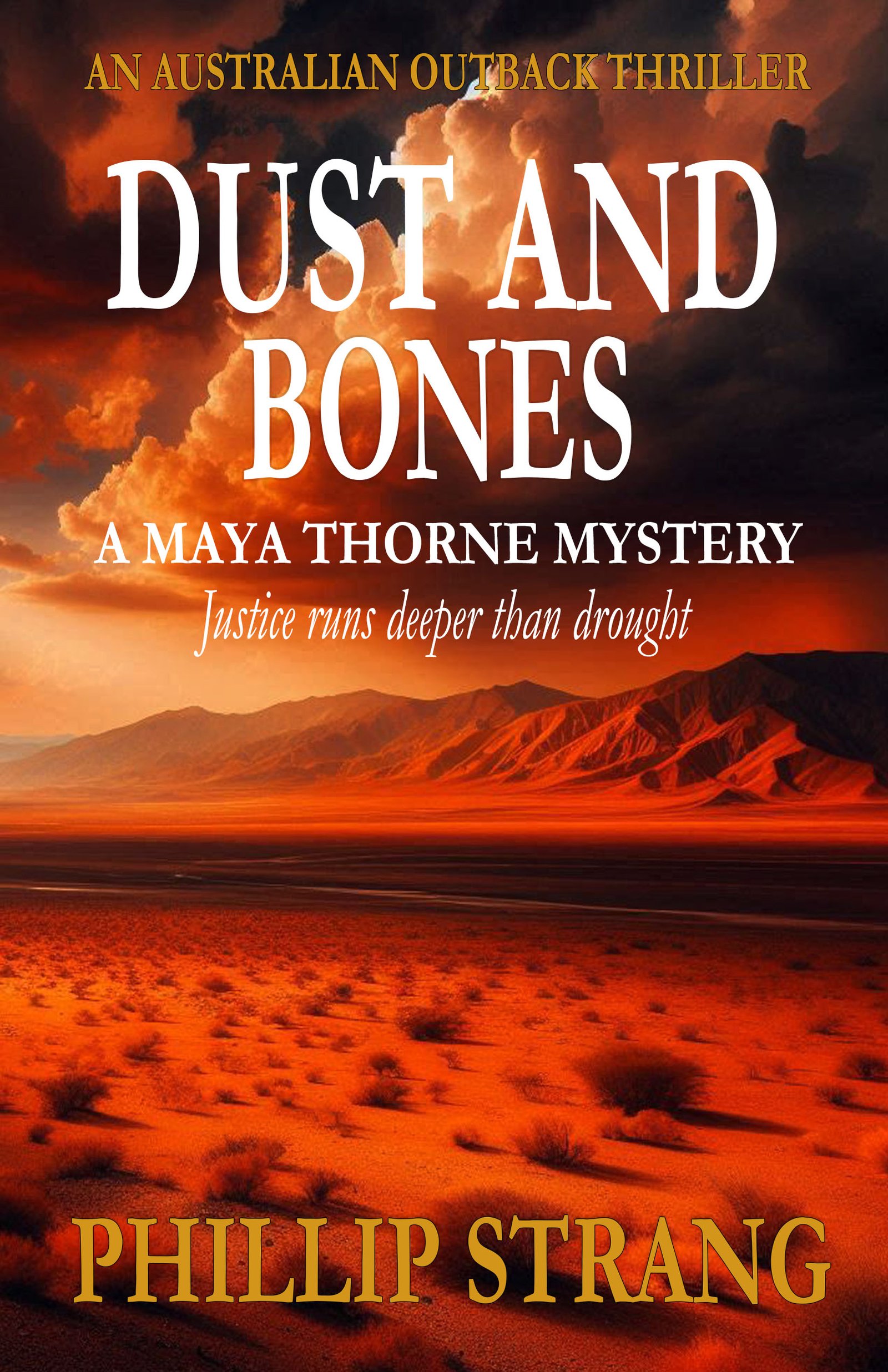
A MAYA THORNE MYSTERY
Get Dust and Bones Free
Justice runs deeper than drought.
Red dust. Shallow graves. A detective who hunts killers where the law runs thin and the nearest help is two hundred miles away.
Send Me the BookYou'll also receive occasional new release emails. Unsubscribe anytime. No spam, ever.
As an Amazon Associate, Phillip Strang earns from qualifying purchases. This page contains affiliate links — buying through them costs you nothing extra.