
Writing crime fiction in remote Australian settings presents unique challenges that can make or break your detective story. The vastness of the landscape, the isolation of characters, and the psychological pressure of being cut off from help create opportunities for tension that urban settings simply cannot match.
Across eighteen series and more than 150 novels I have found that remote settings demand a completely different approach to pacing, character development, and plot structure. The isolation becomes a character itself, shaping every decision your detective makes and every clue they uncover.
Understanding the Psychology of Isolation
Remote Australia does something to people that Manhattan or London cannot. It strips away the veneer of civilization and forces characters to confront their fundamental nature. Your detective in the outback cannot call for backup, cannot rely on forensic labs twenty minutes away, and cannot disappear into a crowd when things go wrong. This isolation must inform every aspect of their characterization.
In my Maya Thorne series, I deliberately place my protagonist in situations where she must rely entirely on her instincts and local knowledge. The nearest town might be three hours away, mobile phone coverage is non-existent, and the harsh environment poses as much threat as any criminal. This forces a different kind of detective work – one that relies on reading people, understanding the land, and making decisions with incomplete information.
The psychological pressure of isolation affects not just your detective but every character in the story. Suspects cannot easily flee, witnesses cannot hide in anonymity, and everyone knows everyone else’s business. This creates a pressure cooker environment where secrets become harder to keep and motivations more intense.
Building Authentic Atmosphere Through Landscape
Remote Australia is not just a backdrop – it is an active force in your story. The red dirt, the endless horizons, the brutal heat or sudden storms all influence how your detective operates and how crimes unfold. Too many writers treat the outback as exotic scenery rather than understanding how it shapes human behavior and criminal activity.
The landscape dictates logistics in ways that urban writers often miss. Bodies decompose differently in extreme heat. Evidence gets buried by dust storms or washed away by flash floods. Vehicle tracks in red dirt tell stories that footprints on concrete never could. Your detective must understand these environmental factors because they directly impact the investigation.
Water becomes crucial – not just for survival but as a focal point for human activity. In remote Australia, crime often centers around water sources, mining operations, cattle stations, or the few roads that connect isolated communities. These become the natural gathering points where your detective will find both information and suspects.
How I Actually Approach Remote Settings
When I begin plotting a remote Australia story, I start with the map. I need to understand the distances, the terrain, and the human infrastructure before I can believably place a crime and a detective. The setting must create genuine obstacles and opportunities that drive the plot forward.
I research the specific challenges of the location – seasonal weather patterns, communication limitations, transportation difficulties, and the social dynamics of isolated communities. In remote Australia, the local publican, the station manager, or the Aboriginal elder might hold more real authority than any official police presence.
The timeline of investigation becomes crucial in remote settings. In my experience writing police procedural novels, urban detectives can gather evidence quickly through multiple sources. In remote Australia, your detective might spend two days driving to interview one witness, only to find they have left for a cattle muster that will keep them unreachable for weeks.
I also pay attention to the cultural dynamics. Remote Australian communities have complex relationships with authority, particular histories with law enforcement, and social structures that an outsider detective must navigate carefully. These are not generic rural communities – they have specific Australian characteristics that must inform how your detective approaches the investigation.
Common Mistakes That Kill Authenticity
The biggest error I see is writers treating remote Australia as simply ‘countryside with dangerous animals.’ They focus on the exotic threats – snakes, spiders, crocodiles – while missing the real challenges that shape how people live and die in these places. A detective worried about every spider web loses credibility with readers who understand that locals navigate these environments routinely.
Another fatal mistake is maintaining urban investigation pacing in a remote setting. Your detective cannot interview six suspects in one afternoon when they live hundreds of kilometers apart. They cannot access databases instantly or call in specialist teams. The investigation must unfold at a pace determined by the tyranny of distance, not the demands of a fast-moving plot.
Writers also frequently misunderstand the social dynamics. They create isolated communities full of suspicious, hostile locals who all harbor dark secrets. Real remote communities are more complex – they might be protective of their privacy but also desperate for outside contact. They have internal hierarchies and relationships that an experienced detective learns to read and respect.
Some authors make their detectives too self-reliant, turning them into action heroes who can survive anything the outback throws at them. This misses the point entirely. The best remote setting stories come from detectives who understand their limitations, who know when to ask for local help, and who respect the environment they are working in. Even in my action thriller novels, the smart characters are those who work with the landscape rather than against it.
Creating Believable Crimes for Remote Settings
Not every crime works in remote Australia. Complex financial fraud requiring multiple shell companies feels out of place in a community of two hundred people where everyone knows each other’s business. The crimes that work best in these settings grow organically from the environment and the social dynamics.
Land disputes, mining rights, water access, and family inheritances create believable motives for murder in remote areas. So do the pressures of isolation – domestic violence escalating without intervention, mental health crises without support systems, or conflicts over resources becoming deadly when there is no authority to mediate.
The methods of murder must also fit the setting. Poison makes sense when the nearest hospital is hours away. So does staging accidents in an environment where accidents happen regularly and investigation resources are limited. Your detective needs to distinguish between genuine accidents and carefully planned murders in settings where both are equally plausible.
Consider how the crime reflects the broader themes of isolation and survival. The best remote setting crimes are not just puzzles to be solved but examinations of what happens to human nature when stripped of urban constraints. They explore how people adapt, survive, and sometimes break under the pressure of isolation.
Conclusion
Writing effective crime fiction in remote Australian settings requires understanding that isolation shapes everything – from character motivation to investigation methods to the pace of revelation. The landscape and the social dynamics must work together to create authentic challenges that drive your story forward while respecting the realities of how people actually live and die in these remarkable but unforgiving places.
About Phillip Strang
Phillip Strang is an Australian crime and thriller novelist. Across eighteen series and more than 150 novels, his work spans London police procedurals (DCI Isaac Cook), UK investigations (DI Tremayne), Australian outback crime (Maya Thorne), FBI thrillers (Alex Harlan), Scottish Highland mysteries (DI Sarah Lynch), and espionage (Steve Case). Learn more about Phillip or browse his complete catalogue on Amazon.
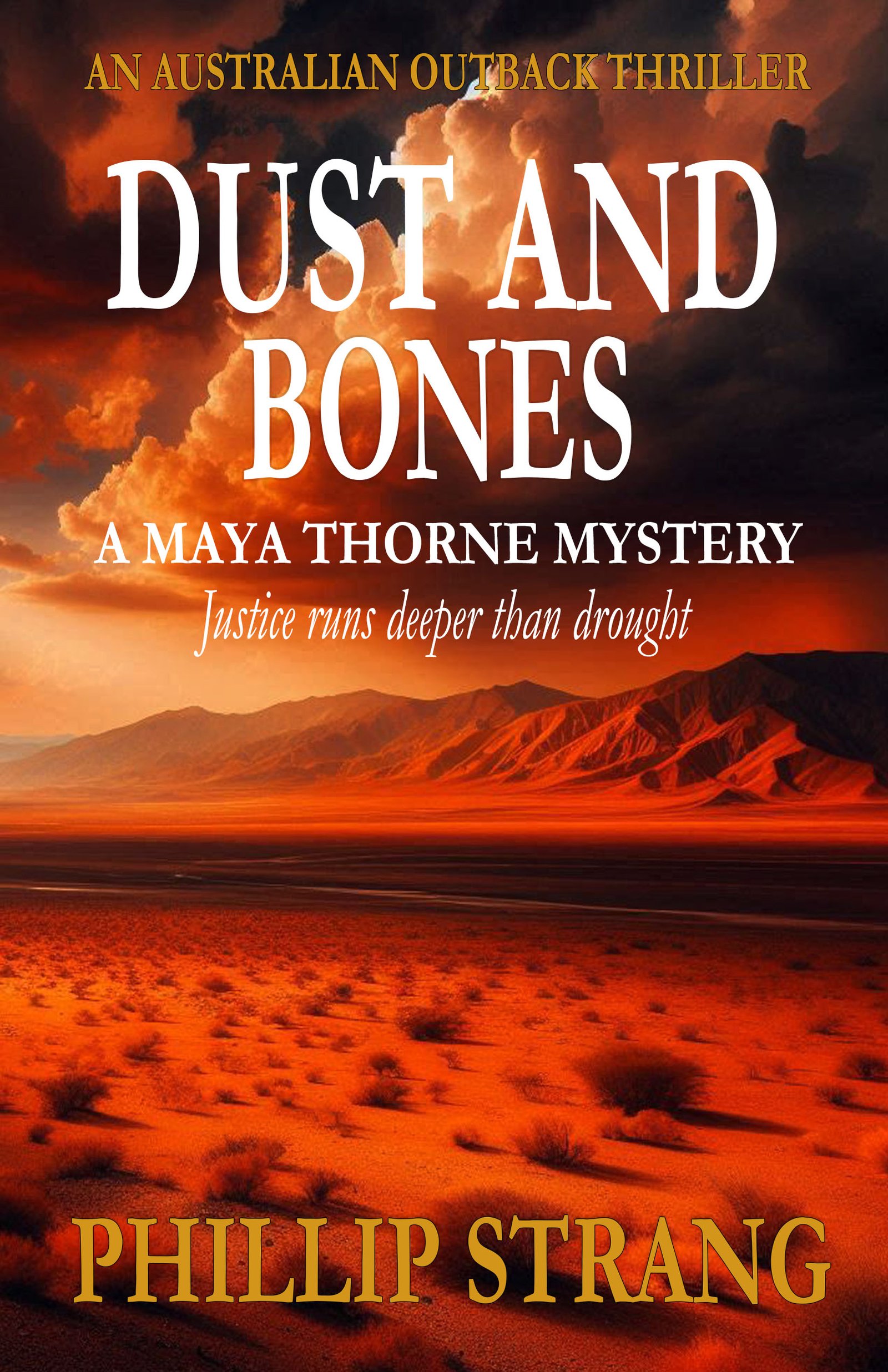
A MAYA THORNE MYSTERY
Get Dust and Bones Free
Justice runs deeper than drought.
Red dust. Shallow graves. A detective who hunts killers where the law runs thin and the nearest help is two hundred miles away.
Send Me the BookYou'll also receive occasional new release emails. Unsubscribe anytime. No spam, ever.
As an Amazon Associate, Phillip Strang earns from qualifying purchases. This page contains affiliate links — buying through them costs you nothing extra.