
Remote island settings present unique challenges that separate competent crime writers from exceptional ones. The interplay between weather systems and access limitations can either elevate your thriller into unforgettable territory or expose fundamental weaknesses in plotting and character development.
Across eighteen series and more than 150 novels, I’ve found that remote islands demand a level of environmental authenticity that mainland settings often forgive. Weather isn’t decoration—it’s a character that can trap your detective, destroy evidence, or force confrontations that wouldn’t occur elsewhere.
Weather as Plot Architecture
Weather systems on remote islands operate with predictable unpredictability. Fog banks roll in within hours. Storm fronts can isolate locations for days. Tidal patterns restrict movement to specific windows. These aren’t obstacles to work around—they’re structural elements that should drive your plot forward. When I developed scenarios for my DI Sarah Lynch series in the Scottish Highlands, I realized that weather patterns needed to feel as inevitable as the crime itself. A detective arriving just as communications fail isn’t coincidence if you’ve established the seasonal storm patterns three chapters earlier. The key lies in establishing meteorological rhythms early enough that when weather becomes crucial, it feels organic rather than convenient.
Access Points and Escape Routes
Every remote island has a finite number of ways on and off. Ferries run on schedules. Private boats require fuel and weather windows. Helicopters need landing zones and visibility. Smart crime writers map these access points before they plot their first murder. The criminal’s escape plan must account for the same limitations that trap your investigator. I’ve learned that readers unconsciously track these logistics, and they’ll abandon your book the moment transportation becomes magically convenient. Police procedurals particularly suffer when writers ignore the bureaucratic complications of jurisdictional boundaries. Which agency responds when a body appears on an island that straddles county lines? How long does it take to get forensics equipment to a location accessible only by boat?
My Approach to Island Isolation
When I’m developing an island-based crime story, I start with maps and weather data rather than character sketches. I need to understand seasonal patterns, ferry schedules, and communication infrastructure before I know where to place my crime. The island’s limitations should create the story’s pressure points. In my Maya Thorne series, dealing with remote Australian locations, I’ve discovered that isolation works best when it’s layered. Geographic remoteness combines with technological limitations and seasonal access restrictions to create mounting tension. The detective can’t simply call for backup—the radio range is limited, the satellite phone battery is dying, and the next supply boat isn’t due for four days. These constraints force creative solutions and heighten stakes organically.
Environmental Research and Authenticity
Remote islands have distinct ecosystems, weather patterns, and seasonal variations that readers familiar with coastal environments will immediately recognize or reject. Wind patterns affect how sound travels—crucial when your plot depends on someone overhearing a conversation. Tidal pools can hide evidence or reveal it depending on your understanding of lunar cycles. Salt air corrodes electronics faster than mainland environments, affecting both criminal methodology and investigative techniques. I research actual locations even when creating fictional islands, borrowing geological features, weather patterns, and access limitations from real places. The specificity creates believability. When fog forms over your fictional island, it should behave like fog over the Hebrides or the Channel Islands, following meteorological logic rather than plot convenience.
Common Mistakes That Kill Credibility
The most frequent error involves treating weather as a switch rather than a system. Writers have storms appear precisely when needed without establishing atmospheric conditions that make sudden weather changes believable. Barometric pressure drops, wind shifts, and temperature changes precede significant weather events. Similarly, many crime writers underestimate how quickly weather information spreads in small island communities. Local residents monitor conditions obsessively and share information constantly. Your detective can’t be surprised by a storm that every fisherman saw coming two days earlier. Communication failures present another credibility trap. Modern islands aren’t completely cut off—they have multiple communication systems with different failure points. Cell towers, landlines, radio systems, and satellite connections don’t all fail simultaneously unless you’ve established a catastrophic event that affects infrastructure comprehensively. Action thrillers particularly suffer when writers assume that remote equals primitive, ignoring the sophisticated technology that keeps modern island communities connected to mainland resources.
Seasonal Variations and Long-Term Planning
Islands experience dramatic seasonal variations in accessibility, weather patterns, and population density. Summer brings tourists, good weather, and frequent transport connections. Winter often means skeleton crews, harsh conditions, and limited access. Your crime’s timing should reflect these seasonal realities. A murder investigation that begins in autumn might face completely different challenges as winter weather systems move in. Ferry schedules reduce, daylight hours shrink, and emergency response times extend dramatically. These seasonal factors should influence both criminal methodology and investigative approaches. Professional criminals familiar with island environments time their activities around seasonal vulnerabilities. Law enforcement agencies adjust resources and response protocols based on seasonal access limitations.
Conclusion
Remote island settings succeed when weather and access limitations feel like natural consequences of geography rather than plot conveniences. The environment should create authentic pressure that forces characters into decisions they wouldn’t make elsewhere, revealing aspects of personality and motivation that drive compelling crime fiction forward.
About Phillip Strang
Phillip Strang is an Australian crime and thriller novelist. Across eighteen series and more than 150 novels, his work spans London police procedurals (DCI Isaac Cook), UK investigations (DI Tremayne), Australian outback crime (Maya Thorne), FBI thrillers (Alex Harlan), Scottish Highland mysteries (DI Sarah Lynch), and espionage (Steve Case). Learn more about Phillip or browse his complete catalogue on Amazon.
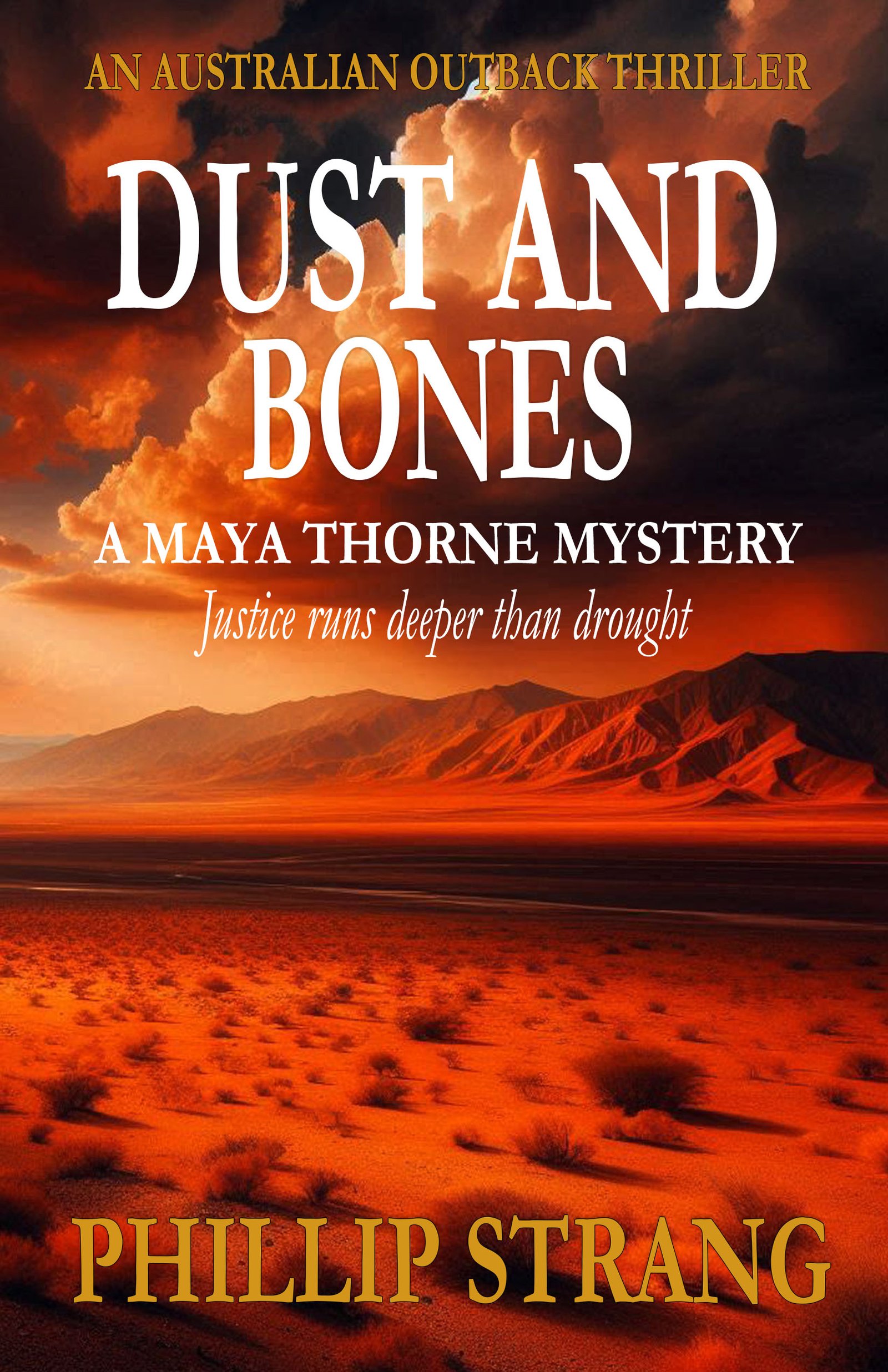
A MAYA THORNE MYSTERY
Get Dust and Bones Free
Justice runs deeper than drought.
Red dust. Shallow graves. A detective who hunts killers where the law runs thin and the nearest help is two hundred miles away.
Send Me the BookYou'll also receive occasional new release emails. Unsubscribe anytime. No spam, ever.
As an Amazon Associate, Phillip Strang earns from qualifying purchases. This page contains affiliate links — buying through them costs you nothing extra.