
The autopsy scene demands precision, but readers don’t need a medical degree to follow your plot. Crime writers face the perpetual challenge of balancing authentic forensic detail with narrative momentum, knowing that too much research can bog down a story while too little undermines credibility.
Across eighteen series and more than 150 novels, I’ve learned that researching medical and forensic detail is less about becoming an expert and more about knowing what questions to ask. The real craft lies in understanding which details serve your story and which ones belong in textbooks.
Essential Sources That Actually Work
Professional contacts trump internet searches every time. Retired police officers, forensic technicians, and medical examiners often prove generous with their knowledge when approached respectfully. I’ve built relationships with several retired detectives who’ve helped authenticate the procedural elements in my DCI Isaac Cook series. These conversations reveal not just the technical aspects but the human reactions that make scenes believable.
Medical textbooks provide foundational knowledge, but autopsy manuals and forensic pathology guides offer the specific details crime writers need. University libraries often grant public access to these resources. Professional journals, while dense, contain case studies that illuminate how theory translates to practice. The key is extracting the narrative-relevant information without drowning in academic jargon.
Police training materials and procedural manuals, often available through freedom of information requests, provide authentic language and protocols. These documents reveal how professionals actually communicate, which proves invaluable when writing dialogue between forensic specialists and investigators.
My Research Process: Targeted and Efficient
I begin with the story requirements, not the research. What does this scene need to accomplish? If a character discovers a body, I need enough detail to establish cause of death and timeline without deriving the entire decomposition process. This story-first approach prevents research rabbit holes that consume writing time without improving the manuscript.
For the Maya Thorne series, set in the Australian outback, I researched how extreme heat affects decomposition and evidence preservation. But I didn’t need to understand every variable affecting bacterial growth. I needed enough authentic detail to ground readers in that harsh environment while maintaining the investigation’s forward momentum. The research served the atmosphere and plot advancement, nothing more.
I maintain research files organized by topic rather than by book. Medical procedures, forensic timelines, and investigative protocols get separate folders. This system allows me to build knowledge incrementally across multiple projects while avoiding repetitive research sessions. When writing DI Sarah Lynch novels, I can quickly access Highland-specific details without starting from scratch each time.
Smart Shortcuts That Maintain Credibility
Consultants provide targeted expertise without requiring comprehensive study. Paying a forensic professional to review key scenes costs less than the time spent researching incorrectly. These experts catch not just factual errors but implausible scenarios that undermine story credibility. They understand which liberties serve dramatic purposes and which ones destroy authenticity.
Existing crime fiction can provide research shortcuts when used carefully. Not for copying details, but for understanding how successful authors handle technical exposition. Reading police procedural novels reveals effective techniques for integrating forensic information without stopping narrative flow. The goal is learning craft approaches, not borrowing content.
Television crime dramas, despite their inaccuracies, demonstrate public expectations about forensic procedures. Understanding these expectations helps writers decide when to educate readers and when to work within established misconceptions. Sometimes acknowledging the gap between television fiction and reality through character dialogue serves the story better than ignoring it entirely.
Recognizing When Research Becomes Procrastination
Research becomes counterproductive when it delays writing without improving story quality. If you’re reading about forensic procedures but haven’t written the discovery scene yet, you’re probably avoiding the real work. The best research often happens during revision when you know exactly which details need verification or expansion.
Writers sometimes over-research to compensate for plot uncertainties. If the murder method keeps changing during research, the problem isn’t insufficient forensic knowledge—it’s an unclear story structure. Solve the plot issues first, then research the technical requirements. This approach prevents research from masking fundamental story problems that will surface eventually.
Perfect accuracy isn’t always the goal. Fiction serves different purposes than forensic textbooks. Readers want believable scenarios that support engaging stories, not comprehensive technical education. When research starts overwhelming story considerations, it’s time to refocus on the narrative elements that actually matter to readers.
The diminishing returns principle applies to forensic research just as it does to any other story element. The first hour of research might solve major credibility issues, but the tenth hour rarely improves the reader experience proportionally. Learning to recognize this threshold prevents research from consuming disproportionate writing time.
Common Research Mistakes That Weaken Stories
Over-explaining technical procedures kills narrative momentum faster than any other research-related mistake. Readers don’t need to understand every step of DNA analysis to follow your plot. They need enough detail to believe the process and understand its story implications. When my forensic expert explains evidence to Isaac Cook, I focus on what the detective needs to know to advance the investigation, not what would satisfy a graduate student.
Treating all sources as equally reliable creates accuracy problems that damage credibility with knowledgeable readers. Television procedurals, true crime podcasts, and forensic websites vary wildly in accuracy. Professional sources, academic publications, and verified expert consultations provide more reliable information than popular media representations of forensic science.
Some writers research extensively but fail to integrate findings naturally into their prose. Dropping forensic terminology without context confuses readers, while over-explaining every term condescends to them. The balance comes through understanding your audience’s knowledge level and building from there. Action thriller novels might handle technical details differently than cozy mysteries, reflecting different reader expectations and genre conventions.
Research also becomes problematic when writers prioritize accuracy over story logic. Real forensic procedures might take weeks, but your plot needs results in days. Acknowledging these compressions through character dialogue or narrative context maintains honesty while serving story requirements. Explaining that your lab rushed the analysis for a high-priority case makes timeline compression credible rather than ignorant.
Conclusion
Effective research supports story goals without overwhelming them. Master the fundamentals, build reliable sources, and remember that your job is crafting compelling fiction, not writing forensic manuals. When research starts serving itself rather than your story, it’s time to get back to the writing.
About Phillip Strang
Phillip Strang is an Australian crime and thriller novelist. Across eighteen series and more than 150 novels, his work spans London police procedurals (DCI Isaac Cook), UK investigations (DI Tremayne), Australian outback crime (Maya Thorne), FBI thrillers (Alex Harlan), Scottish Highland mysteries (DI Sarah Lynch), and espionage (Steve Case). Learn more about Phillip or browse his complete catalogue on Amazon.
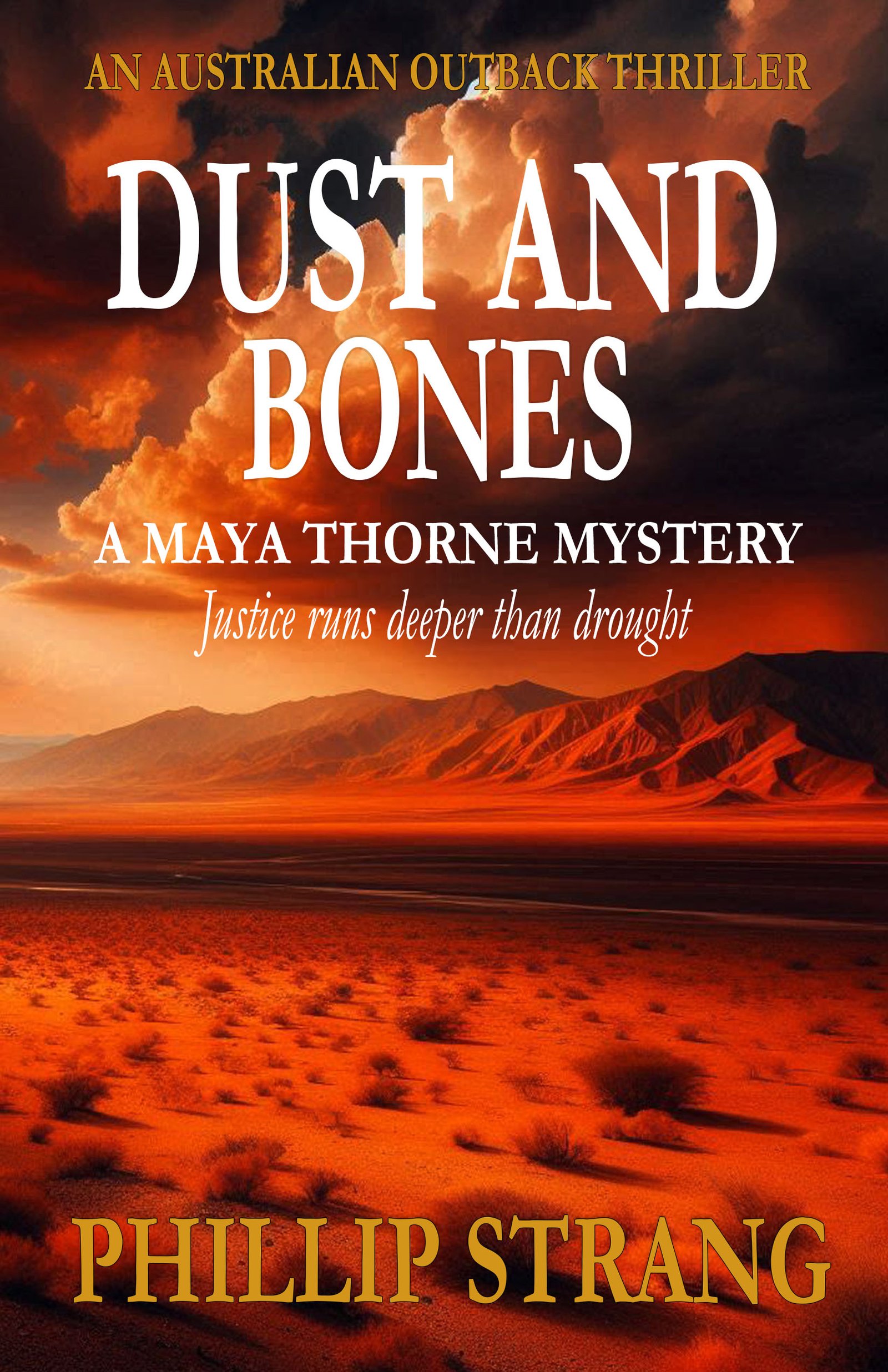
A MAYA THORNE MYSTERY
Get Dust and Bones Free
Justice runs deeper than drought.
Red dust. Shallow graves. A detective who hunts killers where the law runs thin and the nearest help is two hundred miles away.
Send Me the BookYou'll also receive occasional new release emails. Unsubscribe anytime. No spam, ever.
As an Amazon Associate, Phillip Strang earns from qualifying purchases. This page contains affiliate links — buying through them costs you nothing extra.