
Sydney noir demands more than transplanting American hardboiled tropes onto Australian soil. The city’s unique geography, social tensions, and cultural undercurrents require a novelist to dig deeper than surface-level local colour to create authentic urban crime fiction.
Across eighteen series and more than 150 novels, I’ve found that Sydney’s criminal landscape offers writers a complexity that goes far beyond the tourist postcards. The challenge lies in capturing both the city’s seductive harbour glamour and its grittier realities without falling into cliché.
The Geography of Corruption
Sydney’s physical layout creates natural noir territory. The harbour doesn’t just divide the city geographically—it separates worlds of wealth and desperation. In my Campbell series, I use the contrast between the eastern suburbs’ manicured lawns and the industrial sprawl of the inner west to reflect character motivations and social tensions. A crime that begins in Double Bay takes on different implications when it ends in Redfern.
The key is understanding how Sydney’s geography shapes its criminal ecosystem. The harbour provides smuggling routes, the sprawling suburbs create perfect hiding spots, and the CBD’s corporate towers house white-collar corruption. Writers who treat Sydney as merely a backdrop miss the opportunity to let the city drive the plot. When I place a body on the foreshore at Woolloomooloo, I’m not just choosing atmosphere—I’m selecting a location where legitimate business, organised crime, and political power intersect naturally.
The mistake many writers make is focusing only on the iconic locations. Real Sydney noir emerges from the forgotten corners: the late-night venues in Kings Cross, the warehouse districts where property development meets political favours, the suburban streets where ice labs operate behind net curtains.
Class and Crime in Australian Context
Australian crime fiction works best when it acknowledges the country’s particular class dynamics. Unlike British crime with its rigid hierarchies or American noir with its emphasis on individual corruption, Sydney noir operates within Australia’s egalitarian mythology—and the reality that contradicts it.
The most compelling Sydney criminals aren’t just motivated by greed or revenge. They’re driven by the gap between Australia’s promise of a fair go and the reality of entrenched privilege. This creates different tensions than you’ll find in traditional police procedurals. A property developer in Sydney doesn’t just want money—he wants the social acceptance that old money takes for granted.
I’ve found that Sydney’s nouveau riche provide particularly rich material for crime writers. Characters who’ve made fortunes in mining, property, or finance often carry the insecurities that drive them toward increasingly desperate acts. They’re not aristocratic villains—they’re people who remember being excluded, now wielding their wealth like a weapon.
The working-class characters in Sydney noir aren’t just salt-of-the-earth victims either. They carry their own resentments about being priced out of suburbs their families built, watching their local pubs become wine bars for professionals who commute from other states.
Authentic Voice Without Caricature
Writing convincing Sydney dialogue means avoiding both extremes: don’t ignore Australian speech patterns, but don’t turn every character into Crocodile Dundee either. Real Sydneysiders don’t punctuate every sentence with ‘mate’ or discuss throwing prawns on barbies.
The rhythm of Sydney speech is more important than the slang. Characters speak more directly than their British counterparts but with less aggression than typical American crime fiction protagonists. There’s an underlying skepticism in how Sydneysiders approach authority—useful for crime writers because it means your detective characters can question official narratives without seeming unreasonably paranoid.
In my Campbell novels, I pay attention to how different generations speak. Older Sydney characters might use more traditional Australian expressions, while younger ones blend international influences with local vernacular. A drug dealer from western Sydney sounds different from a corruption investigator who grew up in Paddington, but both share certain Australian speech patterns that mark them as unmistakably local.
The biggest mistake is using Australian slang as shorthand for character development. A well-written Sydney character should be identifiably Australian through their worldview and assumptions, not just their vocabulary.
How I Approach Sydney Noir
When I’m developing a Sydney-based crime story, I start with the social tension rather than the crime itself. Sydney’s rapid development, housing affordability crisis, and changing demographics create natural conflicts that drive compelling plots. I’ll identify a specific pressure point—perhaps gentrification displacing long-term residents—then explore how different characters respond to that pressure.
I spend considerable time walking the actual locations where scenes will unfold. Sydney’s microclimates and neighbourhood boundaries shift within a few blocks. The difference between Surry Hills and Redfern isn’t just socioeconomic—the streets feel different, smell different, attract different kinds of trouble. You can’t write convincing Sydney crime from Google Street View alone.
My research goes beyond crime statistics to include local newspapers, council meetings, and development applications. The most interesting corruption stories often emerge from seemingly mundane planning disputes or infrastructure projects. When I discover that a particular development required unusual council approvals, or that certain businesses operate in areas where similar enterprises have failed, I’ve found potential plot threads.
I also maintain contact with people who work in Sydney’s criminal justice system—not for inside information about specific cases, but to understand how the system actually functions. The gap between television crime procedurals and real police work is particularly wide in Australia, where different states have different approaches to organised crime and corruption.
Common Pitfalls in Urban Australian Crime
Too many writers treat Sydney as interchangeable with Melbourne or Brisbane, missing the specific character that makes each Australian city distinct. Sydney’s crime fiction should reflect the city’s particular blend of ambition, anxiety, and hedonism. A story that could happen anywhere else isn’t really Sydney noir.
Another frequent mistake is importing American noir attitudes wholesale. Sydney criminals don’t operate in the same environment as their Los Angeles or New York counterparts. Australian gun laws, different policing approaches, and smaller population centres all affect how crime unfolds. A Sydney standover merchant uses different methods than a Chicago enforcer, not because he’s less violent, but because he operates in a different legal and social context.
Writers also tend to either romanticise or demonise Sydney’s criminal history. The city has genuine organised crime problems and significant corruption issues, but it’s not Gotham City. Effective Sydney noir finds the darkness within recognisable reality rather than creating a cartoon version of urban decay. The most chilling Sydney crime stories are those that could conceivably appear in tomorrow’s newspapers.
Finally, many authors underestimate Sydney readers’ sophistication. Local audiences quickly spot fake locations, impossible geography, or characters who don’t ring true. Interstate and international readers might not catch these errors, but they’ll sense something artificial in the storytelling. Authenticity serves the story, not just the setting.
Building Atmosphere Through Specificity
Sydney noir succeeds through accumulation of precise details rather than broad atmospheric strokes. The particular way light reflects off the harbour at different times of year, the specific sound of Friday night crowds in different neighbourhoods, the exact smell of low tide mixed with diesel fumes—these details anchor readers in a recognisable world.
I’ve learned that Sydney’s weather patterns offer more than scenic description. The city’s humidity affects how people behave, dress, and interact. Summer brings different crimes than winter. The Christmas season falling during summer creates unique pressures and opportunities for criminal activity that don’t exist in northern hemisphere crime fiction.
The key is selecting details that serve multiple purposes. When I describe the morning commute from western suburbs to the CBD, I’m not just establishing setting—I’m showing economic relationships, time pressures, and social divisions that will affect how characters make decisions throughout the story.
Effective Sydney noir also acknowledges the city’s multicultural reality without tokenism. Sydney’s crime world reflects its diverse population, but this diversity must be integrated naturally into the story rather than highlighted as exotic flavouring. Characters from different backgrounds bring different perspectives, connections, and vulnerabilities to criminal situations, creating opportunities for complex plotting that goes beyond surface-level cultural references.
The Business of Crime
Sydney’s criminal economy operates differently than the gangs depicted in American crime fiction or the organised families of European noir. Understanding these differences helps writers create more authentic conflicts and more believable criminal organisations.
Property crime, drug distribution, and white-collar fraud intersect in ways that reflect Sydney’s specific economic structure. The city’s role as a financial centre, its position in Asian trade routes, and its regulatory environment all shape how criminal enterprises develop and compete. Writers who grasp these economic realities can construct plots that feel inevitable rather than contrived.
I’ve found that Sydney’s most interesting criminal characters are those who operate in the spaces between legitimate and illegal business. They’re not career criminals in the traditional sense—they’re people who’ve discovered that certain profitable activities happen to be illegal, and they’ve decided the risk is acceptable. This creates more complex moral territory than stories about purely evil antagonists or completely innocent protagonists.
The challenge for crime writers is making these business relationships clear without turning novels into economics textbooks. Readers need enough information to understand character motivations and plot developments, but not so much detail that the story bogs down in explanation. The criminal enterprise should feel real without overwhelming the human drama.
Conclusion
Sydney noir works best when writers resist the temptation to explain Australia to readers and instead focus on telling compelling stories that happen to unfold in this particular city. The setting should enhance character development and drive plot progression rather than serving as mere exotic decoration. When done properly, noir crime fiction captures not just Sydney’s criminal underworld, but the social forces that create and sustain it.
About Phillip Strang
Phillip Strang is an Australian crime and thriller novelist. Across eighteen series and more than 150 novels, his work spans London police procedurals (DCI Isaac Cook), UK investigations (DI Tremayne), Australian outback crime (Maya Thorne), FBI thrillers (Alex Harlan), Scottish Highland mysteries (DI Sarah Lynch), and espionage (Steve Case). Learn more about Phillip or browse his complete catalogue on Amazon.
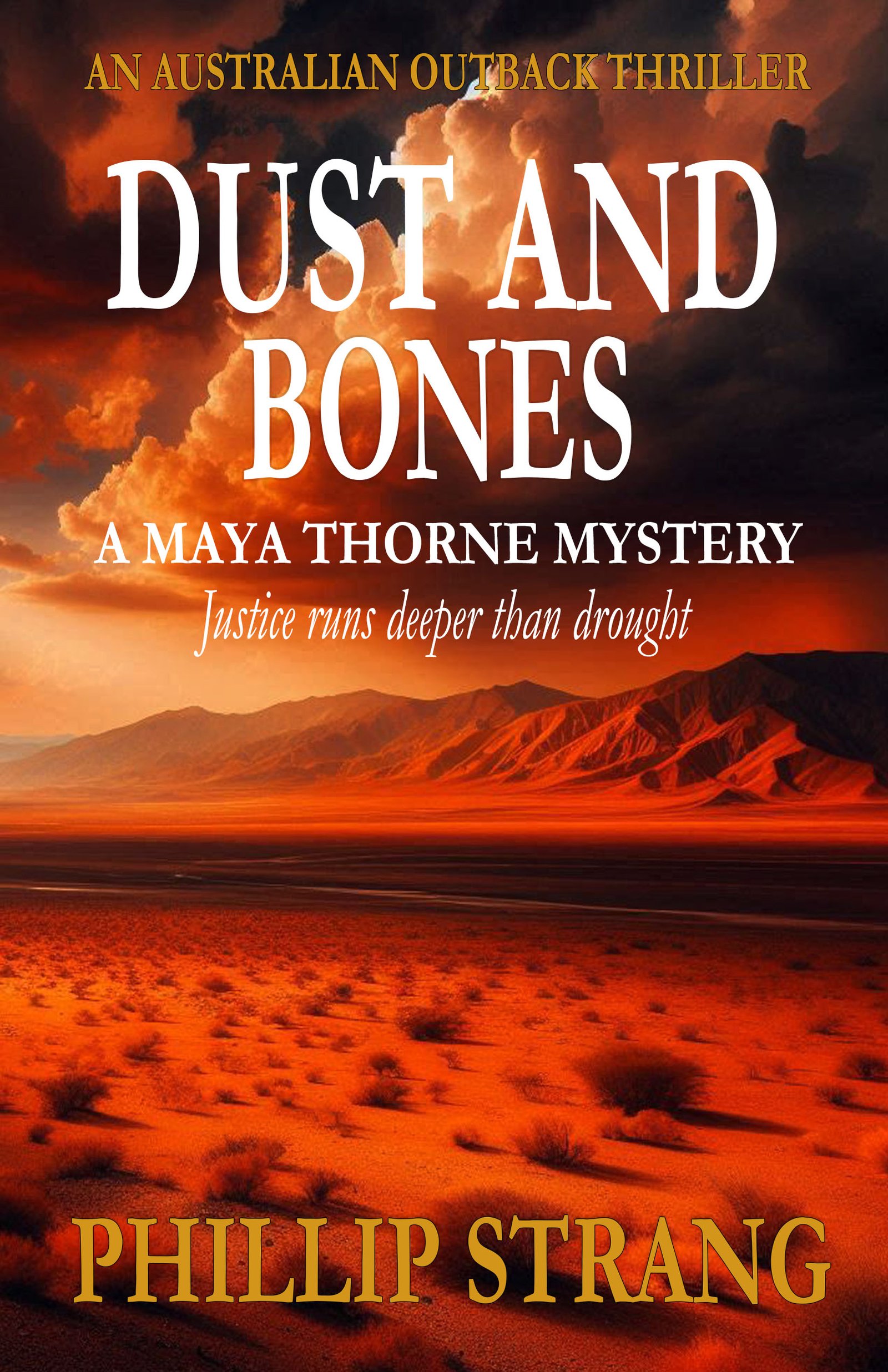
A MAYA THORNE MYSTERY
Get Dust and Bones Free
Justice runs deeper than drought.
Red dust. Shallow graves. A detective who hunts killers where the law runs thin and the nearest help is two hundred miles away.
Send Me the BookYou'll also receive occasional new release emails. Unsubscribe anytime. No spam, ever.
As an Amazon Associate, Phillip Strang earns from qualifying purchases. This page contains affiliate links — buying through them costs you nothing extra.