
Symbolic Settings in Crime Fiction is not a technique writers apply after the fact, like a coat of paint over finished timber. It is structural. The setting either carries moral and psychological weight from the first scene, or it never earns that weight at all, no matter how many brooding descriptions you layer on later. The question worth asking is not what makes a setting atmospheric, but what makes a setting mean something.
Across eighteen series and more than 150 novels, I have found that the writers who use setting most powerfully are not the ones who describe places most vividly, but the ones who allow place to do argumentative work — to take a side, to implicate, to contradict what characters say with what geography shows.
Place as Moral Architecture
A setting becomes symbolic when it mirrors or inverts the moral condition of the story. The decaying manor house in a golden-age mystery is not just a backdrop; it is a comment on inherited privilege rotting from within. The fog-choked city street in noir is not weather; it is epistemology — a world where clarity itself has been murdered. When setting and theme are working in alignment, readers feel the meaning before they can articulate it, which is exactly where you want them.
I think about this constantly with my DCI Isaac Cook series. London is not neutral in those books. The city’s layered geography — the gentrified streets sitting directly above or beside pockets of genuine deprivation — is the argument the novels are making about class, race, and power. Isaac moves between those worlds because the crimes do. The setting is not illustrating the theme; it is the theme made spatial. A murder in a luxury apartment block that backs onto a social housing estate is not just a crime scene. It is a sentence about inequality.
This is the difference between setting as decoration and setting as structure. Decoration can be cut without losing meaning. Structure cannot.
The Symbolic Settings in Crime Fiction That Actually Work
The settings that function symbolically in crime fiction tend to share one characteristic: they are places under pressure. Not necessarily dramatic pressure — a Scottish Highland village can be under profound symbolic pressure if the writer understands that its apparent tranquility is a performance, a suppression of something older and darker. In my DI Sarah Lynch series, the Highlands are not romantic. They are isolating. The landscape enforces silence. Communities close ranks not out of warmth but out of survival instinct, and the land itself — vast, indifferent, difficult to traverse — enacts that silence physically. Every investigation Sarah runs is partly an investigation into what that landscape has permitted to go unremarked for generations.
The outback in Maya Thorne functions similarly but with a different charge. The Australian interior is not indifferent so much as it is ancient and amnesiac. It does not remember what happened there; it absorbs everything. That quality — of a landscape that will not give evidence — creates a particular kind of dramatic pressure for a crime investigator. The setting argues against resolution. Maya’s job is partly to force meaning out of a place that structurally resists it, and that tension is only available because of what the outback symbolically represents.
Writers working in noir crime thriller traditions understand this instinctively. The city in noir is always complicit. It is not where the crime happened to occur; it is why the crime was possible. The symbolic logic of noir setting is that corruption is environmental, systemic, architectural. You cannot solve a noir crime, you can only survive it, and the city’s labyrinthine geography enacts that impossibility at every turn.
How I Actually Build Symbolic Settings
My approach is not to decide what a setting will symbolise and then construct it to order. That produces allegory, not fiction. What I do instead is research the actual place — its history, its social fractures, its topography, its economic conditions — and look for what is already there. Real places have symbolic potential built into their material reality. The writer’s job is to read it accurately and then amplify selectively.
When I set a book in a specific London neighbourhood, I am not inventing its symbolic valence. I am observing that this particular street has been through four demographic shifts in thirty years and that the physical evidence of each layer is still visible, like geological strata, and that a murder investigation which requires going door to door will move through all four of those worlds in the space of two hundred metres. That is already symbolic. I do not need to announce it; I just need to render it with enough precision that the reader does the symbolic work themselves.
The specificity matters enormously. Vague place — a generic city, a nameless forest — produces vague symbolism. The more precisely you render the actual, the more powerfully the symbolic emerges from it. This is counterintuitive to writers who think symbolism requires abstraction. It does not. It requires exactness.
For writers interested in how setting and character interact at the level of character-driven fiction, the key insight is that the most effective symbolic settings are ones that a specific character, with their specific history, is uniquely positioned to misread. The setting reveals character through what the character cannot see in it.
Common Mistakes and What to Avoid
The most common failure is what I call the pathetic fallacy overdose — the storm that arrives just as the killer is revealed, the sunshine that breaks through when the detective finally understands something. Used occasionally, this technique has genuine power. Used constantly, it deadens the reader’s symbolic sense entirely because it requires no interpretive effort. If every emotional beat has a weather correspondent, the setting stops being symbolic and becomes a caption.
A related mistake is using setting symbolically in early chapters and then forgetting it under plot pressure. I see this constantly in manuscripts from newer writers. The first thirty pages establish a beautifully observed small-town environment with genuine symbolic weight — the shuttered factory, the unemployment, the men gathering in a pub with nothing to do — and then the investigation starts and all of that disappears into dialogue and procedural mechanics. The setting was never integrated into the story’s bones. It was imposed from the outside.
Another trap is mistaking the exotic for the symbolic. A setting is not automatically meaningful because it is unfamiliar to a Western readership. The Australian outback, the Scottish Highlands, an African city — these places have genuine symbolic potential, but that potential is only realised through specific, researched, honest engagement. Treating a foreign or remote location as inherently atmospheric, as though strangeness were the same as meaning, produces fiction that is condescending to the place and ultimately hollow for the reader.
Finally, there is the problem of the setting that contradicts the story’s logic. If your novel’s argument is about the invisibility of working-class crime victims, but every significant scene takes place in upscale environments because those are easier to write with confidence, the setting is undermining the theme. The physical world of the novel and its moral world must be coherent. When they are not, readers feel the dishonesty even if they cannot name it. For writers working in police procedural fiction especially, this coherence is critical — the investigation must move through the world the crime actually inhabits.
Conclusion
Setting in crime fiction is never neutral, but it is only symbolic when a writer has done the work to make it so — through specificity, through integration, through allowing place to carry argumentative weight alongside character and plot rather than merely providing scenery for them to move through.
About Phillip Strang
Phillip Strang is an Australian crime and thriller novelist. Across eighteen series and more than 150 novels, his work spans London police procedurals (DCI Isaac Cook), UK investigations (DI Tremayne), Australian outback crime (Maya Thorne), FBI thrillers (Alex Harlan), Scottish Highland mysteries (DI Sarah Lynch), and espionage (Steve Case). Learn more about Phillip or browse his complete catalogue on Amazon.
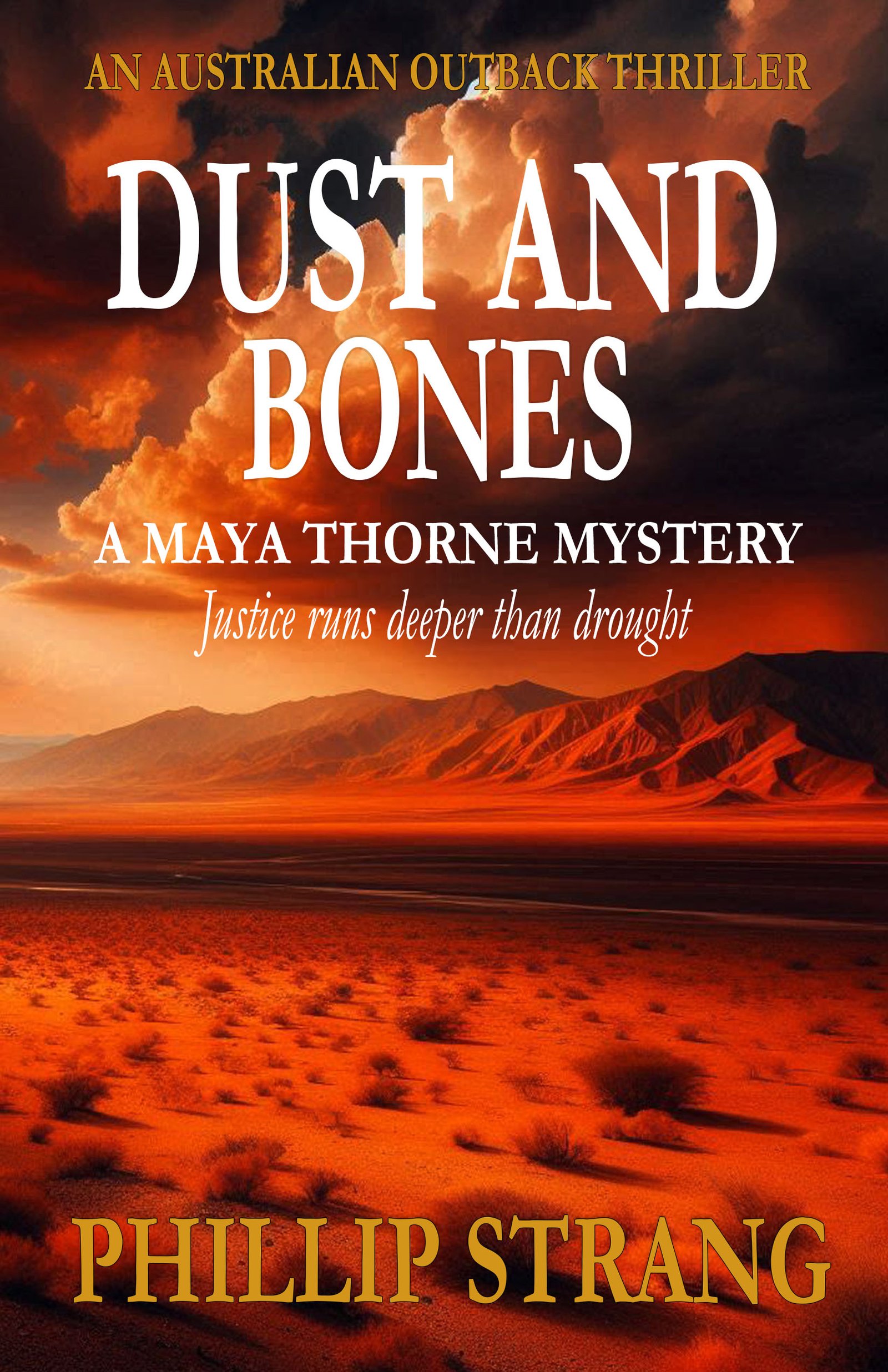
A MAYA THORNE MYSTERY
Get Dust and Bones Free
Justice runs deeper than drought.
Red dust. Shallow graves. A detective who hunts killers where the law runs thin and the nearest help is two hundred miles away.
Send Me the BookYou'll also receive occasional new release emails. Unsubscribe anytime. No spam, ever.
As an Amazon Associate, Phillip Strang earns from qualifying purchases. This page contains affiliate links — buying through them costs you nothing extra.