
Tartan Noir isn’t simply crime fiction that happens to be set in Scotland—it’s a distinct subgenre with specific conventions that demand particular craft approaches. The landscape, culture, and social fabric of Scotland create unique storytelling opportunities that many writers squander by treating the setting as mere window dressing.
Across eighteen series and more than 150 novels, I’ve found that successful Tartan Noir requires understanding how Scottish elements function as more than backdrop—they must drive plot, character, and atmosphere in ways that feel organic rather than forced.
The Landscape as Character Convention
In authentic Tartan Noir, the Scottish landscape functions as an active character rather than passive scenery. The Highlands, Edinburgh’s closes, Glasgow’s tenements—these aren’t just locations where events unfold, they’re forces that shape those events. When I developed my DI Sarah Lynch series, I made the Highland setting integral to how crimes unfold and investigations proceed. A body discovered in the remote Cairngorms creates investigative challenges that simply don’t exist in urban settings—limited forensic access, weather complications, and community dynamics where everyone knows everyone else’s business.
The key craft technique here involves making geographical elements plot-essential rather than decorative. If your Highland murder mystery could work equally well in Surrey by changing a few place names, you’re not writing Tartan Noir—you’re writing generic crime with Scottish flavoring. The isolation, the clan mentalities, the economic pressures of rural Scotland must create specific obstacles and opportunities that drive your narrative forward.
Cultural Authenticity Without Caricature
The biggest trap in Tartan Noir is reducing Scottish culture to kilts, bagpipes, and incomprehensible dialogue written phonetically. Real Scottish character development requires understanding the underlying social structures, historical grievances, and contemporary realities that shape how Scots think and act. This includes the class dynamics between Edinburgh’s New Town and Old Town, the economic devastation in former industrial areas, and the complex relationships between Highland communities and outside authority.
Effective Scottish characters carry these cultural weights naturally. They don’t explain their Scottishness to the reader—they simply act from within it. This means understanding how historical events like the Clearances still influence contemporary attitudes toward authority, or how Presbyterian moral frameworks continue to shape community judgment even in secular contexts. Your detective might not consciously think about these influences, but they inform every decision and relationship in ways that feel authentically Scottish.
How I Approach Scottish Crime Writing
When I’m writing Highland mysteries, I start with the community dynamics rather than the crime itself. Scottish villages and small cities have particular social structures—who holds real power versus official power, how gossip networks function, and where the genuine loyalties lie. In my experience, police procedurals work differently in Scottish settings because the relationship between law enforcement and community operates under different assumptions than in England or urban environments.
I spend considerable time mapping these invisible social networks before plotting the actual crime. Who would people trust with secrets? Who would they automatically distrust? How do economic dependencies affect willingness to cooperate with investigations? These aren’t background details—they’re the engine that drives plot complications and character conflicts. The crime becomes a catalyst that exposes these pre-existing tensions rather than simply an isolated event requiring solution.
My process involves layering historical context into present-day motivations without making it obvious or heavy-handed. A family feud that began with land disputes generations ago might manifest as modern business competition, but the emotional intensity carries that historical weight even if characters never explicitly discuss the past.
Avoiding Common Pitfalls
The most damaging mistake I see in attempted Tartan Noir is treating Scottish speech patterns like a costume to be put on and taken off. Writing dialogue as ‘Och, ye ken whit ah mean, laddie’ doesn’t create authentic Scottish voices—it creates parody. Real Scottish dialogue rhythm and vocabulary choices are far more subtle. Instead of phonetic spelling, focus on sentence structure, word choice, and the underlying directness that characterizes much Scottish communication.
Another frequent error involves using clan history as a lazy plotting device. Simply discovering that two families have an ancient grudge doesn’t constitute a proper motive for contemporary murder unless you’ve established how that history translates into present-day pressures. The connection between past and present must feel psychologically believable, not just historically possible.
Weather descriptions often become clichéd shorthand for atmosphere. Yes, Scottish weather is dramatic and changeable, but constantly emphasizing mist, rain, and gloom becomes tedious. More importantly, it misses opportunities to show how characters actually relate to their environment. Scots don’t spend their time marveling at atmospheric conditions—they dress appropriately and get on with life. Your characters should do the same unless weather creates specific plot complications.
Integrating Social Commentary
Strong Tartan Noir typically engages with contemporary Scottish social and political realities without becoming preachy. Issues like rural depopulation, the effects of North Sea oil economics, urban gentrification in Edinburgh and Glasgow, or tensions between Scottish and English institutions provide rich material for crime plots when handled with nuance. The key lies in making these larger issues personal for your characters rather than turning them into editorial commentary.
This connects naturally to the tradition of noir crime that exposes societal corruption and moral ambiguity. Scottish crime fiction has particular strengths in exploring how institutional failures affect individuals—whether that’s the NHS, local councils, or economic policies that have hollowed out traditional industries. Your detective or protagonist should encounter these systemic problems through specific cases rather than abstract discussion.
The most effective approach involves showing how larger social forces create the conditions where crimes become possible or inevitable. A murder that stems from desperation over losing family land to development reveals character motivations while commenting on broader economic pressures. This technique allows social critique to emerge naturally from plot rather than being imposed upon it.
Conclusion
Mastering Tartan Noir conventions requires understanding that Scotland provides more than an exotic setting—it offers a complete framework for approaching character, plot, and theme that differs significantly from other crime fiction traditions. Success comes from respecting these differences rather than simply applying generic crime formulas with Scottish decoration.
About Phillip Strang
Phillip Strang is an Australian crime and thriller novelist. Across eighteen series and more than 150 novels, his work spans London police procedurals (DCI Isaac Cook), UK investigations (DI Tremayne), Australian outback crime (Maya Thorne), FBI thrillers (Alex Harlan), Scottish Highland mysteries (DI Sarah Lynch), and espionage (Steve Case). Learn more about Phillip or browse his complete catalogue on Amazon.
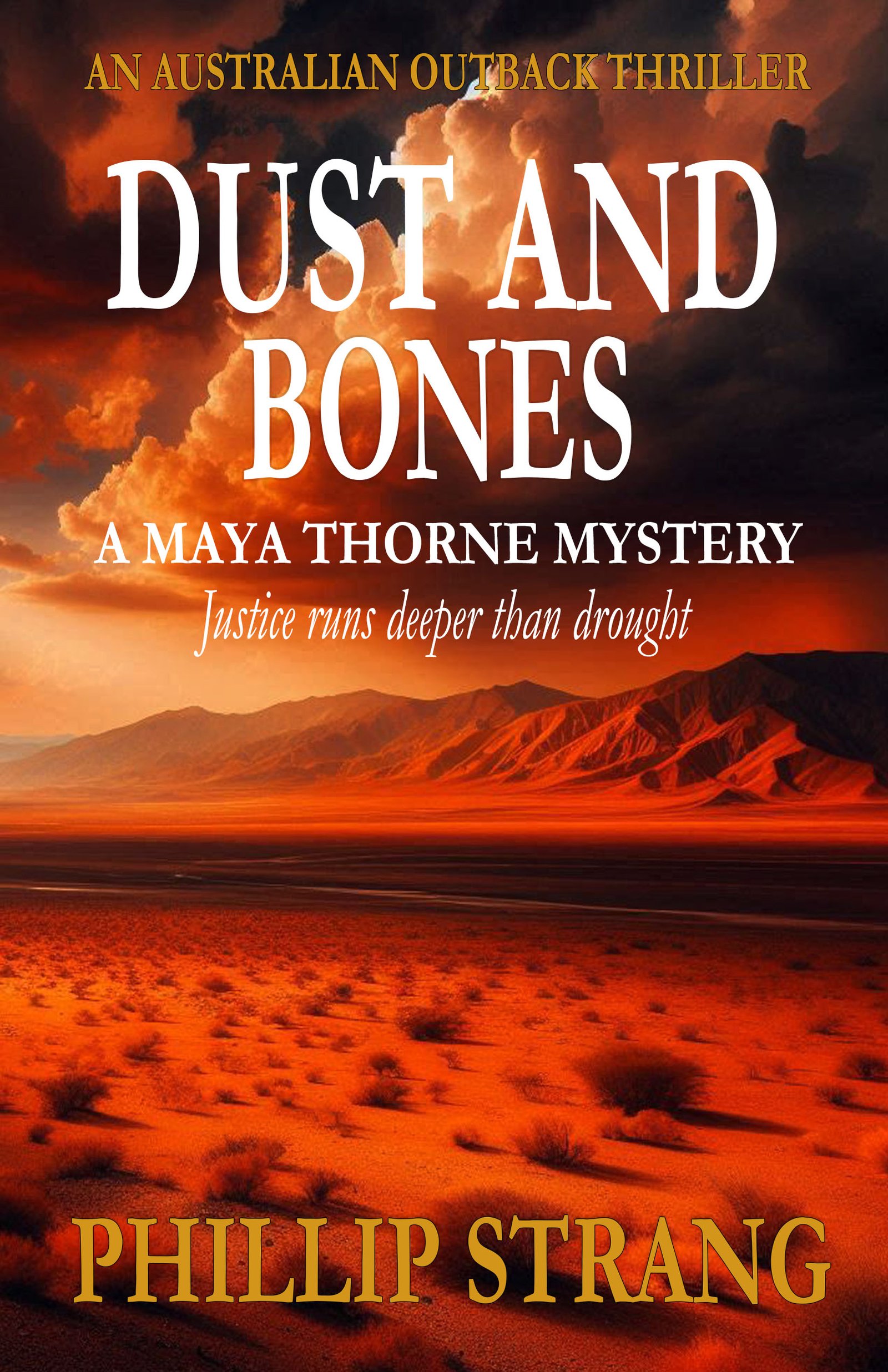
A MAYA THORNE MYSTERY
Get Dust and Bones Free
Justice runs deeper than drought.
Red dust. Shallow graves. A detective who hunts killers where the law runs thin and the nearest help is two hundred miles away.
Send Me the BookYou'll also receive occasional new release emails. Unsubscribe anytime. No spam, ever.
As an Amazon Associate, Phillip Strang earns from qualifying purchases. This page contains affiliate links — buying through them costs you nothing extra.