
The difference between a crime novel that grips readers and one that falls flat often comes down to tone. Your choice of voice, pacing, and stylistic elements must serve the specific darkness you’re exploring, whether that’s the methodical horror of a serial killer or the gritty desperation of street crime.
Across eighteen series and more than 150 novels, I’ve learned that tone in crime fiction isn’t about finding your voice once—it’s about calibrating that voice to match each story’s particular brand of violence, corruption, and moral ambiguity. The tone that works for a cozy village murder won’t serve a brutal urban thriller, and the author who can’t adjust their stylistic approach will find themselves writing the wrong book.
Understanding Genre Expectations Within Crime Fiction
Crime fiction encompasses vastly different emotional territories, each demanding its own tonal approach. Police procedurals require the steady, methodical tone of investigation—think clipped dialogue, technical precision, and the bureaucratic weight of real police work. When I write my DCI Isaac Cook series, the tone reflects London’s institutional gravity: formal but not stuffy, professional but human enough to carry the emotional weight of the crimes.
Psychological thrillers demand an entirely different register. Here, tone becomes a weapon of unease. Sentence fragments mirror fractured thinking. Short paragraphs create breathless urgency. The language itself must feel unstable, reflecting the mental state of characters who may be unreliable narrators or victims of psychological manipulation.
Noir requires yet another approach—world-weary, cynical, with a poetry that emerges from urban decay. The best noir crime thrillers use tone to create atmosphere thick enough to taste, where every description carries moral weight and the language itself reflects the corruption it describes.
Matching Tone to Setting and Character
Your setting isn’t just backdrop—it’s a tonal guide. Rural crime demands different rhythms than urban violence. When I developed my Maya Thorne series, set in the Australian outback, the tone had to reflect that vast, harsh landscape. Longer sentences mirror the endless horizons. Sparse dialogue echoes the isolation. The language itself becomes as unforgiving as the environment.
Character perspective drives tonal choices just as powerfully. A seasoned detective carries different rhythms than a rookie cop or a civilian caught in criminal circumstances. Your protagonist’s background, education, and emotional state should influence not just what they observe but how your prose presents those observations. A street-smart character thinks in different cadences than an academic, and your sentence structure should reflect that distinction.
The key is consistency within flexibility. Each character may have their own voice, but the overall narrative tone must remain coherent enough to hold the story together. This becomes particularly crucial in ensemble pieces or novels with multiple POV characters.
My Working Approach to Tonal Calibration
When I start a new book, I spend time with the opening scene until I find the right tonal frequency. This isn’t about writing a perfect first chapter—it’s about discovering the voice that will carry the entire narrative. I write the same scene multiple ways, experimenting with sentence length, vocabulary choices, and rhythm until something clicks.
For procedurals, I lean toward active voice and present tense for action sequences, but allow more complex structures during investigation scenes. The best police procedurals balance technical accuracy with narrative momentum, and tone becomes the bridge between those sometimes competing demands.
For thrillers, I map emotional intensity across the manuscript. Where does tension peak? Where does it recede? The tone must support these fluctuations without becoming mechanical. High-tension scenes might use shorter paragraphs and more urgent language, while quieter moments allow for deeper character development and more complex prose.
I also read my work aloud, listening for tonal inconsistencies that the eye might miss. Crime fiction especially benefits from this practice because the genre relies so heavily on pace and rhythm to maintain suspense.
Common Tonal Mistakes That Kill Crime Fiction
The most damaging error I see is tonal inconsistency—switching between hardboiled cynicism and cozy comfort within the same narrative. A novel that opens with brutal violence described in stark, unforgiving prose cannot suddenly shift to gentle, humorous observations without breaking the reader’s trust. If your story begins with ‘The knife slid between his ribs like a whisper,’ you’ve committed to a particular darkness that must be sustained.
Another frequent problem is mismatched complexity. Some writers believe crime fiction requires simple, declarative sentences throughout. While clarity is essential, overly simple prose can undermine sophisticated plotting or complex character development. Conversely, writers who favor elaborate, literary language sometimes overwhelm the crime elements. The prose style must serve the story’s primary function.
Dialog represents a particular tonal minefield. Characters speak in their own voices, but those voices must fit within the story’s overall tonal framework. A character in a gritty urban thriller cannot suddenly speak like a drawing room mystery detective without destroying credibility. Even when characters come from different backgrounds, their speech patterns must feel authentic to both their individual circumstances and the story’s broader world.
Perhaps most importantly, avoid letting research overwhelm tone. Crime fiction often requires extensive research into police procedures, forensics, or criminal psychology. While accuracy matters, dense technical information delivered in academic prose can completely derail narrative momentum. The challenge lies in incorporating necessary information through a tonal filter that maintains story flow.
Advanced Techniques for Tonal Control
Experienced crime writers develop subtle tools for tonal manipulation that work below the reader’s conscious awareness. Punctuation becomes a weapon: short sentences create urgency, while longer periods allow tension to build slowly. Paragraph breaks control pacing as effectively as scene breaks, creating breathing room or maintaining breathless momentum as the story demands.
Vocabulary choices carry enormous tonal weight. Clinical language creates emotional distance, which might serve scenes involving forensic evidence but could undermine moments requiring emotional connection. Conversely, emotionally charged language might overwhelm procedural elements. The skilled crime writer learns to modulate between these registers seamlessly.
Sensory details offer another avenue for tonal control. A scene described primarily through visual details creates different emotional resonance than one emphasizing sound or smell. Crime scenes described through clinical visual observation feel different from those where the protagonist notices the metallic scent of blood or the sound of footsteps on broken glass.
Tense and perspective also serve tonal functions beyond their basic narrative roles. First person creates intimacy and immediacy but limits perspective. Third person allows broader scope but can create emotional distance. Present tense drives urgency while past tense allows for more reflective observation. These choices must align with your story’s specific requirements.
Conclusion
Tone in crime fiction functions as both foundation and finishing touch—it supports every other element while providing the final polish that transforms competent writing into compelling narrative. The writer who masters tonal control gains the ability to guide reader emotions as precisely as they control plot revelations, creating crime fiction that resonates long after the case is closed.
About Phillip Strang
Phillip Strang is an Australian crime and thriller novelist. Across eighteen series and more than 150 novels, his work spans London police procedurals (DCI Isaac Cook), UK investigations (DI Tremayne), Australian outback crime (Maya Thorne), FBI thrillers (Alex Harlan), Scottish Highland mysteries (DI Sarah Lynch), and espionage (Steve Case). Learn more about Phillip or browse his complete catalogue on Amazon.
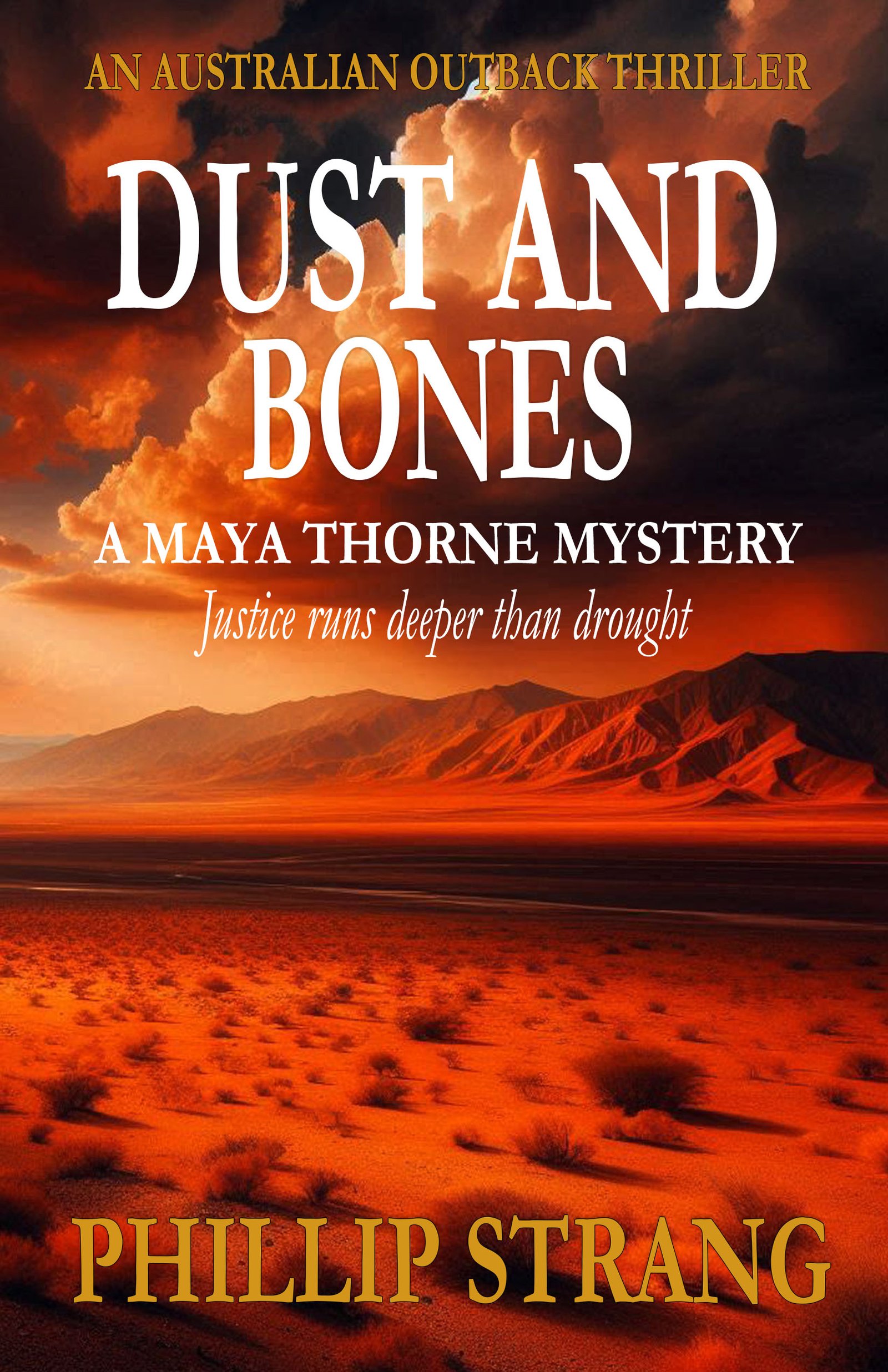
A MAYA THORNE MYSTERY
Get Dust and Bones Free
Justice runs deeper than drought.
Red dust. Shallow graves. A detective who hunts killers where the law runs thin and the nearest help is two hundred miles away.
Send Me the BookYou'll also receive occasional new release emails. Unsubscribe anytime. No spam, ever.
As an Amazon Associate, Phillip Strang earns from qualifying purchases. This page contains affiliate links — buying through them costs you nothing extra.