
Voice in crime fiction operates at multiple levels, but it’s the sentence-level signature that truly hooks readers and keeps them coming back. While plot structures and character archetypes can be learned and replicated, the distinctive way you construct sentences, choose words, and create rhythm becomes your literary fingerprint. Every successful crime writer develops this unconscious signature that readers can identify within a few paragraphs, even without seeing the author’s name on the cover.
Across eighteen series and more than 150 novels, I’ve found that voice emerges not from grand gestures but from thousands of micro-decisions about sentence construction, word choice, and narrative rhythm. Your voice in crime fiction isn’t something you put on like a costume—it’s something you discover and then consciously refine through relentless practice and attention to the music of your own prose.
The Architecture of Sentence-Level Voice
Sentence length and structure form the backbone of your distinctive voice. Some crime writers favour short, punchy sentences that mirror the staccato tension of their plots. Others build complex, layered sentences that mirror the psychological complexity of their investigations. The key isn’t choosing one approach over another—it’s being consistent with your natural inclination while varying for effect.
I discovered my own tendency toward varied sentence structures when writing the DCI Isaac Cook series. Cook’s methodical investigative approach required sentences that could shift from sharp dialogue exchanges to longer observational passages without jarring the reader. The voice emerged from matching sentence architecture to character psychology rather than imposing an artificial style.
Your sentence-level signature also includes punctuation preferences, paragraph breaks, and the rhythm you create between dialogue and narrative. These seemingly minor choices accumulate into a distinctive voice that becomes as recognisable as a musical signature. The best police procedural novels demonstrate how authors use sentence architecture to create voices that feel authentic to their investigative worlds.
Word Choice as Character DNA
The specific words you gravitate toward reveal more about your voice than any conscious stylistic choice. Crime fiction offers particular opportunities for distinctive word selection because the genre demands precision in describing violence, investigation, and psychological states. Your unconscious vocabulary preferences—whether you lean toward clinical terminology, street vernacular, or literary description—become part of your signature.
Consider how you handle violence. Do you favour stark, understated description or more visceral detail? Do you use technical police terminology or translate it for civilian readers? These choices aren’t just about audience—they’re about the fundamental worldview that underlies your voice. When I write the Australian outback settings in Maya Thorne, the landscape demands a different vocabulary than London’s urban investigations, but the underlying voice remains consistent through word choice patterns and descriptive instincts.
Your voice also emerges through the metaphors and comparisons you instinctively reach for. Crime writers often reveal their backgrounds and obsessions through these unconscious choices—military metaphors, medical terminology, literary allusions, or technological references. The key is recognising your natural tendencies and then using them deliberately rather than fighting against them.
Dialogue as Voice Amplifier
Dialogue serves as both character development and voice amplification in crime fiction. Your distinctive voice emerges not just from what characters say, but from how you structure conversations, handle speech tags, and integrate dialogue with action and internal thought. Some writers favour rapid-fire exchanges that crackle with tension. Others prefer longer, more philosophical conversations that reveal character through speech patterns.
The key to developing your dialogue voice lies in consistency of approach rather than similarity of character speech. Your criminals, investigators, and witnesses should sound different from each other, but they should all feel like they exist in the same fictional universe. This consistency comes from your underlying approach to human speech—whether you emphasise subtext, direct confrontation, or the gaps between what people say and mean.
I’ve noticed that my dialogue tends toward economy—characters say what they need to say without excessive preamble. This tendency emerged naturally but now serves as a conscious choice that supports the investigative urgency that drives most crime narratives. Your dialogue signature might emphasise wit, psychological insight, regional vernacular, or professional jargon, but whatever it is, it should feel inevitable rather than imposed.
My Working Approach to Voice Development
After more than 150 novels, I’ve learned that voice develops through accumulation rather than revelation. I don’t sit down to write with a conscious plan for voice—instead, I write consistently and then pay attention to the patterns that emerge. My voice in the Steve Case espionage series differs from my Australian crime novels, but the underlying sentence-level preferences remain consistent.
I track my voice development by reading my own work aloud during revision. This practice reveals rhythm patterns, word repetitions, and structural habits that might not be obvious on the page. Your natural speaking voice and reading voice inform your writing voice more than you might expect. I’ve found that scenes written when I’m listening to particular music or in specific emotional states carry different voice signatures, and recognising these variations helps me maintain consistency.
The practical work involves paying attention to sentences that feel effortless during first draft writing. These sentences often contain the DNA of your emerging voice—they flow naturally because they align with your unconscious preferences for structure, word choice, and rhythm. I collect these sentences in a separate document and study them for patterns that I can then apply more deliberately to challenging passages.
Common Voice Mistakes That Weaken Crime Fiction
The most damaging mistake crime writers make is imitating the surface features of authors they admire without understanding the underlying principles. Copying another writer’s short sentences or tough dialogue without the supporting worldview creates a hollow imitation that readers detect immediately. Voice emerges from authentic perspective, not stylistic mimicry.
Many writers also make the error of believing voice requires constant novelty or cleverness. They strain for distinctive metaphors or unusual word choices that call attention to themselves rather than serving the story. True voice in crime fiction supports narrative momentum rather than disrupting it. The best action thriller novels demonstrate how strong voice enhances rather than competes with plot development.
Another common problem involves inconsistent voice within a single work. Writers sometimes shift between different voice signatures depending on whether they’re writing action sequences, character development, or investigative scenes. While some variation is natural and necessary, the underlying voice should remain recognisably consistent. Readers should never feel like different sections were written by different authors unless that’s your deliberate intention.
Finally, many crime writers underestimate the importance of voice in exposition and transitional passages. They develop strong voices for dialogue and action but resort to generic prose for necessary but less dramatic scenes. Every sentence contributes to your voice signature, including the mundane ones that move characters from scene to scene or provide essential background information.
Conclusion
Voice in crime fiction develops through the accumulation of countless sentence-level decisions that gradually coalesce into a distinctive signature. The writers who develop the strongest voices focus on consistency and authenticity rather than conscious distinctiveness, allowing their natural preferences for rhythm, word choice, and structure to emerge through sustained practice and careful attention to their own unconscious patterns.
About Phillip Strang
Phillip Strang is an Australian crime and thriller novelist. Across eighteen series and more than 150 novels, his work spans London police procedurals (DCI Isaac Cook), UK investigations (DI Tremayne), Australian outback crime (Maya Thorne), FBI thrillers (Alex Harlan), Scottish Highland mysteries (DI Sarah Lynch), and espionage (Steve Case). Learn more about Phillip or browse his complete catalogue on Amazon.
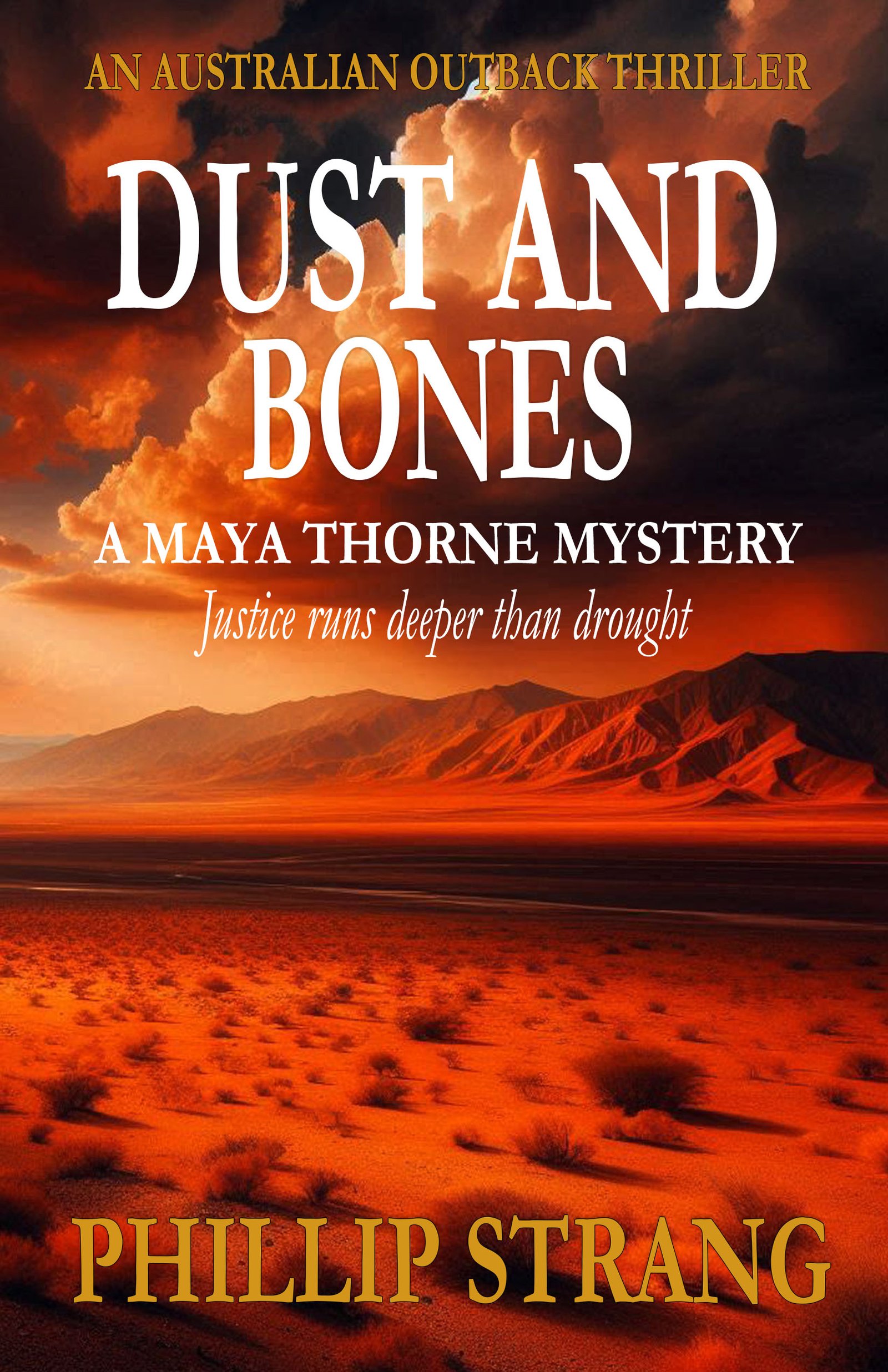
A MAYA THORNE MYSTERY
Get Dust and Bones Free
Justice runs deeper than drought.
Red dust. Shallow graves. A detective who hunts killers where the law runs thin and the nearest help is two hundred miles away.
Send Me the BookYou'll also receive occasional new release emails. Unsubscribe anytime. No spam, ever.
As an Amazon Associate, Phillip Strang earns from qualifying purchases. This page contains affiliate links — buying through them costs you nothing extra.