
Crime fiction commands an almost primal hold over readers that transcends cultural boundaries and demographic lines. The genre consistently dominates bestseller lists, yet the reasons why readers gravitate toward stories of murder, corruption, and justice run far deeper than simple entertainment value.
Across eighteen series and more than 150 novels I have found that understanding reader psychology isn’t just academic curiosity—it’s essential craft knowledge that shapes every decision from opening hooks to final revelations. When you grasp why readers crave crime fiction, you write with purpose rather than hope.
The Control Fantasy in Chaos
Readers love crime fiction because it offers controlled exposure to chaos. In real life, violence and injustice feel random and senseless. In our novels, these same dark forces become puzzles to solve, patterns to decode, justice to restore. We create a sandbox where readers can experience danger without real consequence, where moral complexity has resolution.
This isn’t escapism—it’s rehearsal. Readers use crime fiction to mentally prepare for a world that can be unpredictable and threatening. They want to walk alongside characters who navigate moral ambiguity and emerge with their integrity intact. The detective or investigator becomes their proxy, someone who can stare into the abyss and still choose justice.
I’ve noticed this most clearly in writing DI Tremayne, where the rural English setting masks deep-rooted corruption. Readers don’t want simple answers—they want to feel they could recognize evil when they encounter it, that they could make the right choices under pressure.
The Satisfaction of Moral Order
Crime fiction satisfies a fundamental human need for justice that real life often fails to deliver. Readers live in a world where criminals escape consequences, where victims don’t receive closure, where the powerful manipulate systems to their advantage. Our genre provides what reality cannot guarantee: accountability.
This goes beyond simple good-versus-evil storytelling. Modern readers crave moral complexity, but they still want wrongdoing exposed and addressed. They want to see characters grapple with difficult choices and face the consequences of their actions. The appeal isn’t necessarily punishment—it’s recognition that actions matter, that truth surfaces, that patterns of behavior lead to inevitable outcomes.
The most effective police procedural novels tap into this need by showing methodical investigation revealing hidden truths. Readers find deep satisfaction in watching skilled investigators peel back layers of deception to expose core truths about human nature.
Intellectual Engagement Through Pattern Recognition
Crime fiction appeals to readers’ analytical minds in ways that other genres cannot match. Every clue, every character interaction, every seemingly random detail could be significant. Readers become active participants, constantly evaluating evidence and forming theories about perpetrators and motives.
This intellectual engagement creates a unique reading experience where suspense combines with problem-solving. Readers don’t just want to know what happens—they want to figure it out themselves. The best crime novels provide enough information for astute readers to reach conclusions while maintaining enough uncertainty to keep them guessing.
In my Maya Thorne series, the Australian outback setting becomes part of the puzzle itself. Readers must understand the environment, the isolation, the unique social dynamics to fully grasp how crimes unfold and why certain solutions become possible. The setting isn’t backdrop—it’s evidence.
How I Approach Reader Psychology in Practice
When I’m plotting a new novel, I don’t start with the crime—I start with what the crime reveals about human nature. I ask what fear or desire drives both the perpetrator and the investigation. What truth are characters trying to hide or discover? What justice needs restoration?
I structure each revelation to provide multiple layers of satisfaction. Surface-level readers get plot advancement and action. Analytical readers get clues to decode. Character-focused readers get psychological insight and moral complexity. This isn’t about writing down to different audiences—it’s about recognizing that individual readers engage on multiple levels simultaneously.
The key is maintaining what I call ‘productive uncertainty.’ Readers need enough information to feel intellectually engaged, but not so much that solutions become obvious. They want to work for their understanding, but they also want that work to feel rewarding rather than frustrating. This balance determines whether readers finish your book satisfied or disappointed.
I also pay careful attention to pacing around revelations. Readers need time to process new information and recalibrate their theories. Rush through discoveries and you deny them the satisfaction of understanding. Drag out obvious conclusions and you insult their intelligence. Action thriller novels face particular challenges here, balancing plot momentum with reader comprehension.
Common Mistakes That Break the Psychological Contract
The biggest error I see writers make is prioritizing clever plot twists over emotional truth. Readers invest in crime fiction for psychological reasons, but if you betray that investment with arbitrary surprises, you lose them permanently. A twist that contradicts established character psychology feels like cheating, no matter how technically surprising it might be.
Another frequent mistake is underestimating reader intelligence. Writers sometimes hold back obvious information, thinking they’re building suspense when they’re actually creating frustration. If your protagonist detective notices something significant, readers expect to share that observation. Withholding information that characters clearly possess breaks the trust that makes crime fiction work.
Equally damaging is the false mystery—creating suspense through confusion rather than genuine uncertainty. Readers can distinguish between not knowing something and not understanding what they’ve been told. The first creates engagement; the second creates annoyance. Your job is to present information clearly while maintaining uncertainty about its ultimate significance.
Writers also frequently mistake violence for psychological impact. Readers aren’t drawn to crime fiction because they enjoy brutality—they’re drawn to how characters respond to extreme circumstances. Graphic violence without psychological consequence feels exploitative rather than illuminating.
Conclusion
Understanding why readers love crime fiction transforms how you approach every element of craft, from character development to plot structure. When you recognize that readers seek controlled exploration of chaos, intellectual engagement with moral complexity, and emotional satisfaction through justice, you write with purpose that transcends simple entertainment.
About Phillip Strang
Phillip Strang is an Australian crime and thriller novelist. Across eighteen series and more than 150 novels, his work spans London police procedurals (DCI Isaac Cook), UK investigations (DI Tremayne), Australian outback crime (Maya Thorne), FBI thrillers (Alex Harlan), Scottish Highland mysteries (DI Sarah Lynch), and espionage (Steve Case). Learn more about Phillip or browse his complete catalogue on Amazon.
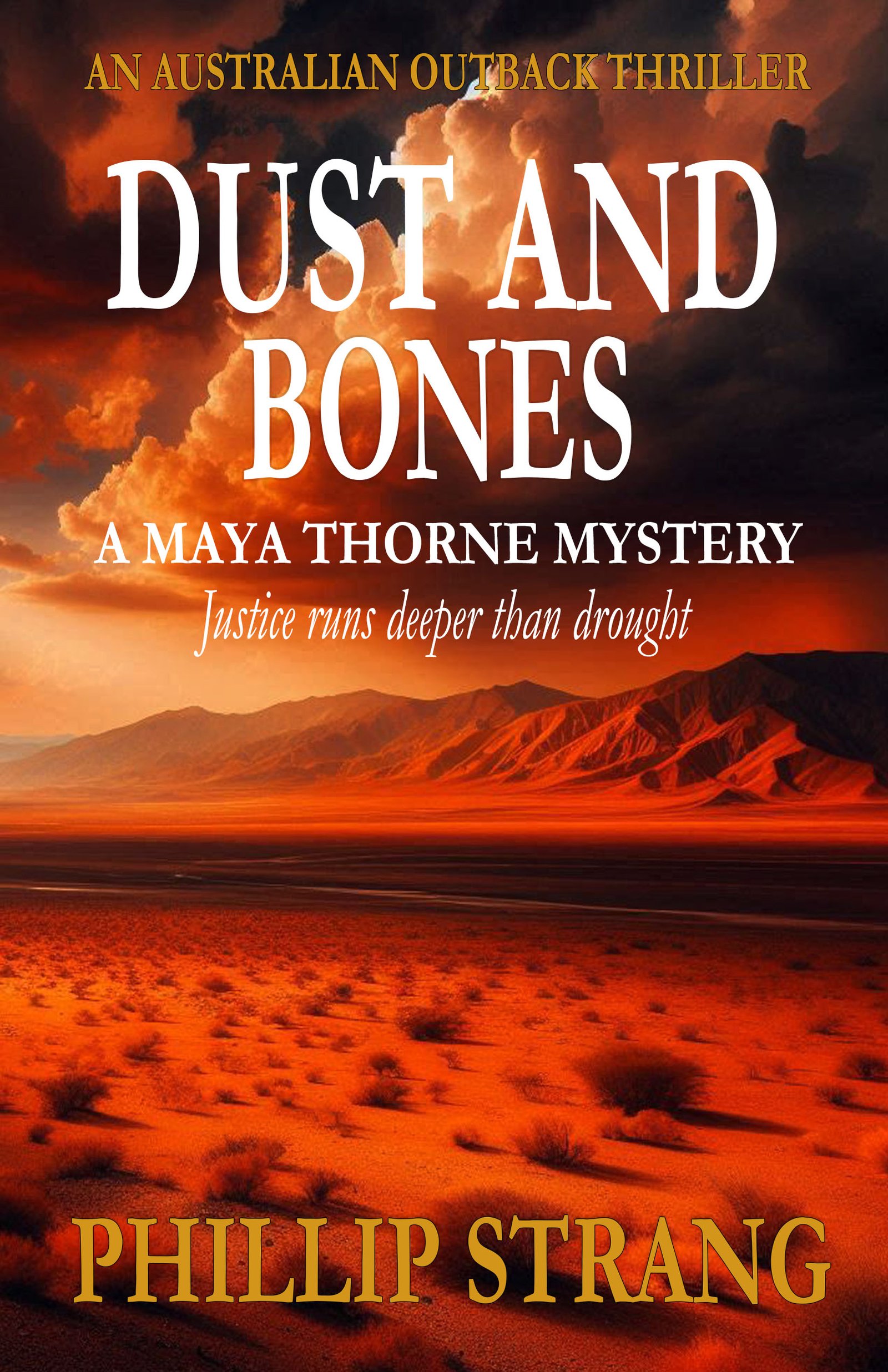
A MAYA THORNE MYSTERY
Get Dust and Bones Free
Justice runs deeper than drought.
Red dust. Shallow graves. A detective who hunts killers where the law runs thin and the nearest help is two hundred miles away.
Send Me the BookYou'll also receive occasional new release emails. Unsubscribe anytime. No spam, ever.
As an Amazon Associate, Phillip Strang earns from qualifying purchases. This page contains affiliate links — buying through them costs you nothing extra.