
Writing children in crime fiction presents one of the most challenging ethical and craft dilemmas any author faces. The vulnerability of child characters demands careful handling, yet their presence often drives the most compelling emotional stakes in our narratives.
Across eighteen series and more than 150 novels, I have found that writing children in crime fiction requires balancing authentic characterization with reader sensibilities, while never losing sight of the story’s emotional truth. The challenge isn’t avoiding child characters entirely, but understanding how to write them with both respect and narrative purpose.
The Emotional Weight of Child Victims
Child victims carry extraordinary emotional weight in crime fiction, but this power must be earned through careful characterization rather than exploited for cheap shock value. The key lies in treating these characters as fully realized individuals rather than plot devices designed to generate outrage or sympathy.
In my DI Tremayne series, when I introduced a storyline involving a missing child, I spent considerable time establishing the child’s personality, relationships, and unique voice before placing them in jeopardy. Readers need to understand who this person is beyond their role as victim. Their hobbies, their relationship with siblings, their favorite foods—these details transform a generic ‘child in danger’ into a specific human being whose fate matters.
The most effective approach involves showing the ripple effects of crimes against children through the adult characters investigating the case. This technique allows you to explore the full emotional impact without subjecting readers to graphic scenes involving minors. The detective’s reaction, the parents’ anguish, the community’s response—these perspectives can convey the gravity of the situation more powerfully than direct depiction.
Child Witnesses: Balancing Authenticity and Plot Function
Child witnesses present unique opportunities for both plot development and character exploration, but they require authentic dialogue and age-appropriate behavior to maintain credibility. Children don’t speak like miniature adults, nor do they process traumatic events the same way mature characters do.
When writing child witnesses, consider their developmental stage carefully. A six-year-old will focus on different details than a twelve-year-old. They might remember the color of someone’s shoes but not their face, or recall a distinctive smell but struggle to describe what they saw. These limitations aren’t weaknesses in your plotting—they’re opportunities to create more realistic investigative challenges.
In one of my Maya Thorne novels set in the Australian outback, a young Aboriginal child witnesses a crime but struggles to communicate what happened due to trauma and cultural barriers. Rather than having the child suddenly become articulate for plot convenience, I explored how Maya had to work patiently, using cultural understanding and gentle persistence to piece together the truth. This approach honored both the character’s authenticity and the story’s investigative process.
How I Approach Writing Child Characters
My process for writing children in crime fiction begins with establishing clear boundaries about what I will and won’t depict on the page. I never write graphic violence against children from the child’s perspective, nor do I detail sexual crimes against minors. These aren’t artistic limitations—they’re professional standards that allow me to explore difficult themes without exploiting vulnerable characters.
I research child psychology and development extensively, paying attention to how children of different ages process fear, trauma, and loss. This research informs everything from dialogue patterns to behavioral responses. A traumatized eight-year-old might regress to younger behaviors, while a teenager might become unnaturally adult in their responses. Understanding these patterns helps create authentic character arcs.
When interviewing techniques become necessary in my police procedural novels, I focus on the investigators’ expertise in handling young witnesses. This shifts the narrative attention to professional competence rather than the child’s distress, while still acknowledging the difficulty of the situation.
I also establish the child’s world beyond their involvement in the crime. Their school life, friendships, family dynamics, and personal interests create a foundation that makes their involvement in the criminal plot feel organic rather than contrived. Readers need to believe this child exists as a real person who happened to encounter crime, not as a character created solely to serve the plot.
Common Mistakes That Undermine Child Characters
The most frequent error I see in crime fiction involving children is making them too precocious or wise beyond their years. Writers often have eight-year-olds speaking like philosophy professors or displaying adult reasoning skills that completely break character authenticity. Real children have limited vocabularies, shorter attention spans, and different logical processes than adults.
Another common mistake involves using child characters purely for emotional manipulation. Having a child in jeopardy simply to raise stakes without developing their personality or relationships creates hollow drama that sophisticated readers will recognize and reject. The child becomes a prop rather than a character, which diminishes the story’s emotional impact.
Many authors also struggle with the aftermath of trauma in child characters. They either have children bounce back unrealistically quickly or remain frozen in victim status throughout the narrative. Real children show resilience in some areas while struggling in others. They might return to normal behavior in familiar settings but display anxiety in new situations, or they might develop specific fears that seem unrelated to the actual traumatic event.
The dialogue trap catches many writers as well. Children don’t use adult sentence structures or sophisticated vocabulary, but they’re not stupid. They process complex emotions and situations through their own developmental lens, which creates unique perspectives that can actually enhance your investigation plot if handled skillfully.
Ethical Boundaries and Reader Expectations
Establishing clear ethical boundaries doesn’t limit storytelling—it enhances it by forcing writers to find more creative solutions. The constraint of not exploiting child characters for shock value pushes authors toward more sophisticated emotional development and plot construction.
Consider your target audience’s expectations carefully. Readers of cozy mysteries have different tolerance levels than those who prefer noir crime thrillers. However, regardless of subgenre, most readers appreciate restraint when dealing with crimes against children. The suggestion of horror often proves more effective than explicit depiction.
In my Steve Case espionage series, when a plot involved endangered children, I focused on the operational aspects of the rescue rather than dwelling on the children’s suffering. This approach maintained tension while respecting both the characters and readers. The urgency came from Case’s professional knowledge of what these children faced, not from graphic descriptions of their situation.
The key lies in understanding that writing children in crime fiction isn’t about avoiding difficult topics—it’s about approaching them with the skill and sensitivity they deserve. Child characters can provide some of the most powerful emotional moments in crime fiction when they’re written as complete human beings rather than plot devices.
Conclusion
Writing children in crime fiction successfully requires treating them as fully realized characters deserving of respect and authentic development. The ethical lines we draw as authors don’t constrain our storytelling—they elevate it by demanding greater skill and sensitivity in our craft.
About Phillip Strang
Phillip Strang is an Australian crime and thriller novelist. Across eighteen series and more than 150 novels, his work spans London police procedurals (DCI Isaac Cook), UK investigations (DI Tremayne), Australian outback crime (Maya Thorne), FBI thrillers (Alex Harlan), Scottish Highland mysteries (DI Sarah Lynch), and espionage (Steve Case). Learn more about Phillip or browse his complete catalogue on Amazon.
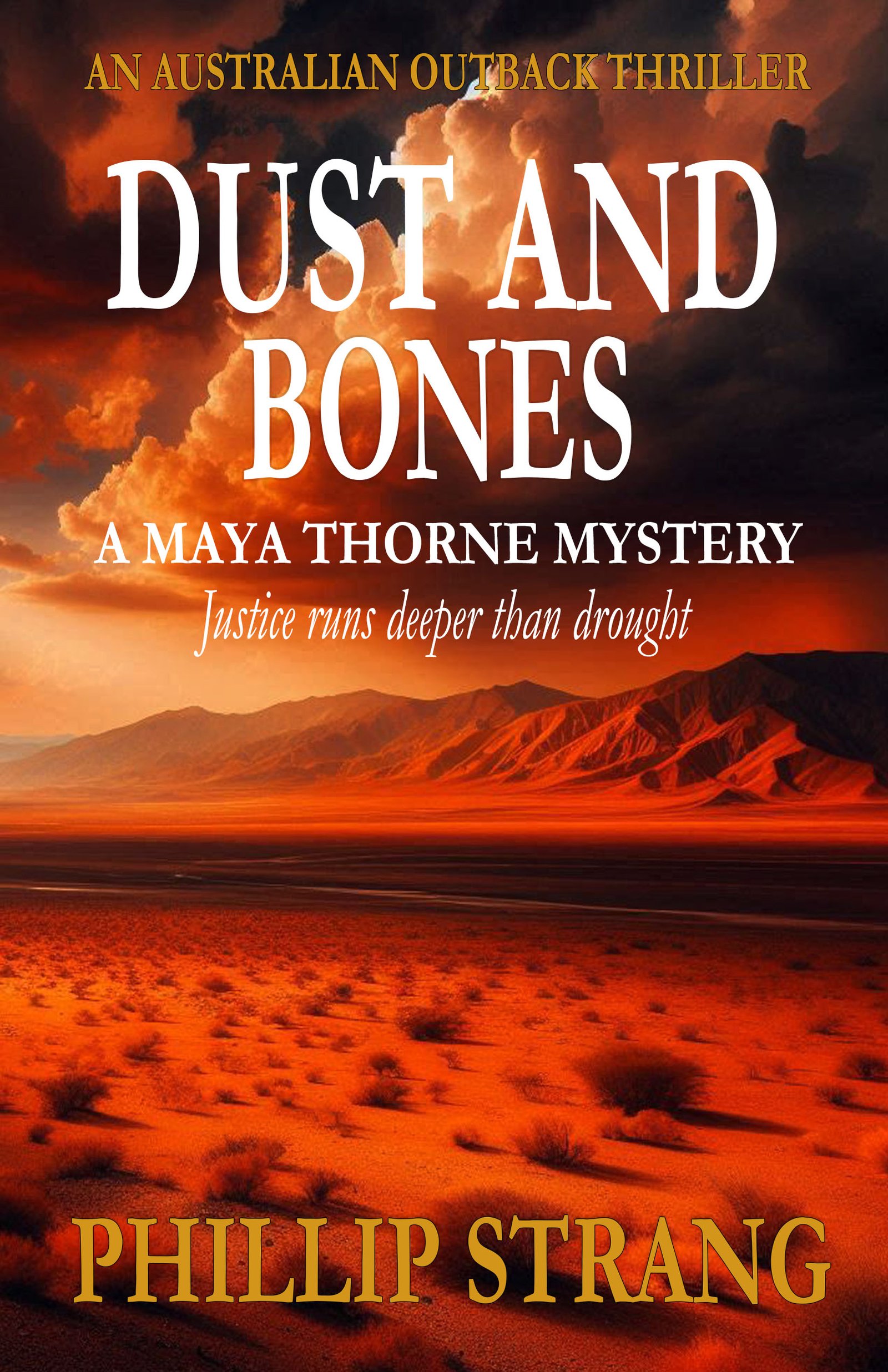
A MAYA THORNE MYSTERY
Get Dust and Bones Free
Justice runs deeper than drought.
Red dust. Shallow graves. A detective who hunts killers where the law runs thin and the nearest help is two hundred miles away.
Send Me the BookYou'll also receive occasional new release emails. Unsubscribe anytime. No spam, ever.
As an Amazon Associate, Phillip Strang earns from qualifying purchases. This page contains affiliate links — buying through them costs you nothing extra.