
Crime fiction thrives on pressure, and nothing creates pressure quite like trapping your characters in a confined space with a killer. The closed environment—whether it’s a cruise ship, remote island, or isolated resort—strips away the safety nets that modern life provides and forces both characters and readers into a claustrophobic dance with danger.
The appeal is immediate: no escape, limited suspects, and mounting tension as the body count rises. Across eighteen series and more than 150 novels, I’ve found that closed environments offer crime writers unparalleled opportunities to explore the darker aspects of human nature while maintaining the logical constraints that make mysteries satisfying to solve.
The Psychology of Confinement in Crime Fiction
Closed environments work because they mirror our primal fears about being trapped with predators. When I wrote several DI Tremayne investigations set in isolated English villages, I discovered that physical boundaries create psychological pressure that accelerates character development and conflict. Your characters can’t simply walk away from problems, call for backup, or disappear into anonymity.
The confined setting forces personalities to collide in ways that wouldn’t happen in open environments. Secrets emerge faster, alliances form and fracture under pressure, and the killer’s mask begins to slip because there’s nowhere to hide. This psychological pressure cooker effect means every conversation, every glance, every seemingly innocent action carries weight.
Consider how differently a murder investigation unfolds on a cruise ship compared to a sprawling city. On the ship, the detective and killer share dining rooms, corridors, and entertainment spaces. They might even find themselves seated at the same captain’s table, maintaining polite conversation while engaged in a deadly game of cat and mouse.
Building Authentic Closed World Settings
Research becomes critical when writing closed environments because readers will scrutinize every detail. You need to understand how a luxury resort operates during a typhoon lockdown, or how ship’s security protocols work when passengers can’t disembark. These aren’t just background details—they become plot drivers.
I’ve learned that successful closed environment stories require you to become an expert in your chosen setting’s operational realities. Who has access to which areas? What are the communication limitations? How do supplies, security, and emergency procedures function? These constraints become the framework within which your crime unfolds.
The physical geography matters enormously. A resort with multiple buildings connected by exposed walkways creates different opportunities than a single hotel structure. An island with beaches, cliffs, and jungle offers hiding places and escape routes that a ship’s metal corridors cannot. Map your environment completely before you begin writing, understanding every possible route, hideaway, and point of vulnerability.
How I Approach Closed Environment Stories
When I’m planning a closed environment crime story, I start with the setting’s natural limitations and work outward. What makes this particular location inescapable? Weather? Geography? Mechanical failure? Political situation? The answer to this question shapes everything that follows.
Next, I populate the environment with just enough characters to create complexity without confusion. Too few, and the mystery becomes transparent. Too many, and readers lose track. I’ve found the sweet spot usually lies between eight and fifteen significant characters, each with clear motivations for being in this particular place at this particular time.
The timeline becomes crucial in closed environments because every moment is accounted for. Unlike traditional police procedurals where investigation can sprawl across weeks, closed environment crimes typically unfold over days or even hours. This compression requires tight plotting and careful attention to the logical sequence of events.
I always establish the ‘rules’ of the environment early—communication blackouts, weather patterns, patrol schedules, or whatever constraints will drive the plot. Readers need to understand these limitations so they can fully appreciate the characters’ predicament and the killer’s cleverness in working within them.
Common Pitfalls and How to Avoid Them
The biggest mistake I see in closed environment crime fiction is relying too heavily on coincidence. Just because your characters are trapped together doesn’t mean logic goes out the window. If the power conveniently fails just as the detective discovers a crucial clue, or the radio mysteriously stops working when backup is needed, readers will feel manipulated.
Another common error is underestimating the practical challenges of your chosen environment. Writers often forget that luxury cruise ships have extensive security systems and trained personnel specifically designed to handle emergencies. Resort staff are trained to notice unusual behavior. Island communities often have informal networks that make it difficult for outsiders to operate undetected.
Beware of the ‘sitting duck’ syndrome where characters behave stupidly to serve the plot. Real people trapped with a killer would take precautions, travel in groups, and modify their behavior. If your victim goes alone to investigate strange noises in the ship’s engine room at midnight, you better give them a compelling reason that readers will accept.
The revelation scene requires particular care in closed environments. Since everyone has been present throughout the story, the solution must emerge from clues and observations that readers could theoretically have made themselves. The detective’s brilliant deduction should feel inevitable in retrospect, not like a rabbit pulled from a hat.
Leveraging the Unique Advantages
Closed environments offer opportunities that open settings cannot match. Every character becomes a potential suspect because everyone had opportunity. The limited cast allows for deeper character development and more complex relationships. Readers can engage more fully with the puzzle because they have the same information available as the detective.
The pressure cooker effect accelerates story pacing naturally. In my Steve Case espionage thrillers, when I’ve placed him in confined situations, the tension builds exponentially because options for maneuver are limited. Characters must rely on intelligence, psychological insight, and careful planning rather than physical escape or external resources.
Use the environment’s unique features as both obstacles and tools. A ship’s complex ventilation system might hide evidence or provide secret passage. Resort maintenance tunnels could offer concealment. Island caves might serve as hideouts or tombs. The setting should feel like an active participant in the story, not just a backdrop.
The confined setting also allows for innovative approaches to classic crime elements. Action thriller elements take on new dimensions when chase scenes must navigate narrow ship corridors or resort buildings. Surveillance becomes more intimate and personal. Even espionage storylines gain intensity when agents cannot easily extract or receive support.
Conclusion
Closed environment crime fiction demands meticulous planning and deep understanding of your chosen setting, but the payoff in terms of sustained tension and reader engagement makes the effort worthwhile. The key lies in respecting both the logical constraints of your environment and the intelligence of your readers, using confinement to enhance rather than substitute for solid plotting and character development.
About Phillip Strang
Phillip Strang is an Australian crime and thriller novelist. Across eighteen series and more than 150 novels, his work spans London police procedurals (DCI Isaac Cook), UK investigations (DI Tremayne), Australian outback crime (Maya Thorne), FBI thrillers (Alex Harlan), Scottish Highland mysteries (DI Sarah Lynch), and espionage (Steve Case). Learn more about Phillip or browse his complete catalogue on Amazon.
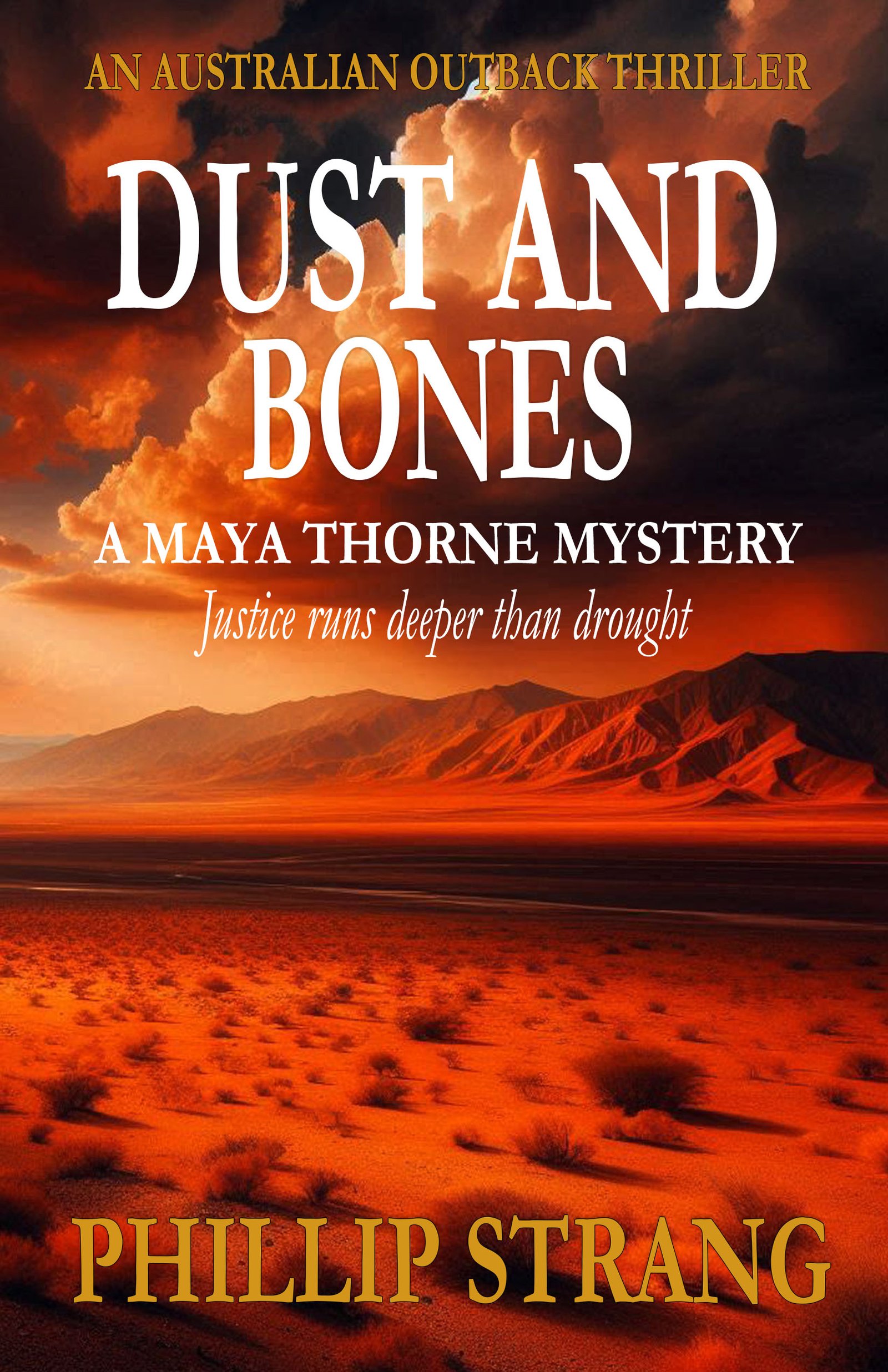
A MAYA THORNE MYSTERY
Get Dust and Bones Free
Justice runs deeper than drought.
Red dust. Shallow graves. A detective who hunts killers where the law runs thin and the nearest help is two hundred miles away.
Send Me the BookYou'll also receive occasional new release emails. Unsubscribe anytime. No spam, ever.
As an Amazon Associate, Phillip Strang earns from qualifying purchases. This page contains affiliate links — buying through them costs you nothing extra.