
The cold case novel presents unique structural challenges that separate it from straightforward police procedurals. Unlike active investigations where events unfold in real-time, cold cases demand writers juggle dual timelines while maintaining momentum across decades-old evidence trails. The central tension lies in balancing historical revelation with present-day investigation without losing narrative drive.
Across eighteen series and more than 150 novels, I have found that cold case structure requires deliberate architectural choices that many crime writers underestimate. When I developed certain DCI Isaac Cook investigations, the cold case elements demanded entirely different pacing strategies than my contemporary crime plots.
The Dual Timeline Problem
Most writers approach dual timelines by alternating chapters between past and present, but this mechanical structure often undermines tension rather than building it. The real challenge is ensuring each timeline drives the other forward rather than competing for attention. I learned this the hard way when structuring investigations that reached back decades.
The key lies in treating the past timeline not as backstory but as active investigation. Your present-day detective isn’t just uncovering what happened—they’re experiencing the original investigation’s emotional and procedural reality. This means the historical sections must contain genuine discoveries, not merely context. Each past chapter should answer one present question while raising two new ones.
Timeline transitions require surgical precision. The moment you switch between time periods represents a structural hinge that can either accelerate or destroy momentum. I’ve found success in linking transitions through evidence, location, or emotional resonance rather than arbitrary chapter breaks. When your detective finds a photograph, let that photograph transport readers directly into the moment it was taken.
Evidence Revelation and Pacing Control
Cold cases present the peculiar challenge of managing evidence that already exists versus evidence that must be discovered. Unlike fresh crime scenes, your detective inherits boxes of files, witness statements, and physical evidence that previous investigators examined. This creates a pacing trap: readers expect new discoveries, but logically, how much new evidence can realistically emerge after years or decades?
The solution involves understanding that evidence has multiple lives. A witness statement from 1995 means something different when read alongside mobile phone records that didn’t exist during the original investigation. DNA technology, digital forensics, and changed circumstances transform old evidence into new revelations. Your structure must account for this layered discovery process.
I structure evidence revelation in three waves: immediate reexamination of existing materials, technology-driven reanalysis, and circumstantial connections that emerge through fresh perspective. Each wave operates on different pacing rhythms. The first wave moves quickly as your detective absorbs the case file. The second wave slows down for methodical technical work. The third wave accelerates as connections emerge between seemingly unrelated elements.
How I Actually Structure Cold Case Investigations
My approach begins with mapping the original crime’s timeline alongside the present investigation’s discoveries. I create two separate story spines, then identify where they must intersect for maximum impact. This isn’t about alternating chapters—it’s about engineering collision points where past and present inform each other.
I typically open with the present-day hook, then move quickly to establish the historical crime’s essential details. But here’s the crucial element: I never reveal the original crime’s complete story upfront. Instead, I parcel out historical details based on what my present-day detective discovers and when they discover it. This keeps both timelines active and interdependent.
The middle section focuses on parallel development. While my detective investigates leads in the present, readers experience the original investigation’s failures and oversights. This creates dramatic irony—readers often spot connections before the detective does, generating engagement rather than frustration. The key is ensuring your detective reaches the same conclusions through logical investigation rather than coincidence.
For climax structure, I bring both timelines into direct confrontation. The resolution of the historical crime must coincide with present-day consequences. Cold cases aren’t academic exercises—they affect living people who’ve carried secrets, guilt, or fear for decades. When working on investigations that involved police procedural elements, I found that the most satisfying cold case resolutions created new conflicts even as they resolved old mysteries.
Character Development Across Time
Cold case novels demand sophisticated character work because you’re essentially writing two sets of characters: those from the original time period and those investigating decades later. The structural challenge involves creating character arcs that span both timelines without losing focus or emotional investment.
Your present-day detective must have compelling personal stakes in solving a historical crime. Generic professional curiosity isn’t sufficient motivation for a full novel. I develop connections between my detective’s personal history and the cold case that go deeper than simple career advancement. Sometimes the detective has indirect connections to the original crime’s era or location. Other times, the cold case echoes patterns in their own life or previous investigations.
Historical characters require equal development despite limited present-day appearances. Victims, suspects, witnesses, and original investigators must feel like complete people rather than plot devices. This means understanding their historical context, personal motivations, and the specific ways that time period shaped their choices. A witness who seemed unreliable in 1987 might have had compelling reasons for their evasiveness that become clear decades later.
The most effective cold case novels create character echoes between timelines. Present-day characters face similar moral or emotional challenges as their historical counterparts, but with different outcomes. This parallel development reinforces themes while avoiding heavy-handed symbolism.
Common Structural Mistakes That Kill Cold Case Novels
The most frequent error involves treating the historical timeline as extended flashback rather than active story. Writers dump backstory in large chunks, believing comprehensive historical context serves the investigation. Instead, this approach kills momentum and reduces the past to mere exposition. Your historical sections must contain scenes with immediate dramatic stakes, not just informational content.
Another critical mistake involves resolution imbalance. Writers often resolve the historical mystery but neglect present-day consequences, or vice versa. A cold case investigation that solves the original crime but creates no contemporary conflict feels academically satisfying but emotionally hollow. Conversely, focusing entirely on present-day drama while treating the historical crime as a simple puzzle reduces your novel to a treasure hunt with dead bodies.
Timeline confusion represents perhaps the most dangerous structural flaw. When readers lose track of which time period they’re experiencing, or when timeline transitions feel arbitrary, the entire narrative architecture collapses. Clear temporal anchoring—through specific historical details, character ages, technology references, or cultural context—must be established within the first paragraph of each timeline shift.
Evidence management errors also plague cold case structures. Some writers introduce too much physical evidence too quickly, overwhelming readers with details. Others rely too heavily on convenient new evidence that emerges precisely when needed. The most effective cold case novels work within realistic constraints while finding creative ways to reexamine existing materials.
Conclusion
Cold case novel structure demands precision engineering rather than intuitive storytelling. The dual timeline challenge, evidence pacing, and character development across decades require architectural planning that goes far beyond standard crime novel construction. Master these elements, and you’ll create investigations that feel both historically grounded and immediately compelling.
About Phillip Strang
Phillip Strang is an Australian crime and thriller novelist. Across eighteen series and more than 150 novels, his work spans London police procedurals (DCI Isaac Cook), UK investigations (DI Tremayne), Australian outback crime (Maya Thorne), FBI thrillers (Alex Harlan), Scottish Highland mysteries (DI Sarah Lynch), and espionage (Steve Case). Learn more about Phillip or browse his complete catalogue on Amazon.
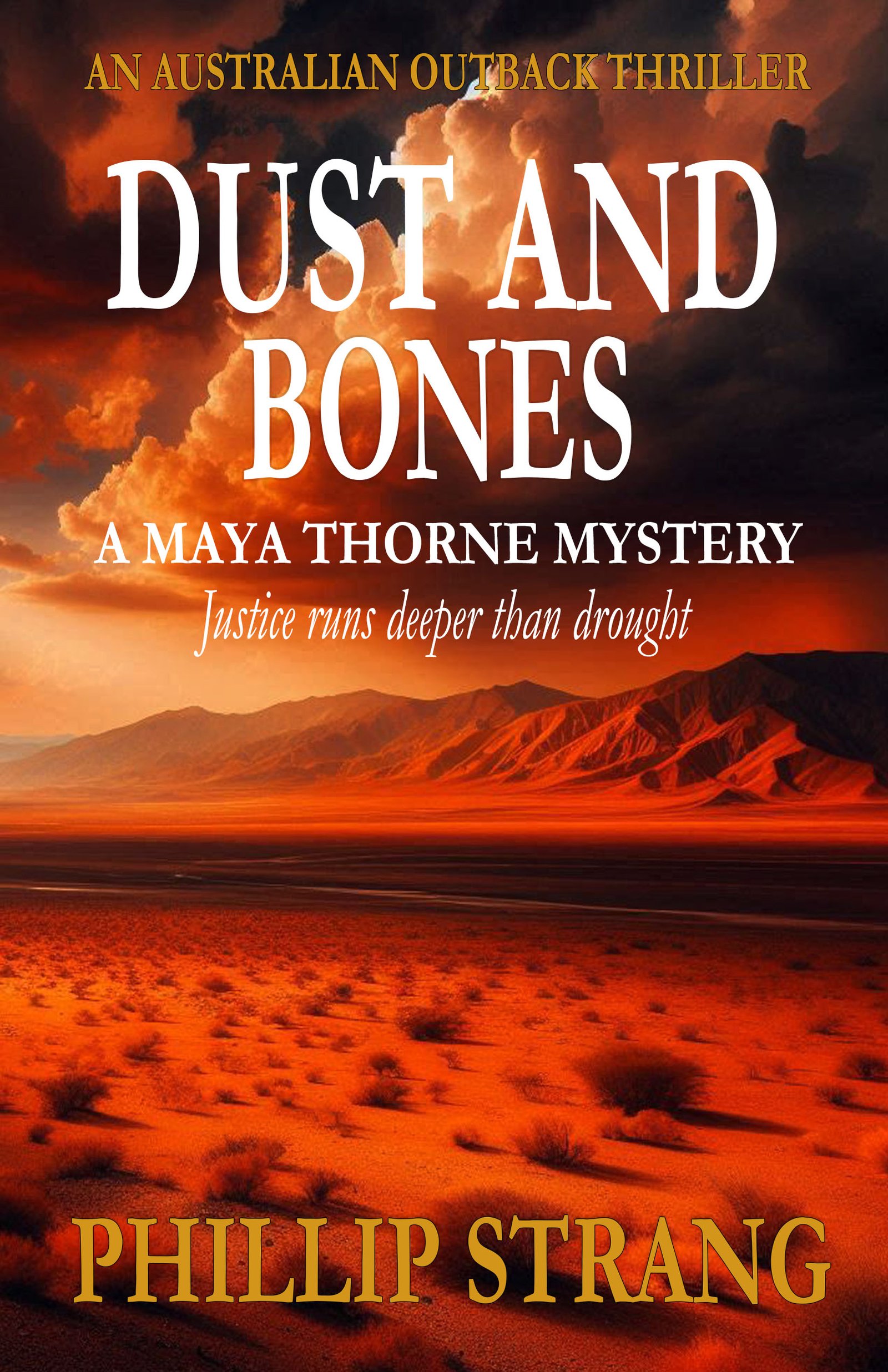
A MAYA THORNE MYSTERY
Get Dust and Bones Free
Justice runs deeper than drought.
Red dust. Shallow graves. A detective who hunts killers where the law runs thin and the nearest help is two hundred miles away.
Send Me the BookYou'll also receive occasional new release emails. Unsubscribe anytime. No spam, ever.
As an Amazon Associate, Phillip Strang earns from qualifying purchases. This page contains affiliate links — buying through them costs you nothing extra.