
The conspiracy thriller presents a unique challenge: how do you weave together multiple threads of deception, betrayal, and hidden agendas without losing your reader in a maze of confusion? The genre demands complexity—readers expect layers of conspiracy that unfold gradually—but that complexity must serve the story, not obscure it.
Across eighteen series and more than 150 novels, I’ve found that the key to successful conspiracy thriller writing lies in controlled revelation. The author must understand the complete conspiracy from the outset, even if the protagonist and reader discover it piece by piece. This isn’t about dumbing down your plot; it’s about smart construction that respects your reader’s intelligence while maintaining clarity.
The Foundation: Building Your Conspiracy Architecture
Before you write a single scene, you need to map your conspiracy completely. I learned this lesson early in my Steve Case series, where the espionage elements required intricate plotting across government agencies, foreign operatives, and corporate interests. The temptation is to let the conspiracy evolve organically as you write, but this approach leads to plot holes and inconsistencies that savvy thriller readers will spot immediately.
Start with the core conspiracy—who benefits, what they’re hiding, and why it matters. Then work backward to determine how this conspiracy would realistically operate. What evidence would it leave? Who would know pieces of the truth? How would they cover their tracks? This groundwork isn’t creative constraint; it’s the foundation that allows you to plant clues and red herrings with precision.
The architecture metaphor is deliberate. Just as a building needs structural integrity before you add decorative elements, your conspiracy needs logical coherence before you layer in the twists and misdirection that make the genre compelling.
Managing Information Flow Without Losing Momentum
The conspiracy thriller’s greatest risk is information overload. You have multiple players, shifting allegiances, hidden motives, and layers of deception to track. Readers want to feel challenged, not overwhelmed. The solution lies in strategic information management—revealing just enough to keep readers engaged while withholding enough to maintain tension.
I use what I call the ‘breadcrumb principle.’ Each chapter should give readers one meaningful piece of information while raising new questions. In my Alex Harlan FBI thrillers, I often reveal a connection between two seemingly unrelated events, but this revelation immediately raises questions about a third element. This keeps the forward momentum while building complexity.
Timing is crucial. Reveal too much too early, and you lose mystery. Reveal too little, and readers become frustrated. The best action thriller novels maintain this balance by giving readers enough information to feel they’re solving the puzzle alongside the protagonist, without making the solution obvious.
Character Perspective as Your Clarity Tool
Your protagonist’s journey through the conspiracy is your primary tool for maintaining reader clarity. The character shouldn’t be a passive recipient of information dumps; they should actively discover, analyze, and sometimes misinterpret what they find. This active engagement creates natural opportunities to clarify complex plot points without resorting to exposition.
I’ve found that internal monologue works particularly well in conspiracy thrillers. When your protagonist pieces together connections, their thought process can illuminate relationships between plot elements for readers. But this technique requires restraint—your character’s deductions should feel organic, not like thinly veiled author explanation.
Multiple POV can enhance complexity, but it can also muddy clarity. If you choose multiple perspectives, each viewpoint character should serve a specific function in revealing or concealing conspiracy elements. Random perspective shifts confuse readers and dilute narrative focus.
My Working Approach: The Conspiracy Map
When I begin a conspiracy thriller, I create what I call a conspiracy map—a visual representation of all the connections, players, and timeline elements. This isn’t a complex diagram; it’s a practical tool that helps me track who knows what, when they know it, and how information moves between characters.
I divide this map into three levels: surface level (what appears to be happening), intermediate level (what’s actually happening), and deep level (the true conspiracy). As I write, I check each scene against this map to ensure I’m revealing information from the appropriate level at the right time. This prevents accidental reveals and helps me maintain consistent complexity throughout the story.
The map also helps me identify potential confusion points before readers encounter them. If I can’t clearly explain a connection or motivation using my map, I know I need to strengthen that element before it reaches the page. This upfront investment saves significant revision time and results in cleaner, more coherent narratives.
Common Mistakes That Cloud Reader Understanding
The most frequent error I see in conspiracy thrillers is the kitchen sink approach—throwing in every possible twist and connection without considering cumulative effect. More isn’t better when it comes to conspiracy elements. Each layer should serve the core story, not exist simply to demonstrate authorial cleverness.
Another major problem is the false complexity trap. Some authors create elaborate conspiracies that collapse under scrutiny. A conspiracy involving sixteen government agencies, twelve corporations, and forty-three individual conspirators might sound impressive, but it’s neither believable nor manageable within a single novel. The best espionage thrillers achieve impact through focused conspiracy rather than sprawling complexity.
Information timing mistakes are equally damaging. Revealing too much in early chapters removes mystery, while withholding crucial information until the final chapters feels like cheating. The worst version of this is the conspiracy that only makes sense after the author explains it in exposition-heavy final scenes. If your conspiracy requires lengthy explanation after the climax, you haven’t integrated it properly into your narrative structure.
Character knowledge inconsistency also undermines reader trust. If your protagonist acts on information they shouldn’t possess, or fails to pursue obvious leads, readers notice. Every character action should align with their knowledge level and established capabilities.
Conclusion
Writing effective conspiracy thrillers requires disciplined complexity—every element must earn its place in your narrative. The goal isn’t to create the most convoluted plot possible, but to craft a conspiracy that feels both sophisticated and comprehensible. When readers close your book understanding how all the pieces fit together, while still marveling at the intricacy of your construction, you’ve succeeded in the conspiracy thriller’s essential challenge.
About Phillip Strang
Phillip Strang is an Australian crime and thriller novelist. Across eighteen series and more than 150 novels, his work spans London police procedurals (DCI Isaac Cook), UK investigations (DI Tremayne), Australian outback crime (Maya Thorne), FBI thrillers (Alex Harlan), Scottish Highland mysteries (DI Sarah Lynch), and espionage (Steve Case). Learn more about Phillip or browse his complete catalogue on Amazon.
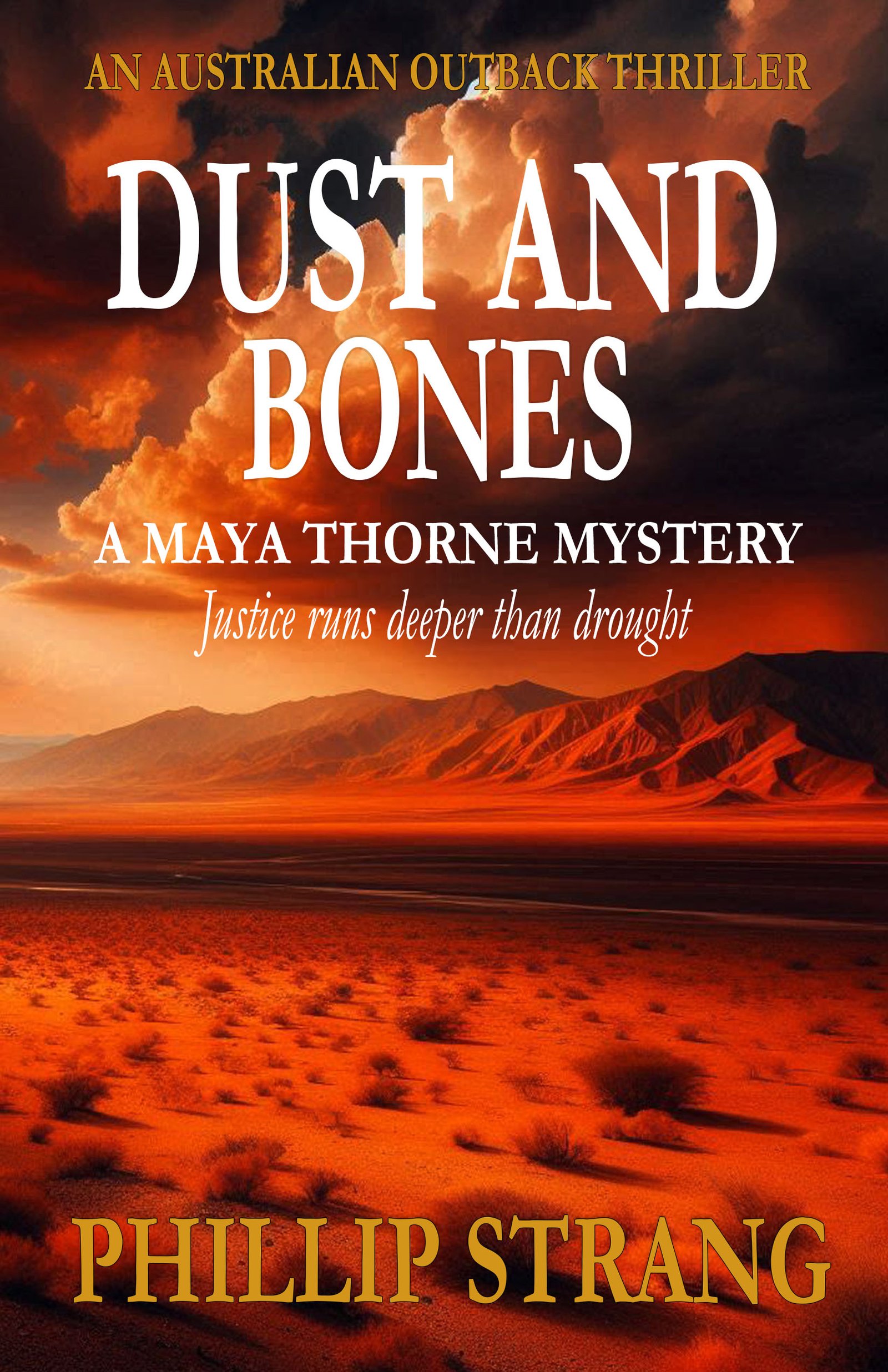
A MAYA THORNE MYSTERY
Get Dust and Bones Free
Justice runs deeper than drought.
Red dust. Shallow graves. A detective who hunts killers where the law runs thin and the nearest help is two hundred miles away.
Send Me the BookYou'll also receive occasional new release emails. Unsubscribe anytime. No spam, ever.
As an Amazon Associate, Phillip Strang earns from qualifying purchases. This page contains affiliate links — buying through them costs you nothing extra.