
The desert doesn’t simply provide backdrop for crime fiction—it becomes an active participant in the psychological warfare between hunter and hunted. Unlike urban settings where buildings and crowds offer hiding places and witnesses, the desert strips characters down to their essential survival instincts while exposing every weakness.
Across eighteen series and more than 150 novels, I’ve found that the most compelling crime fiction emerges when the environment itself threatens characters as much as any human antagonist. Writing desert crime fiction demands understanding how relentless heat, isolation, and the constant specter of death transform ordinary investigative procedures into battles for survival.
The Desert as Psychological Pressure Cooker
Heat becomes a character in desert crime fiction, not merely atmospheric detail. When your detective steps from an air-conditioned vehicle into 120-degree afternoon sun, that physical shock should translate into immediate psychological pressure. The body’s fight-or-flight response activates not from the crime scene, but from the environment itself.
In my Maya Thorne series, I use the Australian outback’s merciless conditions to strip away the comfortable protocols my detective relies on in civilization. When standard police procedures become impossible—when forensic equipment fails in extreme heat, when backup is hundreds of miles away, when radio contact cuts out—characters must make decisions based purely on instinct and limited information. This environmental pressure creates authentic tension that no amount of artificial plot manipulation can match.
The key lies in showing how heat affects decision-making. Dehydration clouds judgment within hours. Sleep deprivation from temperature extremes creates paranoia. Even experienced desert dwellers make fatal errors when environmental stress compounds the psychological pressure of pursuing dangerous criminals.
Isolation as Narrative Device
Desert isolation eliminates the safety nets that urban crime fighters take for granted. No surveillance cameras capture crucial evidence. No witnesses emerge from apartment windows. No cavalry arrives with sirens blaring. This forced self-reliance fundamentally changes how investigations unfold.
The isolation works both ways, of course. Criminals fleeing into desert terrain face the same environmental hazards as their pursuers, creating a leveled playing field where survival skills matter more than weapons or technology. I’ve used this dynamic repeatedly in my Australian outback novels, where both detective and suspect must navigate identical threats from landscape, wildlife, and weather.
Smart writers exploit this isolation to force character development. When your protagonist can’t call for backup, can’t rely on database searches, can’t even trust GPS navigation, they must draw on internal resources and personal knowledge. These limitations push characters toward growth while maintaining narrative tension without resorting to contrived plot devices.
How I Approach Desert Crime Scenes
My process for writing desert crime fiction begins with environmental research that goes far deeper than casual observation. I study how extreme temperatures affect decomposition rates, how wind patterns scatter evidence, how mirages distort visual perception. These details become plot points, not mere atmospheric flourishes.
When constructing desert crime scenes, I consider the timeline carefully. A body discovered after three days in desert heat presents vastly different investigative challenges than the same discovery in temperate climates. Footprints in sand tell different stories than tracks in soil. Even bullet trajectories change in extreme heat conditions.
I also research the specific desert ecosystem I’m writing about. The Sonoran Desert presents different challenges than the Great Victoria Desert or the Mojave. Each has distinct flora, fauna, weather patterns, and geological features that affect both criminal activity and investigation methods. This specificity prevents the generic ‘desert’ backdrop that marks amateur writing.
The human element requires equal attention. Desert communities develop distinct cultures, economic patterns, and social structures. Understanding how people actually live and work in these environments—rather than relying on Hollywood stereotypes—creates authentic character motivations and believable criminal enterprises. Drug trafficking routes, mining operations, and tourism all generate different types of crime requiring different investigative approaches.
Common Mistakes That Destroy Desert Authenticity
The most glaring error in desert crime fiction involves treating extreme environments as mere scenic backdrops rather than active story elements. Writers who have their characters hiking through Death Valley in business suits, or conducting lengthy outdoor interrogations in 115-degree heat, immediately destroy credibility with readers who understand these environments.
Another frequent mistake involves romanticizing desert survival. Characters who navigate trackless wasteland without proper navigation equipment, who find water sources through lucky coincidence, or who suffer no ill effects from exposure destroy the tension that harsh environments should create. Real desert survival requires specific knowledge and equipment—shortcuts in research become obvious to informed readers.
Technology worship presents another pitfall. While GPS and satellite communications work in many desert areas, terrain and weather create dead zones where high-tech solutions fail. Writers who rely on technological solutions to resolve desert dangers miss opportunities to test characters against environmental challenges. The most compelling scenes often emerge when modern tools prove inadequate against ancient landscapes.
Perhaps the worst error involves cultural stereotyping. Desert regions worldwide support diverse communities with complex histories, economies, and social structures. Reducing these populations to generic ‘desert dwellers’ or relying on outdated Western stereotypes insults readers while missing rich opportunities for authentic character development and criminal motivation.
Making Environment Drive Plot Development
Effective desert crime fiction uses environmental factors as plot drivers rather than obstacles to overcome. Water sources become gathering points where criminals and investigators inevitably cross paths. Seasonal weather patterns create windows of opportunity for certain crimes while making others impossible. Even the best action thriller novels recognize that authentic environmental challenges create more sustainable tension than artificial time limits.
I structure desert investigations around environmental realities. Evidence collection happens during cooler morning hours. Long-distance travel requires supply planning and route selection. Communications follow terrain limitations rather than plot convenience. These constraints force creative problem-solving while maintaining believable pacing.
The environment should also reflect character psychology. Endless horizons might represent freedom to some characters while triggering claustrophobia in others. The same landscape that offers purification and clarity to one character becomes a hostile maze to another. These psychological responses to environment reveal character depth while advancing plot development.
Desert weather patterns provide excellent timing mechanisms. Sandstorms that eliminate evidence also create cover for criminal activity. Flash floods that wash away crime scenes also cut off escape routes. Extreme temperature swings that preserve some evidence destroy others. Unlike traditional police procedural novels where weather provides atmosphere, desert crime fiction can use environmental factors as active plot elements that force story development in organic directions.
Building Authentic Desert Communities
Real desert communities develop around practical necessities: water access, transportation routes, natural resources, or strategic locations. Understanding these foundations helps writers create believable settings where criminal enterprises and law enforcement responses both make logical sense.
Desert towns often exist in economic isolation, creating unique social dynamics that affect both criminal motivation and investigative procedures. Limited employment opportunities might drive residents toward illegal activities, while tight-knit communities might protect criminals from outside law enforcement. These social pressures create authentic conflicts that drive plot development without requiring external manipulation.
The seasonal nature of many desert communities—particularly those dependent on tourism or agriculture—creates cyclical opportunities for criminal enterprise and law enforcement challenges. Understanding these patterns helps writers time criminal activities realistically while creating logical opportunities for detection and pursuit.
Contemporary desert communities also deal with modern challenges: drug trafficking routes, human smuggling, environmental crimes, and resource conflicts. These real-world issues provide authentic criminal motivations while connecting local crimes to larger criminal enterprises, expanding story possibilities beyond simple isolated incidents.
Conclusion
Writing compelling desert crime fiction requires treating the environment as an active story participant rather than scenic backdrop. When landscape challenges characters as ruthlessly as any human antagonist, when environmental factors drive plot development, and when authentic desert communities provide realistic criminal motivations, the result transcends simple crime fiction to become survival literature where the stakes feel genuinely life-threatening.
About Phillip Strang
Phillip Strang is an Australian crime and thriller novelist. Across eighteen series and more than 150 novels, his work spans London police procedurals (DCI Isaac Cook), UK investigations (DI Tremayne), Australian outback crime (Maya Thorne), FBI thrillers (Alex Harlan), Scottish Highland mysteries (DI Sarah Lynch), and espionage (Steve Case). Learn more about Phillip or browse his complete catalogue on Amazon.
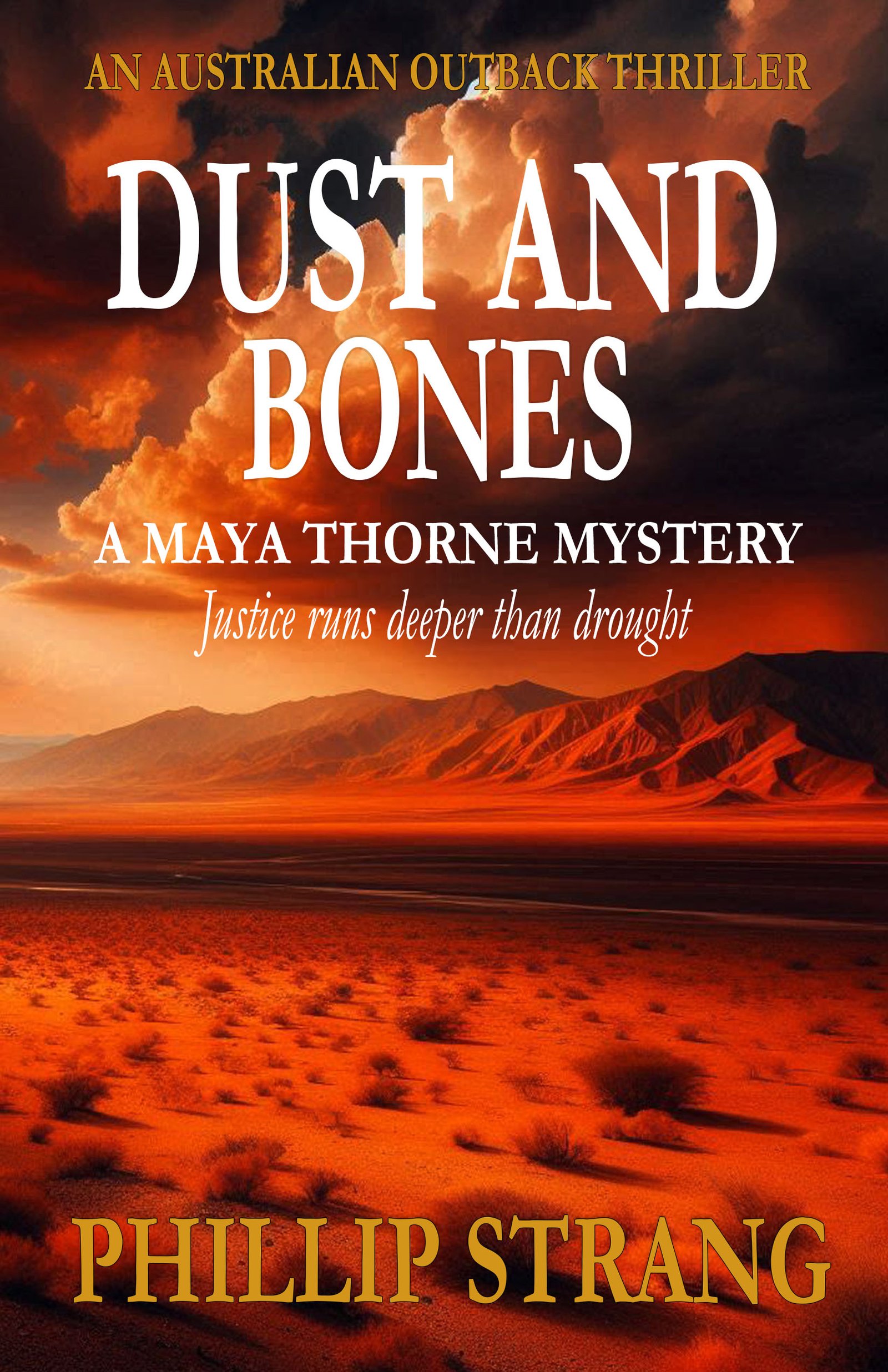
A MAYA THORNE MYSTERY
Get Dust and Bones Free
Justice runs deeper than drought.
Red dust. Shallow graves. A detective who hunts killers where the law runs thin and the nearest help is two hundred miles away.
Send Me the BookYou'll also receive occasional new release emails. Unsubscribe anytime. No spam, ever.
As an Amazon Associate, Phillip Strang earns from qualifying purchases. This page contains affiliate links — buying through them costs you nothing extra.