
The moment when forensic findings emerge can make or break a crime novel. Too early, and you rob the story of its tension; too late, and readers feel cheated by information withheld artificially. The art lies in calibrating these revelations to serve both plot momentum and reader satisfaction.
Across eighteen series and more than 150 novels, I have found that the most crucial decision is not what the forensic evidence reveals, but when and how your characters—and through them, your readers—encounter these discoveries. The pacing of evidence disclosure determines whether your procedural feels authentic or manipulated, whether the investigation drives forward with genuine momentum or staggers under the weight of convenient timing.
The Cascade Principle of Evidence Revelation
Forensic findings should never arrive in isolation. Each piece of evidence must connect to what came before while opening new investigative pathways. I structure evidence reveals like a cascade—each finding triggers the next logical step, creating forward momentum while building complexity.
In my police procedural novels featuring DCI Isaac Cook, I often have preliminary forensic reports arrive within the first third of the book. These early findings establish the crime’s parameters—cause of death, approximate timeline, initial DNA or fingerprint results—without solving the case. They provide enough information to launch the investigation while withholding the crucial connections that would resolve it prematurely.
The key is layering. First comes the obvious evidence any competent investigation would uncover immediately. Then the secondary findings that require deeper analysis or cross-referencing. Finally, the breakthrough evidence that emerges only when investigators ask the right questions or technology provides previously unavailable answers.
Matching Evidence Timing to Story Structure
The three-act structure demands different types of forensic revelations at specific intervals. Act One establishes what happened—the basic forensic facts that define the crime. Act Two complicates those facts with conflicting evidence or deeper analysis that challenges initial assumptions. Act Three delivers the decisive evidence that resolves the central mystery.
This doesn’t mean spreading reveals evenly across your narrative. Some investigations naturally produce clusters of findings, followed by periods of analysis and re-investigation. In my DI Tremayne series, I often have a burst of initial forensic activity, then a slower middle section where characters pursue leads suggested by that evidence, culminating in a final forensic breakthrough that confirms or contradicts their theories.
The crucial principle is that each reveal must feel inevitable in hindsight while remaining surprising in the moment. Readers should be able to look back and see why the evidence emerged when it did, based on the logical progression of the investigation rather than authorial convenience.
Managing Reader Expectations and Knowledge
Crime readers approach forensic evidence with sophisticated expectations shaped by decades of procedurals. They understand DNA analysis takes time, that trace evidence requires careful comparison, that digital forensics can be complex and time-consuming. Playing against these expectations—having results arrive faster or slower than anticipated—can create effective tension if handled properly.
The reader’s knowledge must track closely with the investigating characters’ understanding. If you reveal forensic findings to readers that your detectives haven’t yet received, you create artificial dramatic irony that distances readers from the investigation. Conversely, if your detectives know crucial information that readers don’t share, the story feels manipulated and unsatisfying.
I prefer keeping readers slightly ahead of some characters while maintaining their alignment with the primary investigator. In my Maya Thorne outback crime series, Maya might receive forensic results that local police haven’t seen, or understand their significance in ways other characters don’t. This creates tension without breaking the investigative logic.
How I Actually Structure Evidence Reveals
When I’m plotting a new book, I map out all forensic evidence before writing the first scene. I know what the crime scene will yield, what the autopsy will reveal, what digital or trace evidence exists. Then I work backwards, determining when each piece should emerge based on investigative logic and story pacing.
I typically frontload basic forensic information—cause of death, weapon type, general timeline—within the first few chapters. This grounds readers in the reality of the crime and establishes the investigation’s parameters. Mid-book reveals focus on evidence that complicates the initial picture: unexpected DNA, trace evidence linking to new suspects, digital findings that suggest different motives or timelines.
The final forensic breakthrough usually comes in the last quarter of the book, but it’s never a complete surprise. I plant enough hints and partial evidence that attentive readers can anticipate the direction, even if they can’t predict the exact details. The satisfaction comes from seeing the pieces fit together, not from arbitrary revelation.
I also maintain what I call an evidence pipeline—information that exists in the story world but hasn’t yet reached the characters. Lab results pending, analysis in progress, experts consulted but not yet reporting back. This creates natural tension and gives me tools for pacing without resorting to artificial delays.
Common Mistakes That Kill Evidence Reveals
The worst error is the convenient delay—forensic results that should arrive quickly but don’t because the plot requires their absence. Readers notice when DNA analysis that typically takes days suddenly requires weeks, or when obvious tests aren’t conducted until the story needs their results.
Equally damaging is the information dump approach, where multiple crucial findings arrive simultaneously in a single scene. This might seem efficient, but it actually flattens the investigative process and robs individual discoveries of their impact. Instead of building momentum, it creates a static exposition block that halts forward motion.
Many writers also fall into the red herring trap with forensic evidence—introducing findings that point toward innocent suspects without proper foundation. Effective thriller writing requires that misleading evidence make logical sense within the crime’s reality, not exist solely to misdirect readers. The evidence should genuinely suggest alternative theories that competent investigators would reasonably pursue.
Another common flaw is the CSI effect taken too far—forensic evidence that provides impossibly specific information or delivers results faster than real-world capabilities allow. While crime fiction permits some compression of real-world timelines, pushing too far breaks the procedural contract with readers who expect basic plausibility.
Building Tension Through Partial Reveals
The most effective forensic scenes often withhold as much as they reveal. A lab report that confirms one suspicion while raising new questions maintains investigative momentum better than one that simply provides answers. I structure many evidence reveals as partial information—preliminary results that suggest directions without providing conclusions.
This approach reflects real forensic work, where initial findings often prompt additional testing or analysis. It also creates natural opportunities for characters to debate interpretations, pursue different theories, or request follow-up examinations. The investigation remains active rather than simply reactive to incoming information.
In my espionage thriller series, forensic evidence often raises questions about jurisdictions, international connections, or classified information that complicates rather than clarifies the investigation. The evidence moves the story forward while deepening the mystery rather than resolving it.
Conclusion
Effective forensic evidence reveals serve story momentum rather than dictating it. The best crime fiction makes each discovery feel like a natural consequence of competent investigation while maintaining the pacing necessary for engaging narrative. Master this balance, and your procedurals will feel both authentic and compelling.
About Phillip Strang
Phillip Strang is an Australian crime and thriller novelist. Across eighteen series and more than 150 novels, his work spans London police procedurals (DCI Isaac Cook), UK investigations (DI Tremayne), Australian outback crime (Maya Thorne), FBI thrillers (Alex Harlan), Scottish Highland mysteries (DI Sarah Lynch), and espionage (Steve Case). Learn more about Phillip or browse his complete catalogue on Amazon.
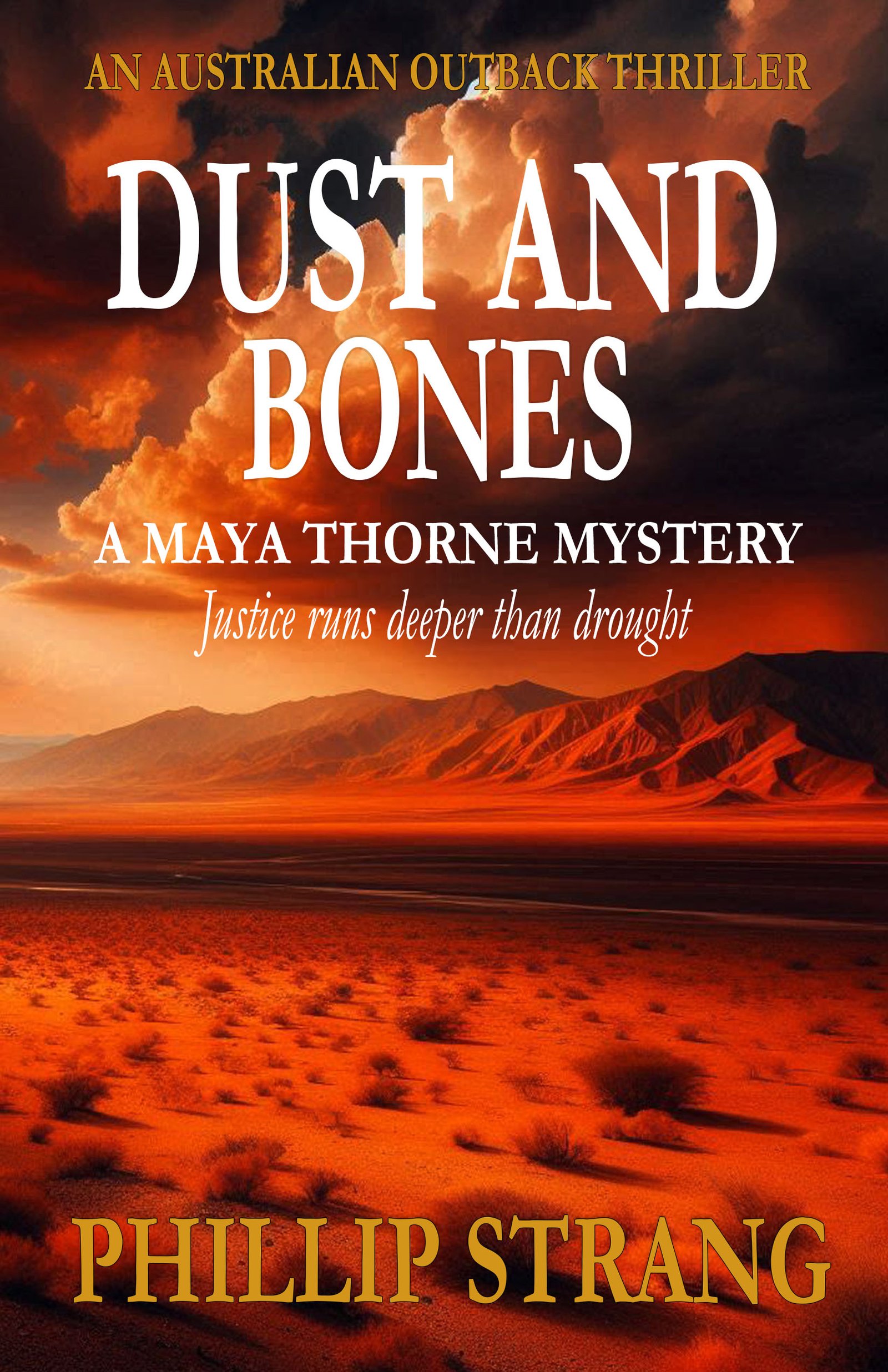
A MAYA THORNE MYSTERY
Get Dust and Bones Free
Justice runs deeper than drought.
Red dust. Shallow graves. A detective who hunts killers where the law runs thin and the nearest help is two hundred miles away.
Send Me the BookYou'll also receive occasional new release emails. Unsubscribe anytime. No spam, ever.
As an Amazon Associate, Phillip Strang earns from qualifying purchases. This page contains affiliate links — buying through them costs you nothing extra.