
The first draft of a crime novel presents a unique challenge that separates it from other genres. You’re not just wrestling with character arcs and pacing, you’re constructing a puzzle that must resolve logically while maintaining tension throughout. Too many writers get lost in the labyrinth of clues and red herrings they’ve created, abandoning manuscripts halfway through when the investigation becomes as confusing to them as it would be to their detective.
Across eighteen series and more than 150 novels, I’ve found that completing a crime novel’s first draft requires a different mindset than literary fiction or even other commercial genres. The structural demands are unforgiving, and the reader’s expectations for logical resolution mean you can’t simply write your way into clarity as you might with character-driven work.
Start With Your Ending, Not Your Beginning
Crime novels work backwards from the solution, regardless of how you present the investigation to readers. Before I write the opening scene, I know who committed the crime, why they did it, and how my detective will uncover the truth. This isn’t about plotting every detail, it’s about establishing the logical foundation that will support your entire narrative structure.
When I developed the first DCI Isaac Cook novel, I spent weeks working out the murderer’s methodology and timeline before Cook ever arrived at the crime scene. This groundwork prevented me from writing myself into corners where the evidence couldn’t logically lead to a satisfying resolution. You can discover character nuances and subplot opportunities as you write, but the crime itself must be architecturally sound from the beginning.
Many writers resist this approach, believing it will constrain their creativity. The opposite is true. When you know where you’re heading, you can plant meaningful clues, develop authentic red herrings, and allow your detective’s investigation to unfold naturally. The mystery lies in how your protagonist discovers the truth, not in whether you know what that truth is.
Maintain Forward Momentum Through Plot Beats
Crime novels live or die on pacing, and first drafts are where pacing problems begin. Every scene must either advance the investigation, deepen character understanding, or escalate tension. If a scene doesn’t accomplish at least one of these functions, it’s literary dead weight that will kill your momentum.
I structure my first drafts around investigation beats rather than word count targets. Each beat represents a significant development: a new clue discovered, a suspect eliminated, a theory proven wrong, a relationship between characters revealed. These beats create natural chapter breaks and ensure the story maintains forward drive even when you’re exploring character psychology or setting atmosphere.
The key is recognizing when you’re indulging in scenes that feel important to you as the writer but don’t serve the reader’s experience. That beautifully written conversation between your detective and their partner might reveal wonderful character insights, but if it doesn’t connect to the central investigation, save it for the second draft. First drafts are about reaching the end with your structure intact.
How I Actually Approach the Writing Process
My daily writing practice focuses on consistency rather than inspiration. I aim for a minimum of one investigation beat per writing session, which typically translates to 1,000 to 1,500 words. This approach ensures I’m always moving the plot forward, even on days when the prose feels clunky or the dialogue sounds stilted.
I keep a separate document tracking my clues, suspects, and timeline. This isn’t a detailed outline, but a working reference that prevents contradictions and helps me maintain logical consistency. When I’m writing a Maya Thorne novel set in the Australian outback, this document becomes crucial for tracking the geographic and temporal relationships between crime scenes and characters.
The most important rule I follow is never stopping mid-scene to research or perfect details. If I need to know the specifics of forensic procedures or police protocol, I make a note and continue writing. First drafts are about capturing the story’s skeleton, not polishing its skin. The research and refinement come later, after you’ve proven you can reach the end.
I also resist the urge to reread previous chapters while drafting. This practice inevitably leads to editing rather than forward progress, and editing before you’ve completed the story is like renovating a house before you’ve finished the foundation. The best police procedural novels succeed because their structure supports the investigation, not because every sentence sparkles.
Common Mistakes That Kill Crime Novel Drafts
The most destructive mistake I see writers make is introducing too many suspects without understanding how each one serves the story. They create elaborate backstories for characters who exist only to pad the suspect list, then struggle to give each one meaningful scenes that justify their presence. When you’re 40,000 words in and realize three of your suspects are interchangeable, the temptation to abandon the project becomes overwhelming.
Another fatal error is changing the crime or the perpetrator midway through the draft because a new idea seems more interesting. While flexibility can improve a story, fundamental changes to the crime’s nature require rewriting everything that came before. What seems like a creative breakthrough often becomes a structural nightmare that derails completion.
Writers also frequently get lost in procedural research, spending hours perfecting the technical aspects of police work or forensic science instead of writing scenes. This research obsession becomes a sophisticated form of procrastination. Your first draft doesn’t need to satisfy forensic experts, it needs to satisfy readers who want a compelling story with logical resolution.
Perhaps most damaging is the tendency to second-guess every plot development as you write it. This constant self-doubt leads to endless revision of completed scenes rather than progress toward the ending. Trust your initial instincts during the first draft, even when they feel imperfect. The goal is completion, not perfection.
Managing the Investigation’s Complexity
Crime novels inherently involve multiple timelines, character motivations, and plot threads that must converge logically. The complexity can become paralyzing if you try to keep every detail perfect as you write. Instead, focus on maintaining the primary investigation thread while allowing secondary elements to remain loosely defined until revision.
When developing my DI Sarah Lynch series, I learned to distinguish between essential plot points that must be precisely positioned and supporting details that can be adjusted later. The timing of when Lynch discovers a crucial piece of evidence affects every subsequent scene, but the exact wording of witness statements can be refined in revision without structural consequences.
This approach requires accepting temporary inconsistencies and plot holes in your first draft. Mark these issues for later attention rather than stopping to resolve them immediately. The most important relationship in your crime novel is between the central mystery and its resolution, and everything else can be calibrated once that relationship is solid.
Consider how the complexity in action thriller novels often involves multiple plot threads, yet successful authors maintain focus on the primary conflict while weaving in supporting elements. The same principle applies to crime fiction, where the investigation provides the central spine that supports character development, setting details, and thematic elements.
Conclusion
Completing a crime novel’s first draft requires discipline over inspiration, structure over spontaneity. The genre’s demands for logical resolution mean you can’t rely on writing your way to clarity as you might with other forms of fiction. Know your ending, maintain forward momentum through consistent plotting beats, and resist the perfectionist impulses that derail completion. The best crime novel is the one you finish, not the one you abandon in pursuit of impossible perfection.
About Phillip Strang
Phillip Strang is an Australian crime and thriller novelist. Across eighteen series and more than 150 novels, his work spans London police procedurals (DCI Isaac Cook), UK investigations (DI Tremayne), Australian outback crime (Maya Thorne), FBI thrillers (Alex Harlan), Scottish Highland mysteries (DI Sarah Lynch), and espionage (Steve Case). Learn more about Phillip or browse his complete catalogue on Amazon.
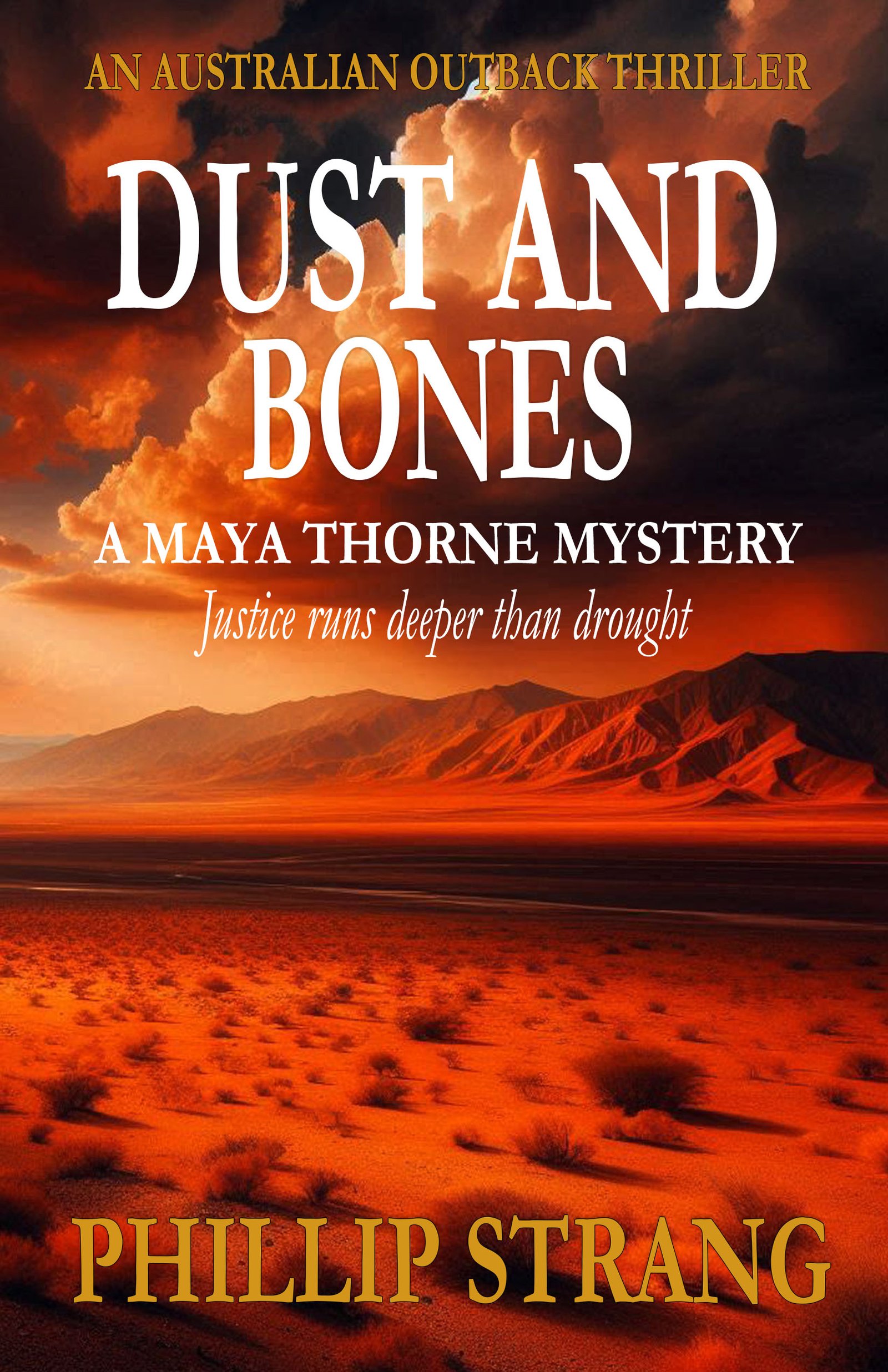
A MAYA THORNE MYSTERY
Get Dust and Bones Free
Justice runs deeper than drought.
Red dust. Shallow graves. A detective who hunts killers where the law runs thin and the nearest help is two hundred miles away.
Send Me the BookYou'll also receive occasional new release emails. Unsubscribe anytime. No spam, ever.
As an Amazon Associate, Phillip Strang earns from qualifying purchases. This page contains affiliate links — buying through them costs you nothing extra.