
The funeral scene occupies unique territory in crime fiction, serving simultaneously as a crucible of genuine grief and a calculated narrative device for gathering suspects under one roof. Unlike other dramatic moments that can be staged anywhere, the funeral forces your characters into proximity while their emotional defenses are theoretically lowered, creating opportunities for revelation that feel both organic and inevitable.
Across eighteen series and more than 150 novels, I have found that the funeral scene functions best when it serves multiple masters: advancing the investigation, deepening character relationships, and honoring the reality of loss. The challenge lies in balancing these competing demands without sacrificing the authenticity that readers expect from contemporary crime fiction.
The Investigative Function: More Than Just Gathering Suspects
The obvious use of a funeral scene is putting all your players in the same space, but that surface function only works if you’ve established genuine reasons for their attendance. I learned this while writing one of my DCI Isaac Cook novels, where I initially had Isaac observing from the back of the church purely for surveillance purposes. The scene felt hollow until I gave him a personal connection to the deceased that justified his presence beyond professional duty.
The funeral scene excels at revealing character through behavior under social pressure. Some suspects will perform grief they don’t feel, others will struggle to hide relief or satisfaction. The key is showing these reactions through specific actions rather than internal monologue. Watch how people position themselves in relation to the family, how they handle the receiving line, whether they speak or remain silent during open microphone portions of the service.
Physical evidence can emerge naturally at funerals. Flowers reveal relationships that weren’t previously disclosed. Attendance patterns show social hierarchies. Most importantly, absence can be as telling as presence, but only if you’ve established expectation beforehand. The missing business partner or estranged sibling creates questions that drive subsequent investigation.
Emotional Authenticity: Respecting the Reality of Grief
Funeral scenes fail when they treat grief as mere window dressing for plot advancement. Real mourning is messy, unpredictable, and often contradictory. People laugh inappropriately, get angry at trivial details, or feel numb when they expected devastation. These authentic responses create stronger character moments than generic weeping or stoic silence.
The relationship between your investigator and the deceased determines how much emotional weight the scene can carry. If your detective knew the victim personally, the funeral becomes a moment of professional conflict—they’re simultaneously mourning and working. This tension generates compelling internal drama without requiring external action.
Consider the cultural and religious context of your funeral scene. Different traditions create different opportunities for character interaction and plot development. A traditional viewing allows for private conversations, while a celebration of life encourages public sharing that might reveal information. Research the specific practices relevant to your characters rather than defaulting to generic ceremonies.
How I Actually Write These Scenes
I approach funeral scenes by first identifying what information needs to emerge and then constructing realistic circumstances for its revelation. The scene structure typically follows the actual flow of funeral events: arrival and mingling, the service itself, and post-service gathering. Each phase offers different opportunities for character interaction and information exchange.
During the arrival phase, I focus on relationship dynamics as characters navigate who they sit with, how they greet each other, and what their positioning reveals about social hierarchies. The service portion often works best for internal reflection or observation of others’ reactions. The post-service gathering provides the most natural opportunities for conversation and confrontation.
I’ve learned to avoid making the funeral scene the location for major revelations or confrontations unless they arise organically from the emotional pressure. When I wrote a key scene in my Maya Thorne series, the breakthrough came not from someone confessing at the graveside, but from a small inconsistency in how two mourners described the same memory. The emotion of the moment made them less guarded, not more dramatic.
The sensory details matter enormously in funeral scenes. The specific flowers, the music choices, the quality of the facility—these elements reveal character and relationship information while grounding readers in the reality of the moment. I always include at least one detail that only someone who really knew the deceased would notice or comment upon.
Common Mistakes That Undermine Funeral Scenes
The biggest error I see is treating the funeral as pure plot convenience without considering the emotional reality for the characters involved. When your detective shows up purely for surveillance reasons, with no personal connection to the deceased, the scene feels manufactured. Similarly, having mourners behave in ways that serve the plot but ignore human psychology destroys credibility.
Another frequent mistake is overloading the funeral with too many investigative revelations. While the scene offers opportunities for information gathering, treating it as a major exposition dump feels exploitative of the grief context. I’ve seen writers have three different suspects make incriminating statements during the same service, which stretches believability beyond the breaking point.
Dialogue that’s too on-the-nose kills these scenes quickly. People don’t typically discuss the details of their relationships with the deceased in explicit terms at funerals. Instead, they make oblique references, share specific memories, or reveal information through what they choose not to say. The art lies in letting readers infer significance rather than having characters state it directly.
The timing mistake appears when writers place the funeral too early or too late in their investigation timeline. Too early, and you lack sufficient character development for the interactions to carry weight. Too late, and it feels like an afterthought rather than an integral story element. The funeral works best when enough investigation has occurred to make character relationships complex but not yet fully resolved.
Integrating Funeral Scenes Into Series Work
In series fiction, funeral scenes carry additional weight because they often represent the culmination of character relationships built over multiple books. Regular readers bring emotional investment to these moments that first-time readers lack. This creates an opportunity to reward series loyalty while remaining accessible to new readers.
The funeral scene also provides natural opportunities for character development that extends beyond the current case. When writing a funeral in my police procedural novels, I consider how the experience of loss might affect the detective’s approach to future cases or personal relationships.
For series characters, attending funerals becomes part of their emotional journey across books. The accumulated weight of loss—victims, colleagues, family members—shapes how they handle subsequent grief and influences their investigative priorities. This emotional continuity strengthens series cohesion while adding depth to individual installments.
Conclusion
The funeral scene in crime fiction succeeds when it honors both the narrative requirements of the genre and the emotional reality of loss. Rather than treating it as pure plot device, approach it as a moment where character truth emerges under pressure, where relationships reveal their true nature, and where the human cost of crime receives proper acknowledgment.
About Phillip Strang
Phillip Strang is an Australian crime and thriller novelist. Across eighteen series and more than 150 novels, his work spans London police procedurals (DCI Isaac Cook), UK investigations (DI Tremayne), Australian outback crime (Maya Thorne), FBI thrillers (Alex Harlan), Scottish Highland mysteries (DI Sarah Lynch), and espionage (Steve Case). Learn more about Phillip or browse his complete catalogue on Amazon.
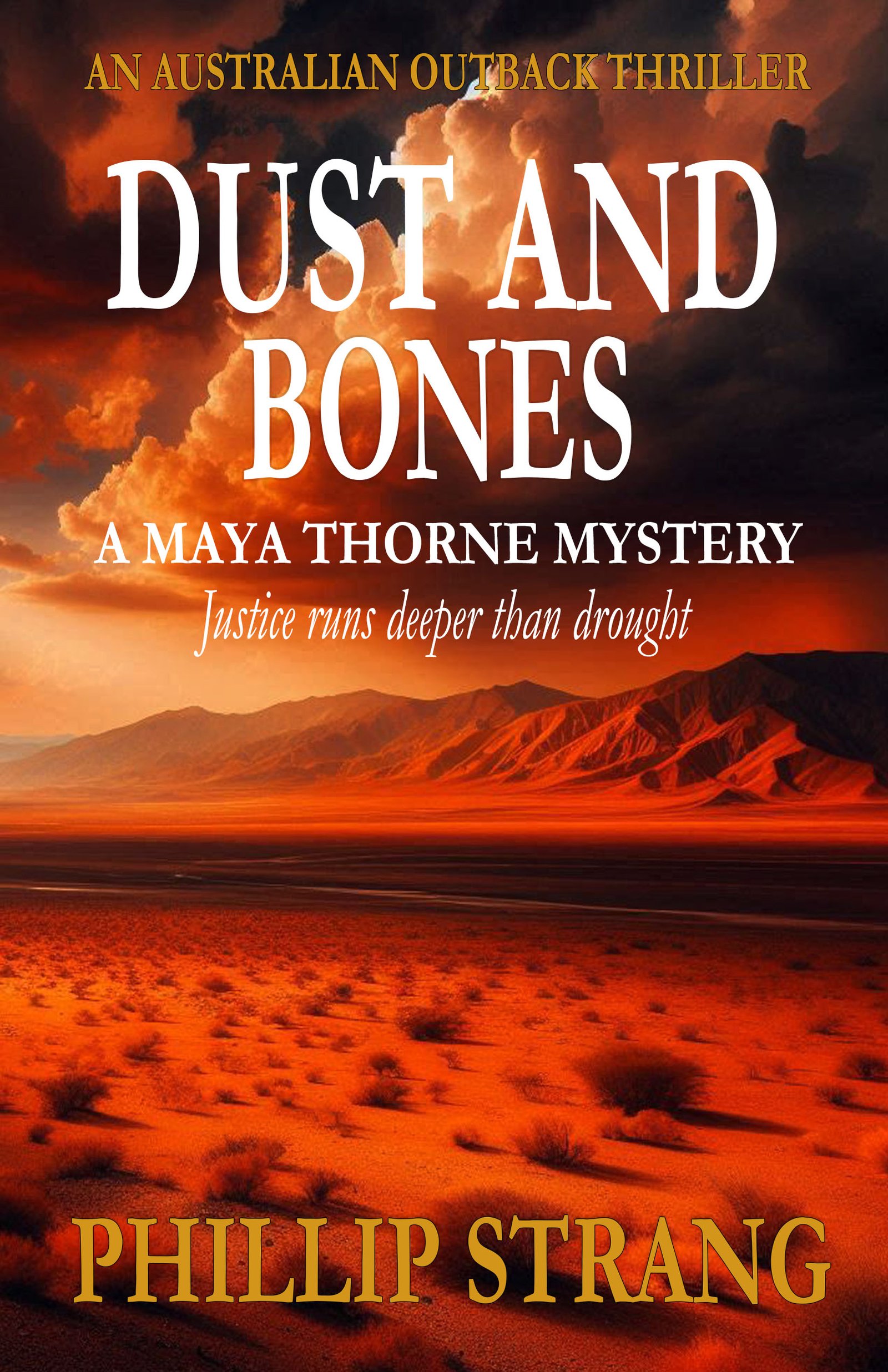
A MAYA THORNE MYSTERY
Get Dust and Bones Free
Justice runs deeper than drought.
Red dust. Shallow graves. A detective who hunts killers where the law runs thin and the nearest help is two hundred miles away.
Send Me the BookYou'll also receive occasional new release emails. Unsubscribe anytime. No spam, ever.
As an Amazon Associate, Phillip Strang earns from qualifying purchases. This page contains affiliate links — buying through them costs you nothing extra.