
Islands present crime writers with a deceptively simple yet devastatingly effective setting that transforms every investigation into a pressure cooker. The physical boundaries create natural story constraints that force both characters and plot into tighter focus. When there’s nowhere to run and limited places to hide, every revelation carries more weight and every red herring becomes more dangerous.
Across eighteen series and more than 150 novels, I’ve found that island settings demand a fundamentally different approach to pacing, character development, and plot structure than mainland crime fiction. The isolation that makes islands so appealing to crime writers also creates specific technical challenges that can derail an otherwise solid story if not handled with precision.
The Geography of Suspense
Island topography becomes your co-conspirator in building tension, but only if you understand how physical limitations affect human behavior under stress. Every cliff becomes a potential death trap, every beach a crime scene, every harbor a bottleneck for escape. The key lies not in cataloguing these features like a tour guide, but in weaving them into the emotional fabric of your investigation.
I learned this lesson while developing locations for my Maya Thorne series, where the vast Australian outback creates similar isolation effects. Physical barriers force characters into confrontation rather than avoidance, accelerating plot development in ways that feel natural rather than contrived. On an island, a simple walk becomes loaded with significance when every path leads either to revelation or dead ends.
The mistake many writers make is treating island geography as mere backdrop. Your coastline, interior terrain, and weather patterns should function as active story elements that influence investigation methods, character movement, and plot timing. A ferry schedule isn’t just transportation logistics—it’s a countdown timer that creates urgency.
Community Dynamics Under the Microscope
Island communities operate under different social rules than mainland populations, and crime writers who ignore this reality create stories that feel artificially transplanted. Long-term residents develop intricate relationship webs spanning generations, where everyone knows everyone else’s business, secrets, and family histories. This creates both opportunities and obstacles for your detective.
The social dynamics that emerge from geographic isolation intensify every human conflict. Old grudges simmer longer when you can’t simply move away from your enemy. Family feuds become community-defining events. Economic dependencies create complex webs where the victim might also be someone’s employer, creditor, or only source of essential services.
When writing police procedurals, these community dynamics become investigative tools and barriers simultaneously. Witnesses who might speak freely to outsiders in a city become protective and suspicious when their neighbor’s reputation hangs in the balance. Local law enforcement faces conflicts of interest that mainland police rarely encounter, creating natural tension between duty and personal relationships.
Pacing in Confined Spaces
Island settings demand careful attention to pacing because the usual crime fiction rhythms don’t translate directly to confined environments. The typical pattern of expanding investigation followed by narrowing focus becomes inverted when your entire story world fits within clearly defined geographical boundaries. Instead of casting increasingly wider nets, your detective must dig deeper into a fixed population and landscape.
This inversion affects how you structure revelations and red herrings. Every false lead your detective follows is visible to the entire community, making subsequent questioning more difficult and suspects more guarded. The usual technique of introducing new characters and locations as the investigation broadens becomes impossible, forcing you to find depth rather than breadth in your storytelling.
I’ve found that successful island crime fiction often employs a spiral structure rather than the linear expansion common in mainland stories. Each investigation cycle moves deeper into the community’s hidden layers while covering the same geographical ground. This requires more sophisticated character development and a more intricate understanding of how past events influence present behavior.
The Outsider Detective Dilemma
Bringing an outside investigator to your island creates immediate dramatic potential, but also presents specific craft challenges that must be addressed early and consistently. The outsider detective faces practical obstacles—limited local knowledge, transportation dependencies, communication barriers—that affect every aspect of the investigation process.
More importantly, the community’s response to outside authority creates story tension that extends beyond the central crime. Island residents often view external investigators with suspicion, protectiveness toward their community, and resentment of implied incompetence in local law enforcement. This social resistance becomes a subplot that either enhances or undermines your main investigation, depending on how skillfully you handle it.
The alternative—using a local detective—presents different challenges. Local investigators face conflicts of interest, personal relationships that compromise objectivity, and community pressure that can derail proper procedures. In my DI Sarah Lynch series set in the Scottish Highlands, similar dynamics emerge where local knowledge becomes both asset and liability, creating internal conflict that drives character development.
Common Pitfalls in Island Crime Writing
The most frequent mistake in island crime fiction is treating isolation as a simple plot device rather than a complex story element that affects every aspect of your narrative. Writers often create islands that feel like mainland settings with water around them, missing the psychological and social implications of true geographic isolation.
Equally problematic is the tendency to over-rely on weather and natural dangers as tension builders. While storms and treacherous coastlines can enhance atmosphere, they shouldn’t carry the primary burden of creating suspense. The most effective island crime fiction generates tension from human conflict intensified by isolation, not from external natural threats.
Another common error involves underestimating the logistics of island life and how these practical considerations affect crime investigation. Ferry schedules, communication limitations, and resource scarcity aren’t just atmospheric details—they’re investigative constraints that must be integrated into your plot structure. When writers ignore these realities, their stories feel disconnected from the setting they’ve chosen.
Perhaps most significantly, many writers fail to explore how island isolation affects the psychological state of both residents and visitors. The claustrophobia, heightened social tensions, and escape anxieties that naturally develop in confined communities should inform character behavior and motivation throughout your story. In developing storylines that explore action thriller elements within confined settings, these psychological pressures become crucial plot drivers.
Conclusion
Island settings offer crime writers unique opportunities to intensify human drama through geographic and social constraints, but only when approached with understanding of how isolation fundamentally changes story dynamics. The physical boundaries that make islands appealing also demand more sophisticated approaches to pacing, character development, and plot structure than conventional crime fiction.
About Phillip Strang
Phillip Strang is an Australian crime and thriller novelist. Across eighteen series and more than 150 novels, his work spans London police procedurals (DCI Isaac Cook), UK investigations (DI Tremayne), Australian outback crime (Maya Thorne), FBI thrillers (Alex Harlan), Scottish Highland mysteries (DI Sarah Lynch), and espionage (Steve Case). Learn more about Phillip or browse his complete catalogue on Amazon.
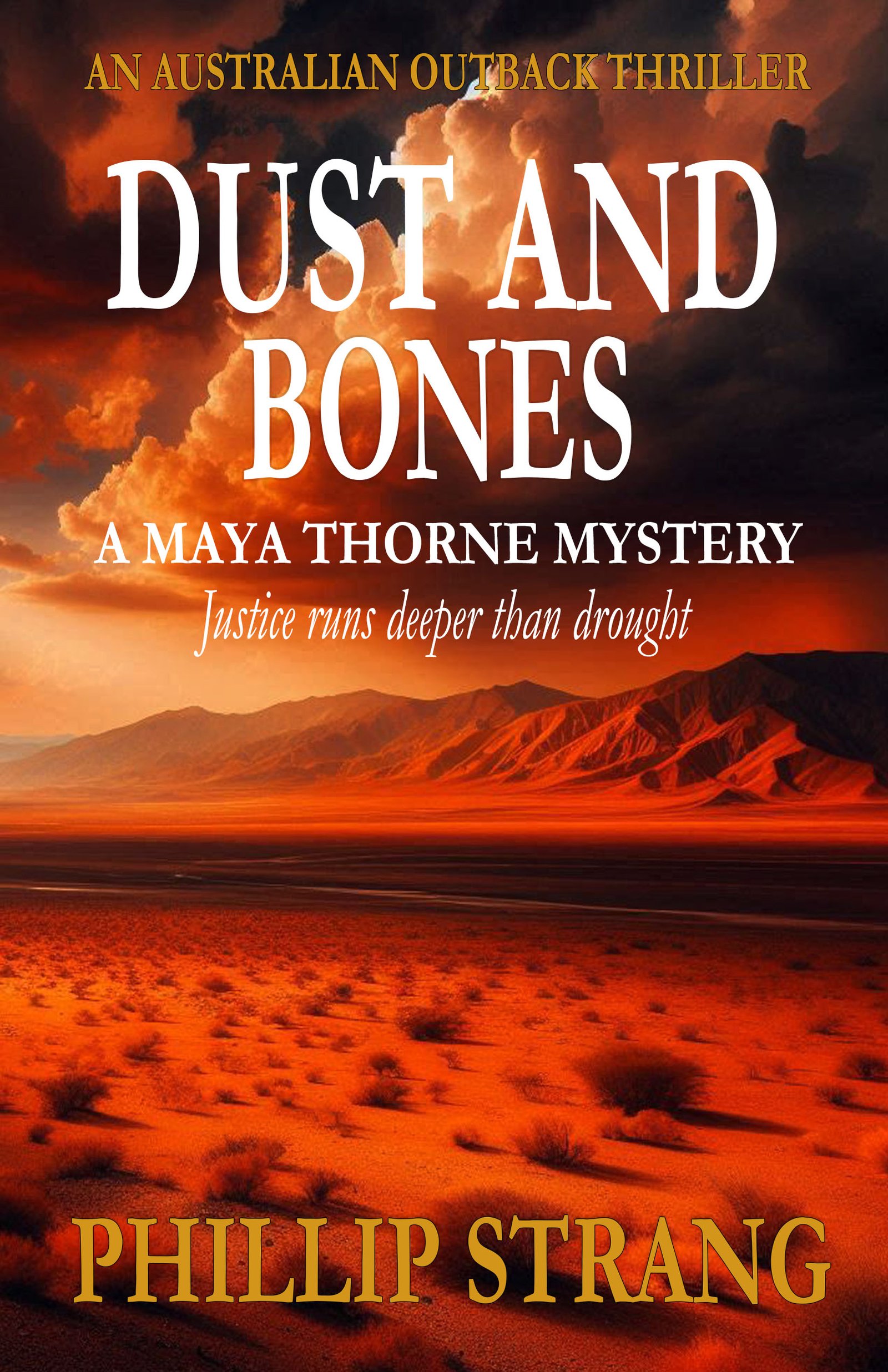
A MAYA THORNE MYSTERY
Get Dust and Bones Free
Justice runs deeper than drought.
Red dust. Shallow graves. A detective who hunts killers where the law runs thin and the nearest help is two hundred miles away.
Send Me the BookYou'll also receive occasional new release emails. Unsubscribe anytime. No spam, ever.
As an Amazon Associate, Phillip Strang earns from qualifying purchases. This page contains affiliate links — buying through them costs you nothing extra.