
The press conference scene sits at the intersection of public performance and private investigation, where what characters say matters less than what they don’t say. Every crime writer faces the challenge of making these potentially static moments crackle with tension while serving multiple story functions simultaneously.
Across eighteen series and more than 150 novels, I’ve found that the press conference scene often becomes a throwaway moment when it should be doing heavy lifting. The best press conferences in crime fiction work on three levels: advancing the investigation, revealing character under pressure, and creating new complications that propel the story forward.
The Dual Purpose of Information Control
Press conferences in crime fiction exist primarily to show characters managing information flow, not to dump exposition on readers. The detective or official giving the conference must balance public demand for answers against investigative necessity for secrecy. This creates natural dramatic tension that good writers exploit mercilessly.
In my DCI Isaac Cook series, I often use press conferences to show Cook’s frustration with media interference while he’s trying to protect witness identities or preserve evidence integrity. The scene becomes about Cook’s character—his professionalism, his protective instincts, his ability to deflect without lying—rather than simply conveying case facts to readers.
The key insight here is that readers already know the case details because they’ve been following the investigation. The press conference’s value lies in showing how characters respond when forced to discuss the case publicly, often before they’re ready to do so.
Building Tension Through Controlled Revelation
The most effective press conference scenes create tension through what remains unsaid rather than what gets revealed. Journalists asking the wrong questions, officials deflecting the right ones, and the careful dance around sensitive information all generate the kind of controlled suspense that keeps readers engaged.
I structure these scenes around three types of information: what the public needs to know, what the investigation requires keeping secret, and what the character conducting the conference wishes they could say but can’t. The tension emerges from these competing demands, especially when a reporter stumbles onto something significant or asks a question that hits too close to classified details.
The temporal element matters enormously here. Press conferences happen at specific moments in investigations—usually when public pressure demands answers or when officials need public assistance. Timing the scene correctly within your narrative arc determines whether it advances or stalls story momentum.
Character Revelation Under Media Pressure
Press conferences force characters into public performance mode, which often reveals aspects of their personality that private scenes cannot access. How does your hard-boiled detective handle aggressive questioning? Does your FBI agent maintain composure when reporters challenge agency competence? These moments test character in ways that normal investigation scenes don’t.
In my Steve Case espionage series, I use press conferences to show the political pressures Case operates under. When his superior gives a conference about a terrorism case, Case watches from the sidelines, seeing how political considerations shape public messaging in ways that sometimes conflict with operational reality. This reveals both the superior’s political acumen and Case’s frustration with bureaucratic constraints.
The mistake many writers make is treating the press conference as pure exposition delivery. Instead, focus on how characters behave when they must speak publicly about private investigations. Their word choices, hesitations, and deflection strategies all reveal character while advancing plot.
How I Actually Write These Scenes
When I’m drafting a press conference scene, I start by identifying what each character in the room wants to achieve. The detective wants to control information flow. The journalists want exclusive details. The superior officer wants political cover. The family members present want public acknowledgment of their loss. These competing agendas create natural conflict.
I write the actual dialogue last, after mapping out the information dynamics. First, I determine what facts must remain secret, what can be revealed, and what red herrings might be useful. Then I consider which reporters will ask which types of questions, and how the official will handle each category of inquiry.
The physical setting matters more than many writers realize. Press conferences have specific rhythms—prepared statements followed by questions, the positioning of officials behind podiums, the way cameras and recording equipment create additional pressure. These environmental details ground the scene in reality while providing opportunities for character-revealing moments.
I often include a moment where the conference goes slightly off-script. Perhaps a reporter asks an unexpected question, or technical difficulties interrupt the flow, or a family member becomes emotional. These disruptions prevent the scene from becoming too predictable while creating opportunities for authentic character responses.
In terms of which novels benefit most from press conference scenes, police procedural novels and action thriller novels often require them for authenticity, while more intimate psychological thrillers might skip them entirely.
Common Mistakes That Kill Press Conference Scenes
The biggest error I see writers make is using press conferences for pure exposition dump. A detective stands behind a podium and recites case facts that readers already know, serving no story purpose beyond filling pages. Real press conferences reveal selected information strategically, not comprehensive case summaries.
Another frequent mistake involves making reporters too aggressive or too passive. Real crime reporters ask pointed questions but understand professional boundaries. They’re not screaming tabloid caricatures, but they’re also not passive note-takers. Finding the right balance requires understanding how actual crime reporting works.
Writers also err by making the official too forthcoming or too secretive. A detective who reveals crucial evidence details publicly lacks credibility, but one who stonewalls every question frustrates readers. The sweet spot involves strategic revelation of selected facts while protecting investigation integrity.
Timing errors plague many press conference scenes. Writers insert them when the story doesn’t need them, usually because they think crime fiction requires press conferences. Only include these scenes when they serve specific story functions: advancing plot, revealing character, or creating new complications.
The dialogue often sounds too formal or too casual. Real officials speaking publicly use specific language patterns—measured, careful, professional but accessible. They avoid both bureaucratic jargon and overly casual speech. Getting this voice right requires listening to actual press conferences rather than relying on television drama versions.
Conclusion
Press conference scenes succeed when they prioritize story function over procedural authenticity. Use them to test characters under public pressure, control information revelation strategically, and create new story complications. When readers finish the scene knowing more about your characters than about your case, you’ve written it correctly.
About Phillip Strang
Phillip Strang is an Australian crime and thriller novelist. Across eighteen series and more than 150 novels, his work spans London police procedurals (DCI Isaac Cook), UK investigations (DI Tremayne), Australian outback crime (Maya Thorne), FBI thrillers (Alex Harlan), Scottish Highland mysteries (DI Sarah Lynch), and espionage (Steve Case). Learn more about Phillip or browse his complete catalogue on Amazon.
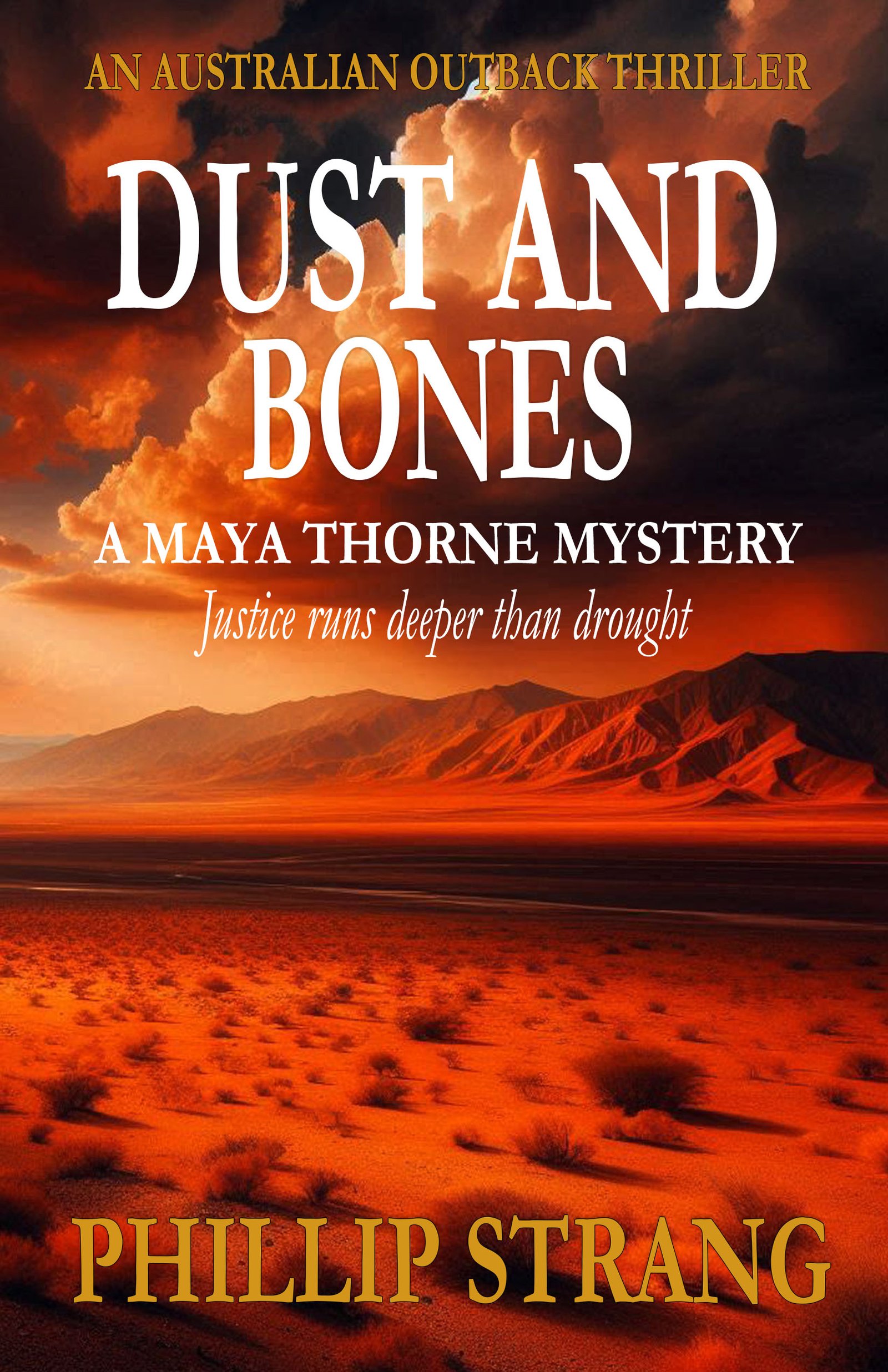
A MAYA THORNE MYSTERY
Get Dust and Bones Free
Justice runs deeper than drought.
Red dust. Shallow graves. A detective who hunts killers where the law runs thin and the nearest help is two hundred miles away.
Send Me the BookYou'll also receive occasional new release emails. Unsubscribe anytime. No spam, ever.
As an Amazon Associate, Phillip Strang earns from qualifying purchases. This page contains affiliate links — buying through them costs you nothing extra.