
The bloodied knife has been bagged, the witness statements taken, and your detective has left the crime scene. What happens in the next chapter determines whether your reader stays engaged or starts checking their phone. These quiet moments between the explosive beats of murder and revelation are where crime fiction either soars or stagnates.
Across eighteen series and more than 150 novels, I’ve learned that writing quiet scenes in crime fiction is not about giving readers a breather—it’s about tightening the noose. The silence between screams can be more terrifying than the screams themselves, but only if you understand what these scenes must accomplish within your story’s architecture.
The Hidden Engine of Quiet Scenes
Quiet scenes are never truly quiet. They hum with undercurrents that skilled crime writers exploit ruthlessly. While your protagonist might be sitting in a café reviewing case files or driving home through empty streets, multiple story engines should be running beneath the surface. Character revelation, relationship dynamics, internal conflict, and the slow accumulation of dread all operate simultaneously in these seemingly mundane moments.
In my DCI Isaac Cook series, some of the most crucial plot developments happen during conversations over coffee or solitary moments of reflection. These scenes work because they serve multiple masters: advancing the investigation, deepening character understanding, and maintaining the psychological pressure that keeps readers turning pages. The key is ensuring every quiet scene earns its place by doing work that only it can do.
The mistake many writers make is treating quiet scenes as mandatory rest stops rather than integral components of their story’s machinery. Your readers didn’t pick up a crime novel to watch your detective do laundry unless that laundry reveals something essential about the case, the character, or the mounting tension.
Character Psychology Under Pressure
Crime fiction protagonists operate under constant stress, and quiet scenes offer the perfect laboratory for exploring how this pressure manifests in their behavior, thoughts, and relationships. These moments reveal character in ways that action sequences cannot. How does your detective handle the silence after viewing a particularly brutal crime scene? What thoughts intrude when they’re alone with their files at midnight?
The psychological realism of these scenes separates competent crime writing from exceptional work. Your detective’s quiet moments should reflect the accumulated weight of their profession. Perhaps they compulsively check locks, avoid certain neighborhoods, or find themselves studying strangers’ faces for signs of deception. These details, woven naturally into quiet scenes, create the texture that makes fictional investigators feel like real people rather than plot devices.
I’ve found that internal monologue during quiet scenes requires careful calibration. Too little, and your protagonist feels shallow. Too much, and the pace drags. The sweet spot lies in selecting thoughts that illuminate both character and case while maintaining the story’s forward momentum. When DI Tremayne sits in his car outside a suspect’s house, his observations about the neighborhood reveal his investigative instincts, his past experiences, and his current state of mind simultaneously.
Building Tension Without Violence
The most effective quiet scenes in crime fiction maintain and often intensify tension rather than dissipating it. This requires understanding that tension comes not from what happens, but from what might happen, what has happened, and what the characters fear might happen next. A detective eating breakfast can be riveting if you’ve established that the killer knows where they live, or if important test results are expected that morning.
Atmospheric details become weapons in quiet scenes. The flickering streetlight outside the witness’s apartment, the phone that doesn’t ring when it should, the familiar face in an unexpected place—these elements create unease without requiring a single body to hit the floor. The art lies in selecting details that serve both the scene’s immediate needs and the story’s larger emotional arc.
Environmental storytelling proves particularly powerful in these moments. Rather than having characters explicitly state their fears or suspicions, let the setting and their interactions with it do the heavy lifting. A detective who suddenly starts taking different routes home or begins sitting with their back to the wall in restaurants tells us everything about their mental state without a word of internal monologue.
How I Actually Approach Writing These Scenes
When drafting quiet scenes, I begin with a simple question: what must change between the start and end of this scene? If nothing changes—in knowledge, relationship dynamics, character understanding, or story momentum—the scene doesn’t earn its place in the manuscript, regardless of how beautifully written it might be.
My process involves mapping the emotional and informational journey before writing a single word. If my protagonist enters the scene frustrated and exits frustrated, with no new insights or complications, I’ve wasted the reader’s time. However, if they enter frustrated and exit with a new lead, a shifted perspective, or a deeper understanding of their own motivations, the scene has justified itself.
I also consider what I call the ‘pressure cooker principle.’ Just as a covered pot builds steam, quiet scenes should increase internal pressure even as external action decreases. This might involve escalating personal stakes, introducing time pressure, or layering in complications that won’t explode until later. In the Maya Thorne series, some of the most effective quiet scenes occur during long drives across the Australian outback, where the vast emptiness amplifies rather than diminishes the psychological intensity.
Dialogue in quiet scenes requires particular attention to subtext. Characters rarely say exactly what they mean, especially when discussing dangerous or emotionally charged topics. The conversation about weekend plans might actually be about whether it’s safe to maintain normal routines. The casual inquiry about family might probe for potential vulnerabilities or leverage points.
Common Pitfalls and How to Avoid Them
The most frequent mistake I encounter in manuscripts is the ’empty quiet scene’—pages where nothing significant happens beyond mundane activities described in exhaustive detail. Your detective making coffee becomes deadly dull when it’s just about coffee rather than about the insomnia that’s driving them to caffeine at midnight, or the nervous energy that prevents them from sitting still while waiting for crucial information.
Another trap involves over-explaining character emotions or motivations during quiet moments. Trust your readers to understand subtext and implication. When your protagonist sits alone in their car for twenty minutes before entering the victim’s family home, you don’t need to spell out their reluctance or anxiety—the behavior demonstrates these feelings more powerfully than exposition could.
Pacing problems plague many quiet scenes, particularly the tendency to match writing rhythm to scene energy. Just because your character is moving slowly doesn’t mean your prose should drag. Maintain sentence variety, sharp word choices, and purposeful progression even during contemplative moments. The goal is creating a sense of calm while maintaining reader engagement, not inducing literary narcolepsy.
Watch for the ‘false quiet scene’ problem, where writers mistake setup exposition for character development. Having your detective review case files while recapping information for the reader’s benefit serves plot mechanics but doesn’t create genuine character moments. True quiet scenes reveal something new about your protagonist while advancing the story, whether through police procedural techniques that show their investigative style or personal habits that illuminate their psychology.
The Rhythm of Revelation
Effective crime fiction operates on carefully orchestrated rhythms of revelation and concealment, action and reflection. Quiet scenes serve as crucial beats in this rhythm, providing space for characters and readers to process information, form theories, and prepare for the next wave of complications. These scenes often contain the story’s most important insights, delivered not through dramatic confrontations but through careful observation and deduction.
The placement of quiet scenes within your story’s structure requires strategic thinking. Following high-intensity sequences, they allow emotional processing while maintaining psychological pressure. Preceding major revelations, they can build anticipation and establish context. During investigation phases, they provide opportunities for logical deduction and character development that pure action sequences cannot accommodate.
Remember that in action thriller novels and espionage thrillers, quiet scenes often prove as memorable as explosive setpieces. The conversation in the empty parking garage, the solitary walk through the cemetery, the late-night phone call—these moments stick with readers because they reveal character truth alongside plot advancement.
Conclusion
Mastering quiet scenes separates competent crime writers from exceptional ones. These pages between the bodies offer opportunities to deepen character psychology, build atmospheric tension, and advance your investigation through methods that pure action cannot achieve. Every quiet scene should change something essential while maintaining the psychological pressure that keeps readers engaged, proving that in crime fiction, silence can be more powerful than screams.
About Phillip Strang
Phillip Strang is an Australian crime and thriller novelist. Across eighteen series and more than 150 novels, his work spans London police procedurals (DCI Isaac Cook), UK investigations (DI Tremayne), Australian outback crime (Maya Thorne), FBI thrillers (Alex Harlan), Scottish Highland mysteries (DI Sarah Lynch), and espionage (Steve Case). Learn more about Phillip or browse his complete catalogue on Amazon.
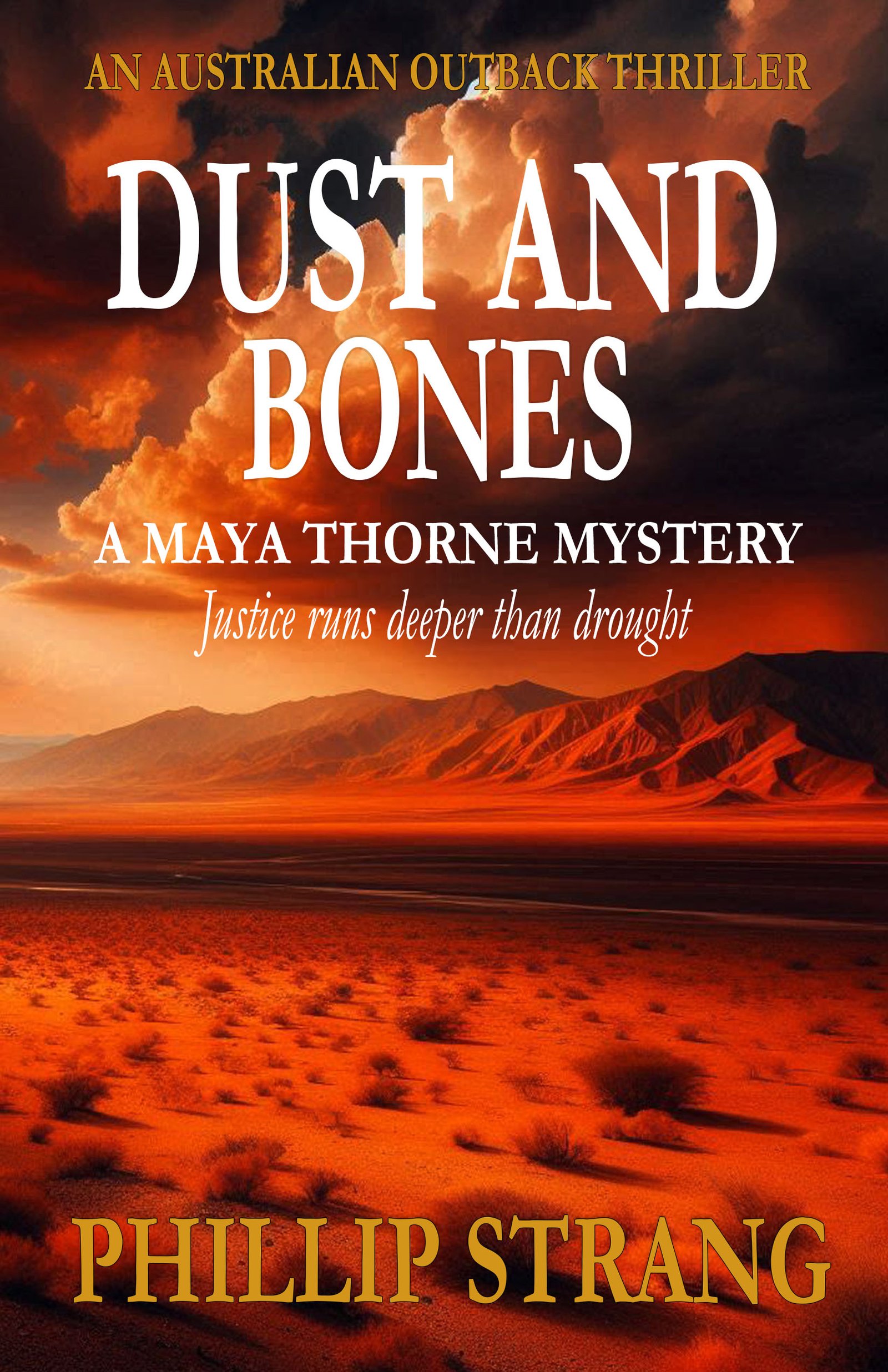
A MAYA THORNE MYSTERY
Get Dust and Bones Free
Justice runs deeper than drought.
Red dust. Shallow graves. A detective who hunts killers where the law runs thin and the nearest help is two hundred miles away.
Send Me the BookYou'll also receive occasional new release emails. Unsubscribe anytime. No spam, ever.
As an Amazon Associate, Phillip Strang earns from qualifying purchases. This page contains affiliate links — buying through them costs you nothing extra.