
Writing Settings You Haven’t Visited demands more than a vivid imagination and a few Google Street View sessions. The challenge goes beyond simply describing what a place looks like—it’s about capturing the texture of daily life, the rhythms of speech, and the subtle social dynamics that make a location feel lived-in rather than researched.
Across eighteen series and more than 150 novels, I’ve learned that authenticity in unfamiliar settings comes from understanding systems rather than memorising landmarks. The best location work happens when you stop thinking like a tourist and start thinking like a local cop, criminal, or witness.
The Research Foundation That Actually Matters
Most writers attack unfamiliar locations backwards. They start with the famous landmarks, the obvious visual details, the postcard shots. This approach screams ‘outsider’ to any reader who knows the place. Instead, I focus on operational details—how does policing work in this jurisdiction? What are the crime patterns? How do emergency services coordinate?
For my DCI Isaac Cook series, I needed to understand not just London’s geography but the Metropolitan Police’s structure, the relationship between different boroughs, and how major incident protocols actually function. These procedural realities shape every scene more than knowing whether Big Ben is visible from a particular street corner.
The key sources aren’t travel guides—they’re local news archives, police reports, court records, and professional forums where people discuss the mundane realities of working in these places. Crime writers particularly benefit from understanding local criminal justice systems, since these vary dramatically between jurisdictions.
Language and Voice as Location Markers
Dialogue carries more location weight than description. People reveal where they’re from through what they don’t say as much as what they do. Regional speech patterns, professional jargon, and cultural assumptions embedded in conversation create stronger sense of place than any amount of scenic description.
I spend considerable time studying how law enforcement officials speak in different regions—not just accent or dialect, but professional terminology, hierarchy markers, and the subtle ways authority expresses itself. A London detective superintendent communicates differently from an Australian senior sergeant, and these differences matter for authenticity.
The same principle applies to criminals, witnesses, and civilians. Each group carries location-specific speech patterns and cultural references. Getting these wrong immediately signals to readers that you’re writing from outside the culture, even if you nail every physical detail.
Common Mistakes When Writing Settings You Haven’t Visited
The biggest error is over-description. Writers compensate for their insecurity about unfamiliar locations by drowning readers in visual details, as if proving they’ve done their homework. This creates the literary equivalent of a slideshow rather than a living environment.
Another frequent problem is temporal confusion—mixing current conditions with outdated information. Cities change rapidly, and crime writers particularly need current information about policing methods, technology, and legal procedures. A procedural set in contemporary London but featuring outdated Metropolitan Police protocols immediately dates the work and undermines credibility.
Writers also tend to homogenise locations within countries or regions. They assume all Australian outback towns function identically, or that rural English villages share identical social structures. This lazy approach ignores the specific economic, social, and geographic factors that make each location unique. When developing the Maya Thorne series, I had to research not just ‘the outback’ as a generic concept, but specific mining towns, agricultural communities, and tourist destinations, each with distinct characteristics.
My Working Method for Unfamiliar Territory
I begin every new location with a crime map. Not tourist attractions or cultural sites, but actual crime patterns, law enforcement resources, and criminal justice procedures. This foundation shapes everything else because it determines how my characters can realistically operate in this environment.
Next, I focus on practical details that affect plot mechanics. How long does it take to get forensic results? What’s the relationship between local police and federal agencies? How do emergency services coordinate? These operational realities often suggest plot possibilities while ensuring the story feels grounded in authentic procedures.
I also develop location-specific character backgrounds through local news sources and community forums. Understanding regional employment patterns, social issues, and cultural tensions helps create believable local characters rather than generic placeholder figures. This approach proved essential for the DI Sarah Lynch series, where Highland communities have distinct social dynamics that differ significantly from urban Scottish settings.
Finally, I test authenticity through specificity. Vague descriptions suggest unfamiliarity, while precise details demonstrate understanding. The goal isn’t encyclopedic knowledge but credible operational awareness—knowing enough about how things actually work to avoid obvious errors that break immersion for knowledgeable readers.
Building Atmosphere Without Personal Experience
Atmosphere comes from understanding how environment shapes behavior and attitude. Climate, geography, economic conditions, and social structures all influence how people interact and how crimes unfold. These factors matter more than scenic description for creating authentic mood and tension.
Weather patterns affect crime rates and investigation methods. Economic conditions influence criminal motivations and police resources. Geographic isolation changes how quickly backup arrives and how criminals might escape. Understanding these practical relationships helps build atmospheric tension that feels organic rather than imposed.
The most effective approach focuses on how location affects your specific characters rather than attempting comprehensive environmental description. How does this setting challenge your detective’s usual methods? What opportunities does it offer criminals? How do local conditions complicate standard procedures? These character-focused questions generate more compelling atmosphere than generic location description.
Success in unfamiliar settings ultimately depends on understanding systems rather than memorising details. Readers forgive minor factual errors but notice immediately when fundamental relationships feel wrong. Focus on how your location actually functions, particularly its criminal justice ecosystem, and the authentic details will follow naturally. This systematic approach works whether you’re writing police procedurals or action thrillers, since both genres depend on credible operational frameworks.
Conclusion
Writing convincing unfamiliar settings requires systematic research focused on operational realities rather than tourist attractions. Master the systems that govern your location, understand how these affect your characters, and let authentic details emerge from genuine understanding rather than defensive over-description.
About Phillip Strang
Phillip Strang is an Australian crime and thriller novelist. Across eighteen series and more than 150 novels, his work spans London police procedurals (DCI Isaac Cook), UK investigations (DI Tremayne), Australian outback crime (Maya Thorne), FBI thrillers (Alex Harlan), Scottish Highland mysteries (DI Sarah Lynch), and espionage (Steve Case). Learn more about Phillip or browse his complete catalogue on Amazon.
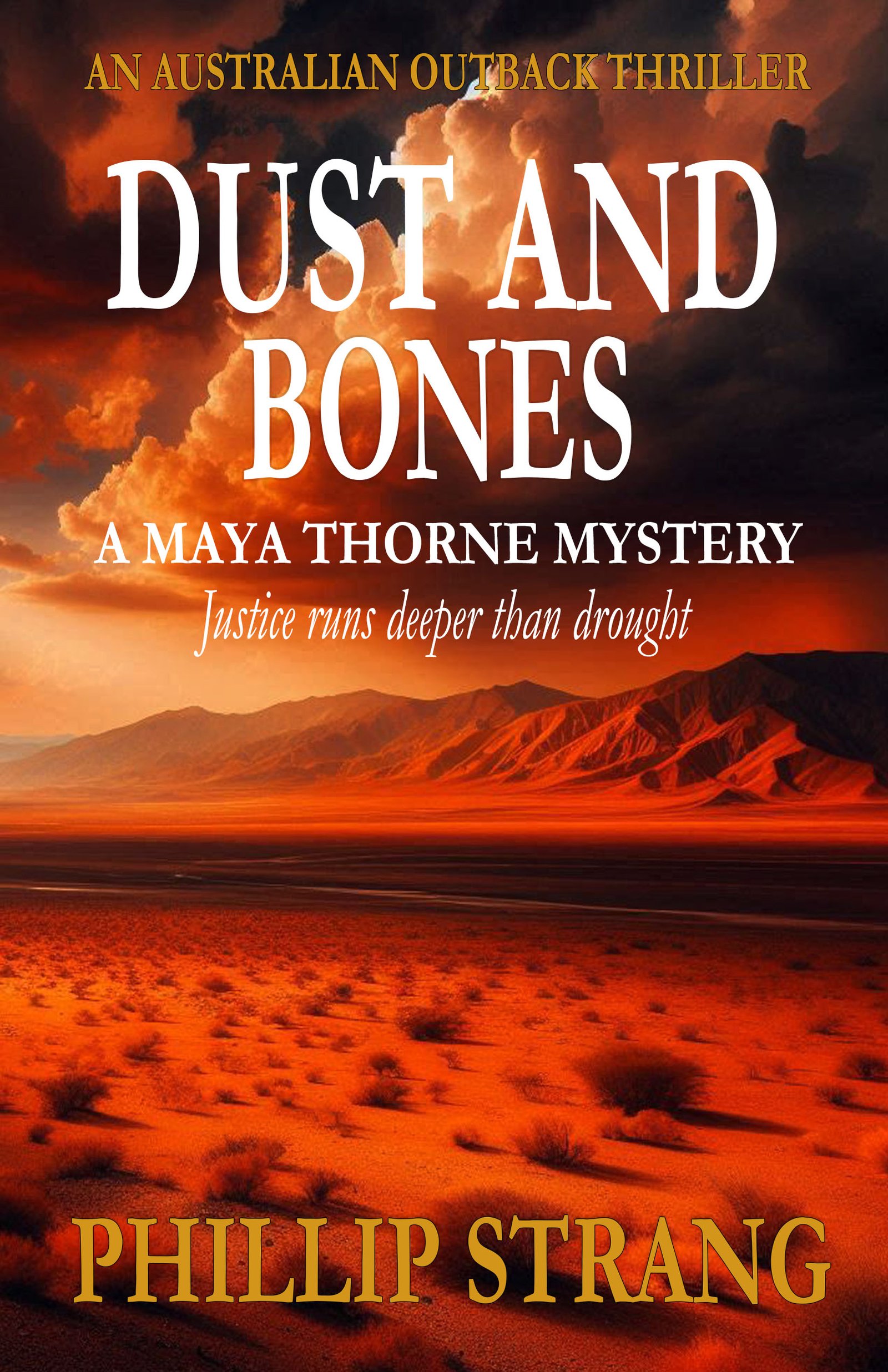
A MAYA THORNE MYSTERY
Get Dust and Bones Free
Justice runs deeper than drought.
Red dust. Shallow graves. A detective who hunts killers where the law runs thin and the nearest help is two hundred miles away.
Send Me the BookYou'll also receive occasional new release emails. Unsubscribe anytime. No spam, ever.
As an Amazon Associate, Phillip Strang earns from qualifying purchases. This page contains affiliate links — buying through them costs you nothing extra.