
Every crime novelist faces the fundamental tension between writing quickly and writing deeply. The pressure to maintain reader engagement through regular releases conflicts with the desire to craft intricately plotted mysteries that reward careful attention to character development and atmospheric detail.
Across eighteen series and more than 150 novels, I’ve discovered that this isn’t truly an either-or proposition, but rather a series of strategic choices that define your approach to commercial crime fiction. The key lies in understanding what speed actually costs you, and what depth genuinely requires.
The Real Costs of Writing at Speed
Writing quickly doesn’t automatically mean writing poorly, but it does impose specific limitations on your craft. The most immediate casualty is usually subplot complexity. When I’m pushing to complete a novel in six to eight weeks, I find myself naturally gravitating toward linear plotting with fewer interconnected threads. This isn’t necessarily a weakness – many successful police procedural novels benefit from focused, driving narratives that don’t meander through excessive subplots.
Character development suffers differently under speed pressure. You tend to rely more heavily on established character types and relationships rather than exploring new psychological territory. In my DCI Isaac Cook series, the rapid writing pace means I lean into the established dynamics between Cook and his team rather than introducing complex new character arcs in every book. This creates consistency but can limit character growth across individual novels.
Research depth becomes another casualty. When you’re writing at speed, you’re drawing primarily from your existing knowledge base and quick verification checks rather than deep dives into forensic procedures or historical detail. This works for contemporary crime fiction where you can rely on established police procedures, but it limits your ability to incorporate cutting-edge investigative techniques or period-specific details.
What Depth Actually Requires
Writing in depth isn’t simply about taking more time – it’s about making different structural choices. Deep writing requires extensive pre-plotting, not because you need every scene mapped out, but because complex plots demand internal consistency that’s difficult to achieve through discovery writing alone. When I developed the Australian setting for my Maya Thorne series, the depth came from understanding how the isolation and harsh environment would psychologically affect both criminals and investigators, not from simply adding more descriptive passages.
Depth also demands what I call ‘layered plotting’ – where surface events connect to deeper themes and character motivations. This requires planning scenes that serve multiple narrative functions simultaneously. A conversation between detective and suspect might advance the plot, reveal character psychology, and establish thematic concerns about justice or morality. This level of integration takes significant planning and often multiple drafts to achieve effectively.
Research for depth means going beyond surface accuracy to understand underlying systems and relationships. For action thriller novels, this might mean understanding not just how weapons work, but how different investigative agencies interact and sometimes conflict with each other’s methodologies.
My Working Approach to Balancing Speed and Depth
I’ve developed what I call ‘selective depth’ – choosing specific elements in each novel to explore thoroughly while maintaining efficiency in other areas. For a typical novel, I might invest deep research and complex plotting into the central mystery while keeping secondary characters and subplots relatively straightforward. This allows me to maintain writing speed without sacrificing the core reading experience.
I also rely heavily on series continuity to create cumulative depth. Individual novels in my DI Tremayne series might be written quickly, but the psychological development of the main character occurs across multiple books. This creates the reading experience of depth without requiring every single novel to carry that full burden.
Pre-writing preparation becomes crucial. I spend significantly more time in the planning phase than many fast writers recommend, creating detailed character profiles and plot outlines that allow me to write quickly during the drafting phase while maintaining internal consistency. This front-loaded approach means I can write individual scenes rapidly because the larger structure is already solid.
Common Mistakes in Pursuing Speed or Depth
The most damaging mistake speed-focused writers make is assuming that first-draft quality is sufficient for publication. Writing quickly can produce strong structural storytelling, but it rarely produces refined prose or subtle character work. I see many crime novels that read like detailed outlines rather than fully realized fiction because the author prioritized completion over revision.
Conversely, writers pursuing depth often fall into over-research and over-plotting. They spend months perfecting background details that never meaningfully impact the reader’s experience. I’ve seen manuscripts where authors have developed elaborate forensic procedures that add nothing to character development or plot advancement. This kind of depth becomes self-indulgent rather than reader-focused.
Another common error is inconsistent depth within a single novel. Some writers will lavish attention on certain scenes or characters while rushing through others, creating an uneven reading experience. Effective crime fiction requires consistent pacing and attention throughout, even if some elements receive deeper treatment than others.
Finally, many writers underestimate the revision requirements for both approaches. Fast writing often needs extensive structural editing, while deep writing typically requires significant cutting and tightening. Neither approach produces publication-ready work without substantial revision, and planning for this revision time is essential for maintaining any kind of productive schedule.
Finding Your Sustainable Balance
The most successful approach depends largely on your publishing goals and personal working style. If you’re building a readership in commercial crime fiction, consistent output often matters more than individual book perfection. Readers of espionage thrillers and police procedurals typically prefer regular new releases over sporadic but deeply complex novels.
However, certain subgenres reward depth over speed. Psychological thrillers and literary crime fiction benefit from careful attention to character psychology and atmospheric detail that requires more deliberate pacing during the writing process. Understanding your target audience’s expectations helps determine where to invest your limited time and energy.
The key insight I’ve gained is that sustainability trumps both speed and depth. A writing practice that consistently produces publishable novels over years will build a stronger career than sporadic attempts at either lightning-fast production or literary perfection. This means finding the level of quality and speed that you can maintain repeatedly without burning out or compromising your basic storytelling standards.
Conclusion
The choice between writing at speed versus writing at depth is ultimately about understanding what your stories genuinely require and what your career goals demand. Both approaches can produce compelling crime fiction, but success lies in making deliberate choices rather than accidentally defaulting to either extreme.
About Phillip Strang
Phillip Strang is an Australian crime and thriller novelist. Across eighteen series and more than 150 novels, his work spans London police procedurals (DCI Isaac Cook), UK investigations (DI Tremayne), Australian outback crime (Maya Thorne), FBI thrillers (Alex Harlan), Scottish Highland mysteries (DI Sarah Lynch), and espionage (Steve Case). Learn more about Phillip or browse his complete catalogue on Amazon.
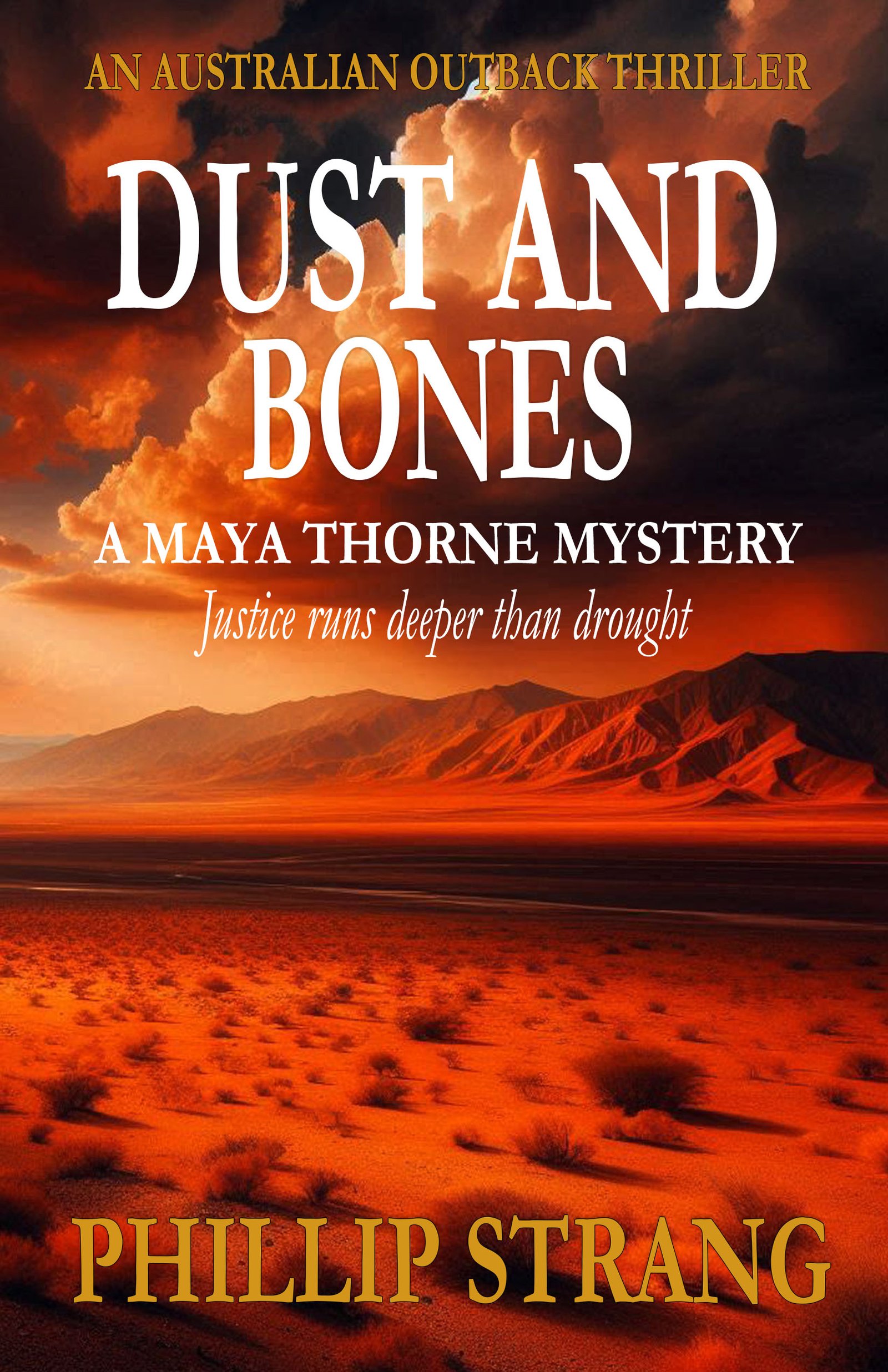
A MAYA THORNE MYSTERY
Get Dust and Bones Free
Justice runs deeper than drought.
Red dust. Shallow graves. A detective who hunts killers where the law runs thin and the nearest help is two hundred miles away.
Send Me the BookYou'll also receive occasional new release emails. Unsubscribe anytime. No spam, ever.
As an Amazon Associate, Phillip Strang earns from qualifying purchases. This page contains affiliate links — buying through them costs you nothing extra.