
The surveillance scene separates competent crime writers from those who truly understand the mechanics of investigation. Too many authors treat surveillance as dead time between action beats, missing the opportunity to build character, advance plot, and create the kind of sustained tension that keeps readers turning pages.
Across eighteen series and more than 150 novels, I’ve found that the surveillance scene demands a different writing rhythm entirely—one that mirrors the actual experience of watching and waiting while maintaining narrative momentum. The challenge lies in making tedium compelling without sacrificing authenticity.
The Reality of Professional Observation
Real surveillance is ninety percent boredom punctuated by moments of crucial information gathering. Your detective isn’t Jason Bourne scaling buildings—they’re sitting in an uncomfortable car, managing bladder pressure, and noting license plates. In my police procedural novels, particularly the DCI Isaac Cook series, I’ve learned that authenticity comes from embracing these mundane details rather than glossing over them.
The key is selective authenticity. Include enough realistic detail to ground the scene—the stiff neck from poor positioning, the difficulty of maintaining focus during hour three—but filter these through your detective’s professional expertise. Isaac Cook notices things civilian readers wouldn’t: the significance of delivery patterns, how foot traffic changes throughout the day, which windows suggest occupancy. This professional lens transforms tedium into expertise demonstration.
Your detective’s experience level should determine their surveillance competence. A seasoned investigator manages discomfort and maintains focus differently than a rookie who fidgets and nearly blows their cover. This distinction creates natural character development opportunities within the scene structure.
Building Tension Through Restraint
The surveillance scene’s power comes from constraint rather than action. Your detective wants to move, to investigate, to make arrests—but professional discipline demands patience. This internal conflict between impulse and training creates natural tension that doesn’t require external threats.
I structure surveillance tension in layers. The immediate layer involves physical discomfort and the challenge of remaining undetected. The investigative layer builds as observations accumulate, patterns emerge, and theories develop. The stakes layer maintains awareness of what depends on this surveillance succeeding—solving the case, preventing another murder, catching the killer before they disappear.
Information revealed during surveillance must feel earned rather than convenient. Your detective pieces together fragments: a face glimpsed in a window, a routine that suggests vulnerability, a visitor whose presence changes everything. Each revelation should feel like the logical result of patient observation rather than authorial convenience.
What the Detective Actually Sees
Professional investigators observe differently than civilians. They notice inconsistencies, patterns, and details that suggest deception or opportunity. Your surveillance scene should demonstrate this trained perception through specific, telling observations rather than generic descriptions.
In the DI Tremayne series, I often filter surveillance observations through Tremayne’s particular expertise and prejudices. He notices architectural details that suggest building access points, reads body language that indicates stress or deception, and spots the kind of routine variations that might signal planned absence. These observations feel natural to his character while advancing the investigation.
Avoid the temptation to make your detective omniscient. They should miss things, misinterpret observations, and draw wrong conclusions based on incomplete information. Sarah Lynch, operating in the Scottish Highlands, sometimes mistakes tourist behavior for suspicious activity, or reads rural customs through urban assumptions. These mistakes feel human and create opportunities for plot complications.
The physical environment shapes what your detective can observe and how they interpret it. Urban surveillance offers anonymity but limits sight lines. Rural surveillance provides clear views but makes concealment difficult. Weather, lighting, and seasonal changes all affect both observation quality and detection risk.
Common Surveillance Scene Mistakes
The greatest surveillance scene killer is impatience—both the author’s and the character’s. Writers often rush through surveillance to reach ‘more interesting’ scenes, missing the opportunity to build tension through restraint. A detective who abandons position after twenty minutes to ‘investigate more actively’ demonstrates neither professional competence nor realistic patience.
Information dumps disguised as observation destroy surveillance authenticity. Your detective shouldn’t conveniently observe everything needed to solve the case during a single surveillance session. Real surveillance often produces more questions than answers, and partial information that requires confirmation through other investigative methods.
Coincidental discoveries during surveillance—stumbling across unrelated crimes, witnessing perfect confession moments, or observing precisely the right evidence—strain credibility. Surveillance should feel methodical and purposeful, not accidentally lucky. When I write Alex Harlan conducting FBI surveillance, the information gathered feels like the logical result of professional planning rather than narrative convenience.
Technical competence matters more than gadget fetishism. Your detective should demonstrate understanding of surveillance fundamentals—positioning, cover stories, communication protocols—rather than relying on exotic equipment that solves problems too easily. Espionage thrillers can support more sophisticated surveillance technology, but the human elements of patience, observation, and judgment remain primary.
My Working Approach to Surveillance Scenes
I write surveillance scenes in real time during first drafts, allowing myself to experience the patience and observation rhythm alongside my detective. This approach often produces surveillance sessions that run too long for final publication, but the cutting process helps me identify which observations and tensions are essential versus merely atmospheric.
Character voice becomes crucial during surveillance downtime. Internal monologue during waiting periods reveals personality, fears, theories, and professional frustrations. Isaac Cook’s surveillance thoughts differ markedly from Maya Thorne’s—urban versus outback experience, different training backgrounds, distinct personal stakes in their respective investigations.
I plan surveillance scenes around specific investigative goals rather than generic ‘watching the suspect.’ What exactly does your detective hope to learn? How will they recognize success? What alternative plans exist if surveillance is compromised? These practical considerations drive scene structure more effectively than abstract tension-building.
The surveillance scene’s ending should provide partial answers while raising new questions. Complete surveillance success that solves everything feels too convenient. Complete failure that teaches nothing wastes reader investment. The most effective surveillance scenes advance the investigation while complicating the detective’s understanding of the case.
Conclusion
The surveillance scene succeeds when patience becomes active rather than passive, when waiting transforms into professional observation that advances both plot and character development. Master this balance, and you’ll discover that some of your most compelling action thriller novels moments come not from chases and confrontations, but from the disciplined art of watching and understanding what you see.
About Phillip Strang
Phillip Strang is an Australian crime and thriller novelist. Across eighteen series and more than 150 novels, his work spans London police procedurals (DCI Isaac Cook), UK investigations (DI Tremayne), Australian outback crime (Maya Thorne), FBI thrillers (Alex Harlan), Scottish Highland mysteries (DI Sarah Lynch), and espionage (Steve Case). Learn more about Phillip or browse his complete catalogue on Amazon.
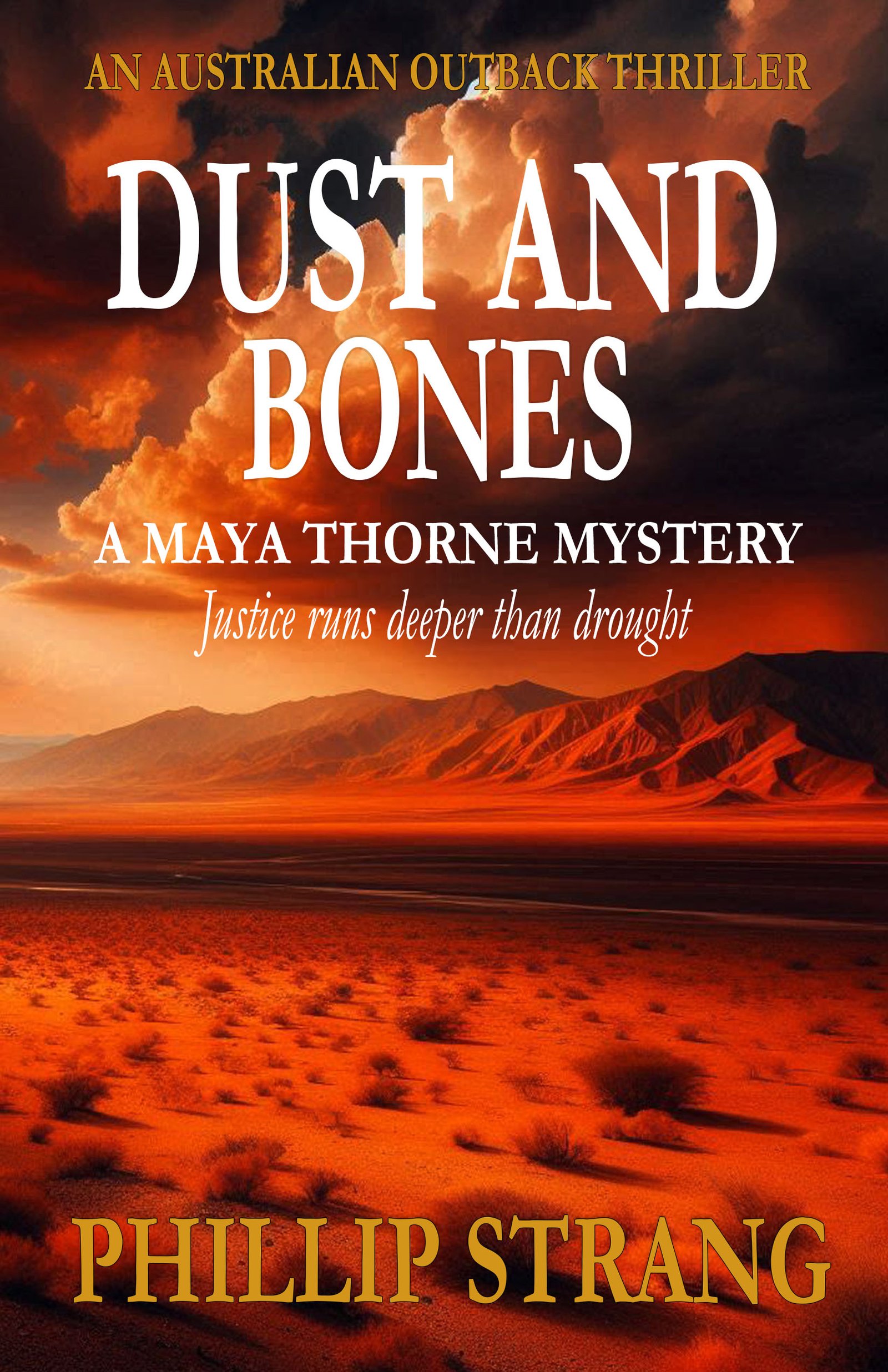
A MAYA THORNE MYSTERY
Get Dust and Bones Free
Justice runs deeper than drought.
Red dust. Shallow graves. A detective who hunts killers where the law runs thin and the nearest help is two hundred miles away.
Send Me the BookYou'll also receive occasional new release emails. Unsubscribe anytime. No spam, ever.
As an Amazon Associate, Phillip Strang earns from qualifying purchases. This page contains affiliate links — buying through them costs you nothing extra.