
The slow burn thriller presents one of crime fiction’s greatest challenges: maintaining reader engagement without the immediate gratification of explosive action or shocking revelations. Unlike fast-paced thrillers that rely on constant momentum, the slow burn demands a more nuanced approach to tension, one that builds incrementally while never allowing the reader to relax completely.
Across eighteen series and more than 150 novels, I have found that writing suspense in the slow burn thriller requires a fundamentally different mindset from other crime subgenres. The techniques that work brilliantly in fast-paced action thrillers or police procedurals can actually undermine the careful atmospheric build that defines the slow burn approach.
The Architecture of Gradual Escalation
Sustained tension in slow burn thrillers operates like a ratchet mechanism—each chapter should tighten the screws without obvious dramatic peaks. The key lies in understanding that tension doesn’t require immediate threat. In my DI Tremayne series, I often spend entire chapters on seemingly mundane investigative work, but each conversation reveals something slightly off, each witness holds back just enough information to create unease.
The mistake many writers make is confusing slow burn with boring. Every scene must serve the tension, even when characters are having tea or reviewing case files. I achieve this by ensuring each interaction contains at least one element that doesn’t quite fit—a hesitation, an inconsistency, a detail that nags at both the detective and the reader. The cumulative effect creates mounting unease without relying on obvious dramatic devices.
Pacing in slow burn thrillers requires what I call ‘controlled revelation.’ Information must be parceled out in carefully measured doses. Too much too quickly destroys the build; too little leaves readers frustrated. I map out revelations chapter by chapter, ensuring each piece of information raises more questions than it answers while still providing enough satisfaction to maintain forward momentum.
Character Psychology as Tension Driver
In slow burn thrillers, psychological tension often carries more weight than external threats. Characters become pressure cookers, their internal conflicts and hidden motivations creating the story’s primary source of unease. I’ve found that the most effective approach involves layering character revelations so that readers gradually realize they’ve misjudged someone they thought they understood.
My Maya Thorne series demonstrates this technique effectively. The outback setting naturally supports a slower pace, but the real tension comes from characters confronting their past decisions and hidden guilt. Each character harbors secrets that slowly surface through dialogue, behavior, and internal monologue. The key is making these revelations feel inevitable rather than contrived.
Unreliable perspectives work particularly well in slow burns. Not necessarily unreliable narrators in the traditional sense, but characters whose understanding of events proves incomplete or skewed. When readers begin questioning what they’ve been told, tension builds organically. This technique requires careful seeding—planting small contradictions that accumulate into larger doubts about character motivations and truthfulness.
Environmental and Atmospheric Pressure
Setting becomes crucial in slow burn thrillers because it must actively contribute to the mounting tension. The environment should feel increasingly oppressive or unsettling as the story progresses. Weather, lighting, and physical spaces all serve as extensions of the psychological landscape.
I learned this working on my DCI Isaac Cook series, where London itself becomes a character that reflects and amplifies the investigation’s emotional weight. Fog doesn’t just obscure vision; it represents the obscured truth the characters are pursuing. Rain doesn’t simply provide atmosphere; it mirrors the relentless pressure bearing down on both investigator and suspect.
The technique extends beyond mere pathetic fallacy. Physical spaces should change in the reader’s perception as information accumulates. A comfortable family home visited early in the investigation might feel sinister when revisited later, not because anything physical has changed, but because the reader now knows what transpired within those walls. This requires careful attention to descriptive details that can carry different emotional weight depending on context.
How I Actually Approach Slow Burn Construction
My practical method for building sustained tension involves what I call ‘tension mapping.’ Before writing, I chart the emotional temperature of each chapter, ensuring it never drops below a baseline level of unease while identifying specific points where tension escalates. This isn’t about dramatic peaks but about preventing any scene from becoming truly comfortable for the reader.
I also maintain what I call a ‘question inventory’—a running list of unresolved issues, suspicious behaviors, and unexplained details. Each chapter must address at least one existing question while introducing new ones. The balance shifts as the story progresses: early chapters raise more questions than they answer, middle chapters maintain equilibrium, and later chapters begin resolving issues while introducing final complications.
Dialogue becomes particularly important in my approach. Characters in slow burn thrillers rarely say exactly what they mean, and subtext carries enormous weight. I write dialogue with layers—what’s said, what’s implied, and what’s deliberately omitted. Characters withhold information not necessarily from deception but from self-protection, uncertainty, or misplaced loyalty. This creates natural tension in every conversation without requiring obvious conflict.
Research and authenticity matter enormously in slow burns because readers have more time to scrutinize details. Unlike fast-paced action thrillers where momentum carries readers past potential inconsistencies, slow burns demand believable procedures, realistic timelines, and authentic character responses. When investigating police procedures for my various detective series, I ensure accuracy not just for credibility but because realistic constraints often create more tension than fabricated obstacles.
Common Pitfalls That Kill Slow Burn Momentum
The most frequent mistake I observe in slow burn attempts involves confusing meandering with building tension. Writers sometimes mistake lengthy descriptions or extended character introspection for atmospheric development. True slow burn requires every element to serve the mounting pressure, even seemingly digressive passages. If a scene doesn’t somehow advance the investigation, develop character psychology, or add to environmental unease, it weakens the overall effect.
Another critical error involves releasing tension too frequently through minor revelations or false climaxes. Some writers worry about boring readers and provide small payoffs that actually undermine the larger build. In my espionage work with the Steve Case character, I learned that maintaining uncertainty requires discipline—resisting the urge to explain too much too soon.
Overwriting atmospheric elements also damages slow burn effectiveness. Heavy-handed descriptions of ominous weather or repeatedly emphasizing sinister undertones actually reduces their impact. The technique works best when environmental details feel naturally integrated rather than obviously manipulative. Readers sense when atmosphere is being forced, and it breaks the spell that slow burn tension requires.
Perhaps the most damaging mistake involves losing track of the central mystery or threat. Writers become so focused on building atmosphere and developing characters that they forget to advance the core plot. Slow burn doesn’t mean static—the investigation must progress, new information must emerge, and stakes must escalate, just at a more measured pace than other thriller subgenres demand.
Conclusion
Writing suspense in the slow burn thriller demands patience from both author and reader, but when executed effectively, it creates some of crime fiction’s most memorable and emotionally resonant experiences. The key lies in understanding that sustained tension operates through accumulation rather than explosion, building pressure through careful character development, atmospheric control, and measured revelation rather than relying on constant action to maintain engagement.
About Phillip Strang
Phillip Strang is an Australian crime and thriller novelist. Across eighteen series and more than 150 novels, his work spans London police procedurals (DCI Isaac Cook), UK investigations (DI Tremayne), Australian outback crime (Maya Thorne), FBI thrillers (Alex Harlan), Scottish Highland mysteries (DI Sarah Lynch), and espionage (Steve Case). Learn more about Phillip or browse his complete catalogue on Amazon.
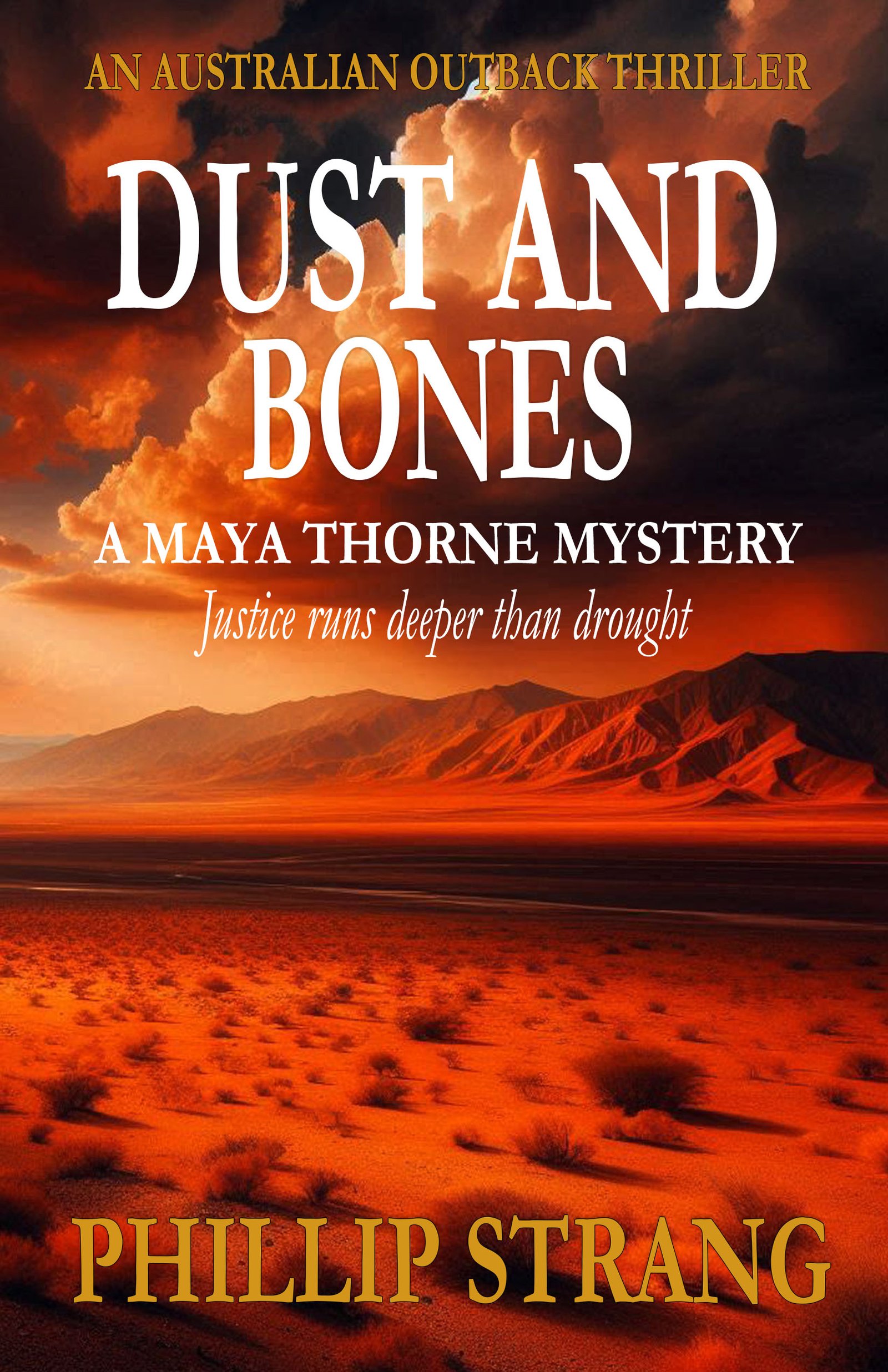
A MAYA THORNE MYSTERY
Get Dust and Bones Free
Justice runs deeper than drought.
Red dust. Shallow graves. A detective who hunts killers where the law runs thin and the nearest help is two hundred miles away.
Send Me the BookYou'll also receive occasional new release emails. Unsubscribe anytime. No spam, ever.
As an Amazon Associate, Phillip Strang earns from qualifying purchases. This page contains affiliate links — buying through them costs you nothing extra.