
Sydney presents unique challenges for crime writers that go far beyond simply dropping familiar landmarks into generic plots. The city’s sprawling geography, cultural complexity, and distinctly Australian criminal underworld demand specific craft considerations that can make or break your thriller’s authenticity.
Writing convincing Sydney-based crime fiction requires understanding both the city’s physical landscape and its criminal ecosystem. Across eighteen series and more than 150 novels I have found that successful Sydney thrillers depend on three core elements: authentic geographic specificity, credible criminal hierarchies, and characters who embody the city’s particular blend of sophistication and edge.
Geographic Authenticity Beyond Tourist Landmarks
The biggest mistake writers make is treating Sydney like a collection of postcard images. Yes, the Harbour Bridge and Opera House exist, but your characters shouldn’t be constantly aware of them unless there’s a specific narrative reason. Real Sydneysiders navigate by suburbs, not monuments.
In my Campbell series, I deliberately focus on areas like Redfern, Surry Hills, and the western suburbs because these locations carry genuine criminal history and social tension. Each Sydney suburb has its own character, crime patterns, and social dynamics. Paddington operates differently from Bankstown, and those differences should influence your plot mechanics, not just your scene descriptions.
The city’s geography creates natural barriers and corridors that affect criminal activity. The harbour divides north and south, creating territorial boundaries. The M4 and M5 motorways become escape routes. Train lines connect criminal networks across suburbs. These aren’t just background details—they’re plot infrastructure that separates professional Sydney crime writing from amateur tourism fiction.
Understanding Sydney’s Criminal Landscape
Sydney’s criminal underworld has specific characteristics shaped by the city’s history, demographics, and economy. Unlike American cities with clearly defined gang territories, Sydney’s criminal networks are more fluid, often organized around ethnic communities, specific criminal enterprises, or historic family connections.
The city’s role as Australia’s financial center creates opportunities for white-collar crime that intersect with traditional organized crime. Drug importation through Port Botany, money laundering through the property market, and corruption within various institutions provide realistic backdrops that feel authentically Sydney rather than transplanted from overseas crime fiction.
Bikies, ethnic crime families, and corrupt officials all operate within Sydney’s criminal ecosystem, but they interact differently than their counterparts in other cities. Understanding these relationships—and avoiding stereotypes—requires research into actual crime patterns and court reporting, not just watching Underbelly reruns.
Character Development in Sydney’s Social Context
Sydney characters carry the city’s particular social tensions and cultural mix. The economic divide between harbor suburbs and western Sydney, the complexity of multiculturalism, and the Australian attitude toward authority all influence how characters think, speak, and act.
Your detective or protagonist shouldn’t sound like they’ve stepped out of a British procedural or American noir. Australian speech patterns, cultural references, and social attitudes are distinct. We don’t say ‘gotten,’ we’re suspicious of authority but not openly confrontational about it, and our humor tends toward the sardonic rather than wisecracks.
Class dynamics in Sydney operate differently than in other English-speaking cities. Old money concentrates in specific areas, new money displays itself differently, and working-class identity carries different markers. These distinctions affect how characters interact, what motivates them, and how they navigate both legitimate and criminal worlds.
How I Approach Sydney Crime Writing
When developing a Sydney-based thriller, I start with the specific criminal enterprise or investigation type, then identify which parts of the city would realistically host that activity. Drug manufacturing happens in industrial areas with good transport links. High-end fraud operates from corporate towers. Street crime follows predictable geographic patterns.
I spend considerable time mapping character movements through actual Sydney geography, checking travel times and route options. If a character needs to get from the CBD to Penrith quickly, there are limited realistic options, and those constraints affect plot timing and tension. Similarly, if you’re setting a scene in a specific suburb, the local demographics, housing types, and business districts all influence how that scene can believably unfold.
Research involves reading local court reports, understanding how NSW Police actually operate, and staying current with Sydney’s evolving criminal patterns. The city’s crime landscape changes as demographics shift, new transport links open, and economic conditions alter criminal opportunities. Writing authentic Sydney crime means staying connected to these evolving realities rather than relying on outdated assumptions.
Common Mistakes That Undermine Credibility
Many writers fall into the trap of making Sydney feel like a Hollywood version of Australia, complete with characters who say ‘mate’ in every sentence and criminals who behave like American gangsters with funny accents. Real Sydney criminals don’t announce their activities with theatrical flourishes—they operate businesses, maintain family relationships, and generally try to avoid attention.
Another frequent error involves police procedures that follow overseas models rather than NSW Police protocols. Australian courts, legal procedures, and law enforcement operate differently than their American or British counterparts. Small details like how arrests are conducted, what powers detectives actually possess, and how evidence is processed can destroy credibility for Australian readers.
Geographic mistakes are equally damaging. Describing characters driving from Bondi to Parramatta in twenty minutes during peak hour immediately signals that the author doesn’t understand Sydney. Similarly, placing incompatible businesses or demographics in the wrong areas creates jarring inconsistencies that pull readers out of the story. These issues appear in many novels that could otherwise succeed but fail because the setting feels fundamentally false.
Conclusion
Writing effective Sydney crime thrillers demands the same attention to authentic detail that makes the best police procedural novels compelling regardless of their setting. The city offers rich material for crime writers willing to dig beneath surface impressions and understand how Sydney actually functions as a criminal ecosystem.
About Phillip Strang
Phillip Strang is an Australian crime and thriller novelist. Across eighteen series and more than 150 novels, his work spans London police procedurals (DCI Isaac Cook), UK investigations (DI Tremayne), Australian outback crime (Maya Thorne), FBI thrillers (Alex Harlan), Scottish Highland mysteries (DI Sarah Lynch), and espionage (Steve Case). Learn more about Phillip or browse his complete catalogue on Amazon.
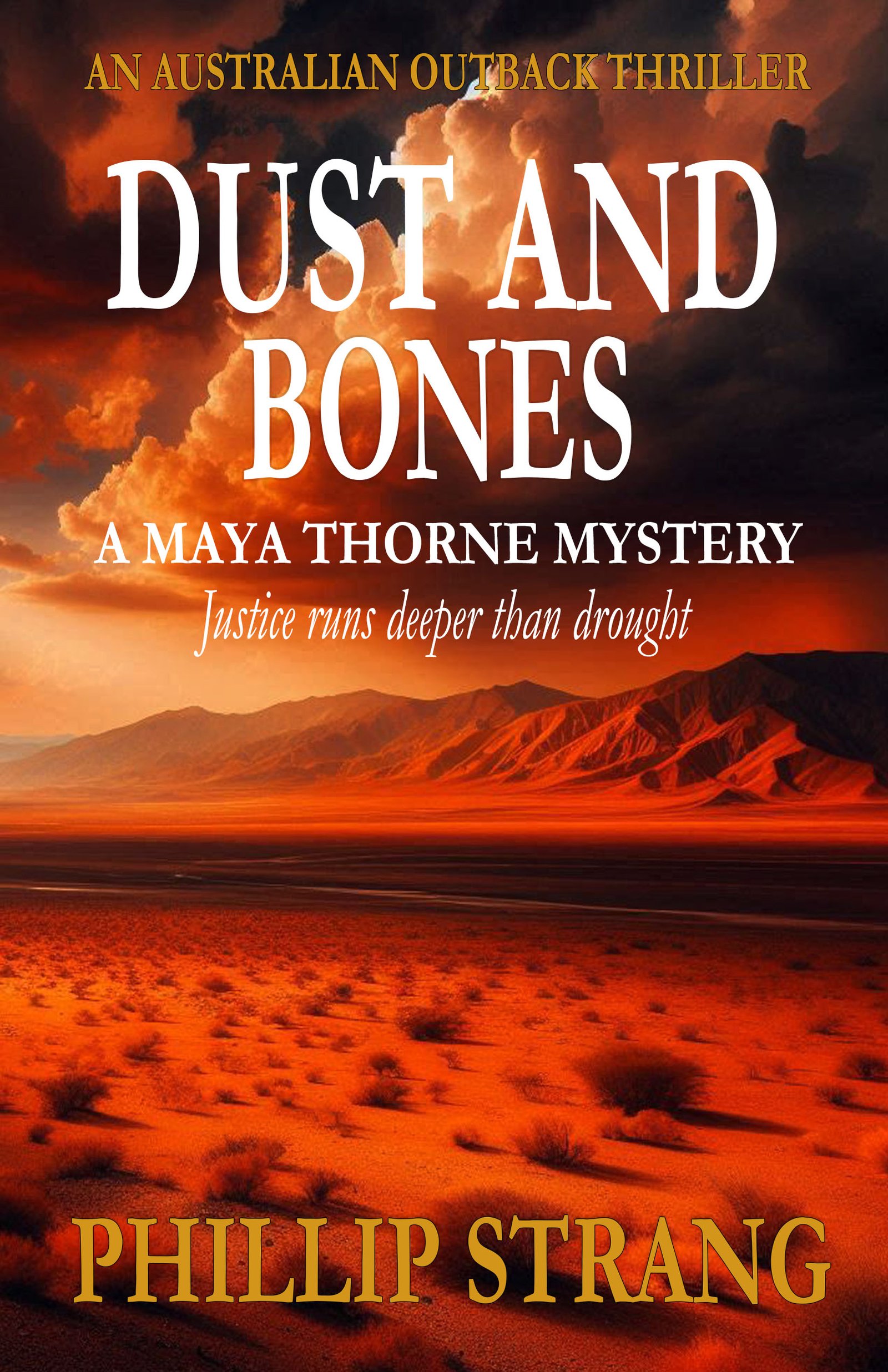
A MAYA THORNE MYSTERY
Get Dust and Bones Free
Justice runs deeper than drought.
Red dust. Shallow graves. A detective who hunts killers where the law runs thin and the nearest help is two hundred miles away.
Send Me the BookYou'll also receive occasional new release emails. Unsubscribe anytime. No spam, ever.
As an Amazon Associate, Phillip Strang earns from qualifying purchases. This page contains affiliate links — buying through them costs you nothing extra.