
The greatest tension in crime fiction often emerges not from gunshots or car chases, but from what remains unsaid in a conversation between two people who both know one is lying. Violence provides immediate shock, but sustainable tension requires the reader to feel the psychological pressure building beneath seemingly ordinary interactions.
Across eighteen series and more than 150 novels, I have found that the most compelling thrillers succeed by making readers uncomfortable long before anyone draws a weapon. Writing tension without violence demands a completely different set of craft skills than action sequences, and mastering these techniques separates competent thriller writers from those who create genuinely unsettling experiences.
The Architecture of Psychological Pressure
Real tension operates like a slow leak in a pressure cooker. The heat builds incrementally, but the reader senses something catastrophic approaching. This requires establishing what I call pressure points – specific vulnerabilities your protagonist cannot escape. In my DCI Isaac Cook series, Cook’s greatest tensions come not from confronting armed suspects, but from navigating the political machinations within the Metropolitan Police while knowing his methods put his career at constant risk.
The key lies in creating situations where your protagonist has everything to lose and no clean way out. A detective who discovers their partner may be corrupt faces a more sustained tension than one simply chasing an armed suspect. The corrupt partner scenario offers no quick resolution – every conversation becomes loaded, every case becomes suspect, every professional relationship transforms into potential betrayal.
Effective psychological pressure also requires understanding that tension escalates through accumulation, not individual incidents. Each scene should add another layer of complexity to your protagonist’s impossible position. The reader should feel the walls closing in gradually, making the eventual confrontation or revelation feel both inevitable and devastating.
Dialogue as a Weapon System
Subtext transforms ordinary conversation into psychological warfare. When characters cannot speak directly about their real concerns, every exchange becomes charged with hidden meaning. The most effective tension-building dialogue occurs when both characters understand the real conversation happening beneath their words, but neither can acknowledge it openly.
Consider how interrogation scenes work in the best police procedural novels. The suspect knows why they are there. The detective knows they are guilty. Neither can say this directly. The tension emerges from watching each party probe for weaknesses while maintaining their performance of innocence or professional courtesy.
I structure these conversations by first establishing what each character desperately wants to know, then forcing them to pursue that information indirectly. In my DI Tremayne series, some of the most effective scenes involve Tremayne questioning witnesses who are clearly lying, but who cannot be confronted directly without destroying the relationship necessary to solve the case. Every question becomes a careful probe, every answer a potential trap.
The rhythm of tension-building dialogue also matters enormously. Short, clipped exchanges create different pressure than longer, rambling responses that reveal too much. Silence becomes as important as speech – what characters choose not to respond to often carries more weight than what they say.
Environmental and Atmospheric Dread
Physical setting functions as an additional character in slow-burn thrillers, amplifying psychological tension through environmental details that reflect internal states. Effective atmospheric writing does not simply describe dark alleys or stormy weather, but uses specific sensory details to create unease that mirrors the protagonist’s mental state.
In the Australian outback settings of my Maya Thorne series, the landscape itself becomes a source of tension. The isolation, the heat, the sense of being watched by unseen presences – these elements work because they externalize Maya’s internal experience of being cut off from support systems and facing unknown threats. The environment reinforces rather than simply decorates the psychological tension.
Temperature, lighting, sound, and spatial relationships all contribute to building unease. A conversation in a crowded restaurant where the protagonist cannot speak freely creates different tension than the same conversation in an empty parking garage. The restaurant’s public nature becomes oppressive rather than safe when privacy becomes essential.
Effective atmospheric writing also employs what I call discord – environmental details that feel slightly wrong or out of place. The cheerful muzak playing during a tense confrontation, the children’s playground visible through the window during a conversation about murder, the smell of fresh bread in a morgue – these details create cognitive dissonance that keeps readers on edge.
How I Actually Build Tension Scenes
When crafting a tension scene without violence, I begin by identifying the specific fear or anxiety I want to create in the reader. This might be the fear of exposure, the dread of inevitable confrontation, or the anxiety of making an impossible choice. Every technical decision serves this emotional goal.
I then map out the power dynamics between characters in the scene. Who holds information the other wants? Who has more to lose? Who controls the physical space or the flow of conversation? Understanding these relationships allows me to structure the interaction to maximize psychological pressure. The character with apparent power often reveals vulnerabilities, while the seemingly powerless character may hold crucial advantages.
Pacing becomes critical in these scenes. I deliberately slow down moments where tension peaks, using longer sentences and more detailed description to make the reader experience the same psychological pressure as the character. When the tension reaches its breaking point, I often use shorter, more direct prose to create a sense of things moving too quickly for comfort.
I also pay careful attention to what characters notice in high-tension situations. Under stress, people focus on strange details – the way someone’s hand trembles slightly, the pause before they answer, the sound of their own heartbeat. These hyper-specific observations help readers feel present in the moment and share the character’s heightened awareness.
Common Mistakes That Kill Tension
The most frequent error I see in tension writing is overexplaining the source of the anxiety. Writers often feel compelled to tell readers directly why a situation is dangerous rather than allowing the tension to build naturally through action and dialogue. When a character thinks ‘This conversation could destroy my career,’ the writer has eliminated the reader’s opportunity to experience that realization themselves.
Another common mistake involves creating false tension through coincidence or misunderstanding rather than genuine conflict. A scene where two characters are actually on the same side but fail to communicate creates frustration, not suspense. Real tension requires genuine stakes and opposing forces, not simply poor communication skills.
Many writers also mistake confusion for complexity. Effective action thriller novels demonstrate that readers need to understand enough about the situation to feel invested in the outcome. If the source of tension is too obscure or the character motivations too unclear, readers disengage rather than feeling suspense.
Perhaps most critically, writers often fail to escalate tension consistently throughout a scene. They establish an initial level of anxiety but then maintain rather than building it. Each exchange, each revelation, each new piece of information should increase rather than simply sustain the psychological pressure.
Conclusion
Writing tension without violence requires mastering the craft of psychological pressure, understanding how subtext operates in dialogue, and using environmental details to amplify internal states. The most memorable thriller scenes often contain no physical action whatsoever, but leave readers emotionally exhausted from experiencing sustained psychological intensity alongside the characters.
About Phillip Strang
Phillip Strang is an Australian crime and thriller novelist. Across eighteen series and more than 150 novels, his work spans London police procedurals (DCI Isaac Cook), UK investigations (DI Tremayne), Australian outback crime (Maya Thorne), FBI thrillers (Alex Harlan), Scottish Highland mysteries (DI Sarah Lynch), and espionage (Steve Case). Learn more about Phillip or browse his complete catalogue on Amazon.
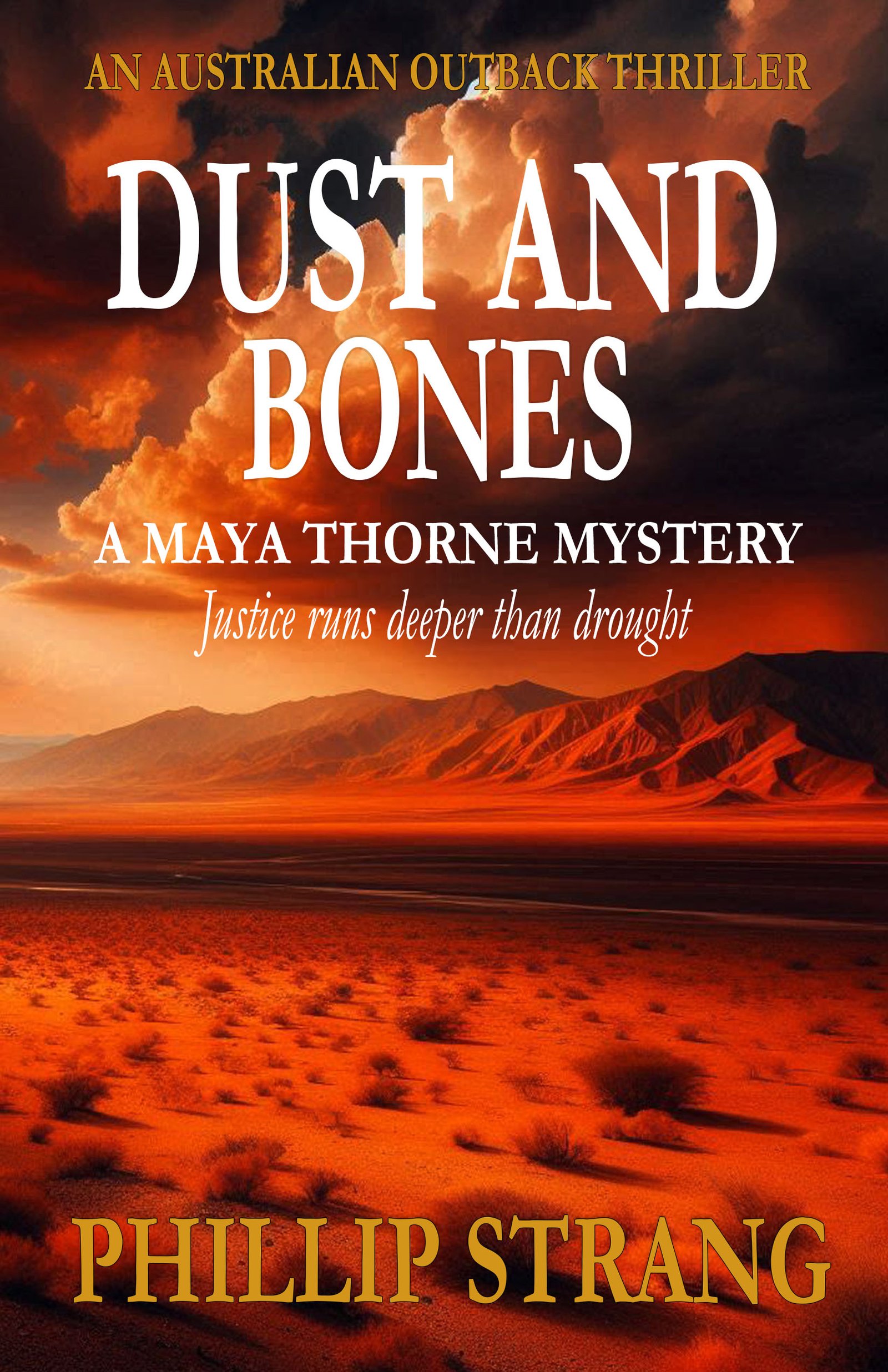
A MAYA THORNE MYSTERY
Get Dust and Bones Free
Justice runs deeper than drought.
Red dust. Shallow graves. A detective who hunts killers where the law runs thin and the nearest help is two hundred miles away.
Send Me the BookYou'll also receive occasional new release emails. Unsubscribe anytime. No spam, ever.
As an Amazon Associate, Phillip Strang earns from qualifying purchases. This page contains affiliate links — buying through them costs you nothing extra.