
Every crime writer faces that inevitable moment when the current manuscript feels like a slog through mud. The plot that seemed brilliant six months ago now reads like amateur hour, the protagonist has lost all personality, and every scene demands Herculean effort to produce mediocre prose. This is the book you don’t want to write anymore, and it’s sitting there demanding completion.
The difference between published authors and aspiring ones often comes down to this single moment of choice. Across eighteen series and more than 150 novels, I have found that learning to write through these difficult books separates professional writers from those who accumulate folders of half-finished manuscripts. The ability to push through isn’t about inspiration or passion—it’s about craft and discipline applied when both have abandoned you.
Why Books Turn Sour Mid-Process
Understanding why a manuscript loses its appeal is the first step toward completion. Most commonly, the initial enthusiasm that carried you through the opening chapters was based on a single compelling element—perhaps a fascinating murder method or an intriguing character dynamic. By the middle act, that single element has been explored, and the remaining structure feels hollow.
Crime novels particularly suffer from this phenomenon because the genre demands sustained tension across multiple plot threads. When I was midway through the fourth police procedural in my DCI Isaac Cook series, I found myself mechanically moving through investigative beats without any sense of discovery. The problem wasn’t writer’s block—it was writer’s boredom, which is far more dangerous because it produces completed but lifeless prose.
Another common trigger is the realization that your plot has fundamental structural problems. You’re 60,000 words in when you discover that your carefully planned red herring makes the actual solution impossible to believe. The temptation to abandon ship becomes overwhelming, but this is precisely when professional discipline must override creative frustration.
My Working Method for Difficult Manuscripts
When a book turns into a chore, I shift from creative mode to craftsman mode. I treat the remaining chapters like carpentry—measuring twice, cutting once, and focusing on technical execution rather than artistic inspiration. This isn’t settling for mediocrity; it’s recognizing that inspiration often follows completion rather than preceding it.
I start by identifying the specific scenes I’m avoiding. Usually, there are two or three pivotal moments that I’ve been dancing around because they require difficult character decisions or complex plotting. Instead of continuing to circle these scenes, I write them badly first. I give myself permission to produce clumsy dialogue and awkward pacing, knowing that a badly written scene can be revised but an unwritten scene cannot.
For my Maya Thorne series, I encountered this exact situation when dealing with a confrontation scene between Maya and a corrupt local official. I’d been avoiding it for weeks, adding unnecessary subplots and padding scenes because the confrontation felt contrived. Finally, I wrote it as pure exposition—character A says this, character B responds with that, information gets exchanged, scene ends. Once the bones were on the page, I could see what needed flesh and what needed cutting.
The other crucial technique is daily minimums rather than daily maximums. When enthusiasm is high, writers often set ambitious daily word counts. When motivation drops, these targets become intimidating walls. Instead, I commit to 300 words per day on the difficult book. This feels manageable even on the worst days, and it maintains forward momentum without demanding inspiration.
Finding the Story’s Hidden Strengths
Books we want to abandon often contain their own solutions if we’re willing to look. The elements that currently feel like problems may actually be the story’s greatest strengths in disguise. A plot that feels too simple might be elegantly streamlined. A character who seems boring might be compellingly understated.
I learned this lesson while working on a Steve Case espionage thriller that felt derivative and predictable. Every scene seemed to echo better books I’d read, and I was convinced the entire premise was tired. Instead of starting over, I decided to lean into the familiar elements and execute them with precision rather than trying to reinvent the wheel. The finished book became one of the series’ strongest entries because readers appreciated the confident handling of classic espionage tropes rather than gimmicky innovation.
Sometimes the solution is narrowing focus rather than expanding it. Crime novels that feel unwieldy often improve dramatically when secondary plots are stripped away and the core mystery gets full attention. If you’re struggling with multiple storylines, identify the one that genuinely excites you and subordinate everything else to that central thread.
Common Mistakes That Make Bad Books Worse
The most destructive response to a difficult book is overcompensation. Writers sensing that their story has lost steam often attempt to rescue it with dramatic plot twists, new characters, or sudden genre shifts. These additions rarely solve the underlying problems and usually create new ones. A police procedural that suddenly introduces supernatural elements or a psychological thriller that pivots to action sequences typically satisfies no one.
Another fatal error is perfectionism during the struggle phase. Writers who normally produce clean first drafts may spend hours polishing individual paragraphs when they should be pushing toward completion. This creates an illusion of productivity while actually slowing progress to a crawl. I’ve seen authors spend months perfecting the first chapter of a book they hate while never addressing the structural issues in later sections.
Perhaps most damaging is the tendency to seek validation during the difficult middle phase. Sharing excerpts with critique partners or beta readers while you’re still wrestling with fundamental problems often generates feedback that confirms your worst fears without providing actionable solutions. The time for outside input is after completion, not during the struggle. External voices during this phase usually amplify doubts rather than providing clarity.
Some writers make the mistake of assuming that difficulty means failure. They interpret their struggle as evidence that the book isn’t meant to be written. This conflates the creative process with the final product. Many excellent novels were painful to write, and many enjoyable writing experiences produce forgettable books. The relationship between process pleasure and product quality is far more complex than beginning writers assume.
The Professional Mindset Shift
Ultimately, writing through unwanted books requires a fundamental mindset shift from artist to professional. Artists wait for inspiration; professionals create on schedule. Artists abandon projects that don’t feel authentic; professionals complete contracted work regardless of emotional attachment. This doesn’t mean sacrificing quality—it means recognizing that quality often emerges through revision rather than initial inspiration.
The books you don’t want to write often teach the most valuable lessons about craft. They force you to rely on technique when passion fails, to problem-solve when intuition offers no guidance, and to maintain standards when enthusiasm has evaporated. These are precisely the skills that distinguish career novelists from occasional writers.
Professional writers also understand that not every book needs to be a masterpiece. Some novels in a series serve primarily functional purposes—advancing character relationships, exploring secondary themes, or simply maintaining reader engagement between major installments. Accepting this reality reduces the pressure on individual books and allows for a more sustainable long-term approach to character-driven storytelling.
The market reality is that readers often respond positively to books their authors struggled with. What feels stale to the writer may feel familiar and comfortable to the audience. What seems predictable during composition may read as satisfyingly inevitable upon publication. Writers are notoriously poor judges of their own work’s appeal, particularly when creative fatigue has set in.
Conclusion
Writing through books you don’t want to write isn’t about lowering standards or accepting mediocrity—it’s about developing the professional resilience that sustains long-term careers. The manuscript that feels impossible today may become tomorrow’s reader favorite, but only if you finish it first.
About Phillip Strang
Phillip Strang is an Australian crime and thriller novelist. Across eighteen series and more than 150 novels, his work spans London police procedurals (DCI Isaac Cook), UK investigations (DI Tremayne), Australian outback crime (Maya Thorne), FBI thrillers (Alex Harlan), Scottish Highland mysteries (DI Sarah Lynch), and espionage (Steve Case). Learn more about Phillip or browse his complete catalogue on Amazon.
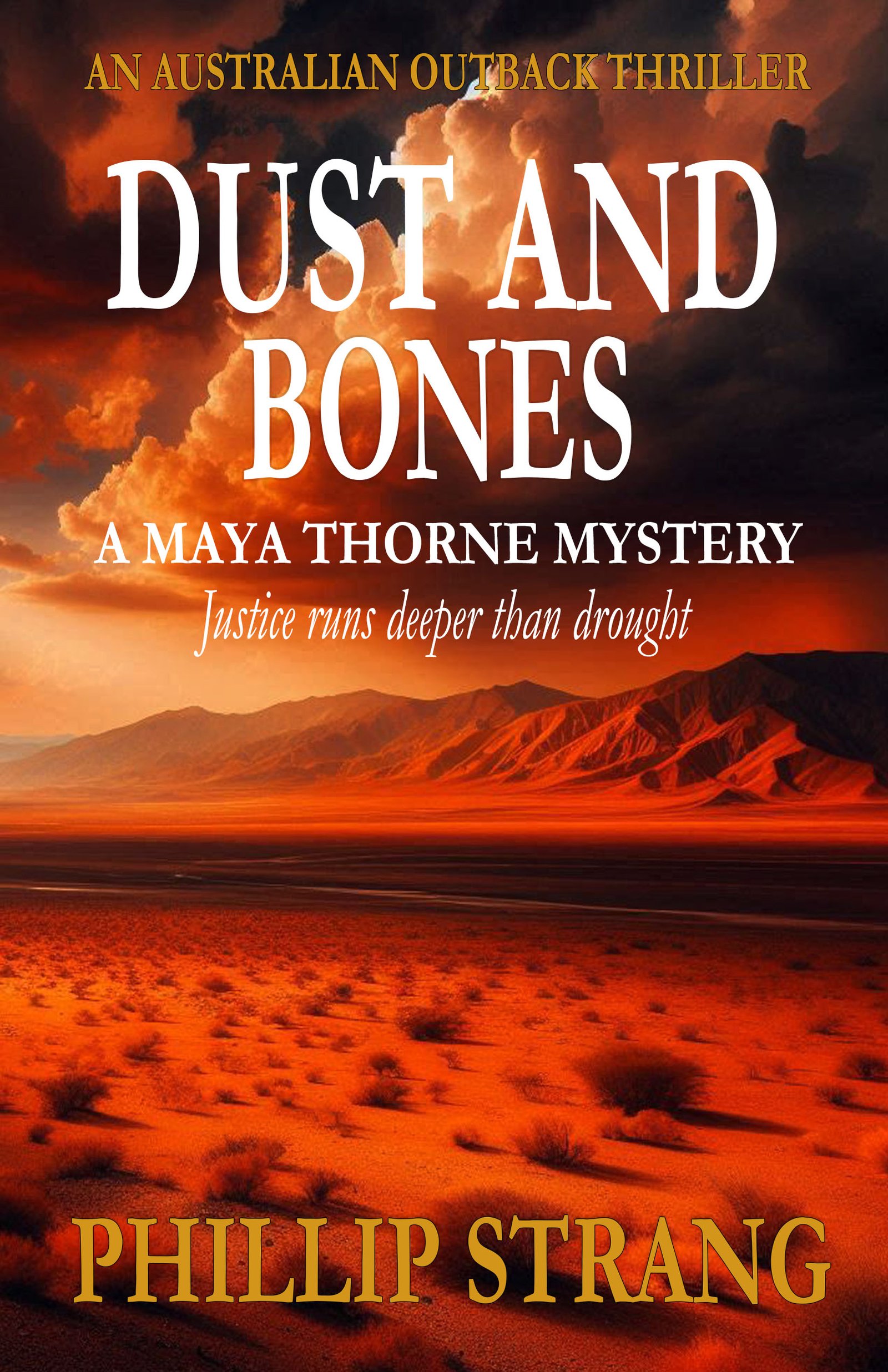
A MAYA THORNE MYSTERY
Get Dust and Bones Free
Justice runs deeper than drought.
Red dust. Shallow graves. A detective who hunts killers where the law runs thin and the nearest help is two hundred miles away.
Send Me the BookYou'll also receive occasional new release emails. Unsubscribe anytime. No spam, ever.
As an Amazon Associate, Phillip Strang earns from qualifying purchases. This page contains affiliate links — buying through them costs you nothing extra.