
Writing two series in parallel creates a unique set of challenges that single-series authors never face. You’re juggling distinct character voices, separate continuities, and different narrative rhythms while maintaining the quality readers expect from each world. The mental gymnastics required to keep DCI Isaac Cook’s London separate from DI Tremayne’s rural investigations can break even experienced writers if they don’t develop systematic approaches.
Across eighteen series and more than 150 novels, I’ve found that the key to successful parallel writing lies not in natural talent but in disciplined craft systems. Too many authors attempt parallel series without understanding that each requires its own creative headspace, distinct voice modulation, and separate continuity tracking. The result is usually series bleed, where characters begin sounding alike and plot elements cross contaminate between worlds.
Creating Distinct Voice Fingerprints for Each Series
Each series must have its own voice fingerprint that goes deeper than surface characteristics. This isn’t just about one detective being gruff and another being philosophical. The narrative voice itself must shift between series, affecting sentence structure, vocabulary choices, and internal rhythm. When I switch from writing Maya Thorne’s Australian outback investigations to DI Sarah Lynch’s Scottish Highland mysteries, I’m not just changing accents—I’m changing the fundamental way the story breathes on the page. Lynch’s world demands shorter, more urgent sentences that mirror the harsh landscape, while Maya’s investigations unfold with the measured pace of outback thinking. The challenge is making these shifts instinctive rather than forced. I maintain voice files for each series, noting specific phrases, sentence patterns, and thinking styles that belong to each world. This prevents the gradual homogenization that kills series distinction over time.
Systematic Continuity Management Without Losing Spontaneity
Continuity tracking for parallel series requires obsessive organization, but not at the expense of creative flow. I use separate continuity bibles for each series, tracking character details, timeline events, and world-building elements that must remain consistent. The mistake many authors make is trying to keep this information in their heads, especially when writing police procedural series where readers notice every inconsistency. Each bible includes character relationship maps, physical descriptions that go beyond the obvious, and timeline markers that anchor major events. But the system only works if you update it immediately after writing, not weeks later when details fade. I’ve learned to treat continuity maintenance as part of the writing process, not an administrative afterthought. The goal is creating a reference system so reliable that you can write with confidence, knowing the foundation details are solid.
How I Actually Approach Parallel Series Writing
My practical approach involves complete mental immersion shifts between series rather than attempting to maintain both simultaneously. I don’t write chapters from different series on the same day because the voice contamination is inevitable. Instead, I commit to one series for defined writing blocks, usually complete scenes or chapters, before switching mental gears. Before beginning each writing session, I reread the last few pages of the previous installment in that series, not for plot continuity but to recapture the specific voice rhythm. This priming process is crucial—it takes about ten minutes of reading before the character’s voice solidifies in my mind. I also maintain different physical writing environments when possible. The space where I write espionage thrillers has different reference materials, different background music, and different visual cues than where I work on police procedurals. These environmental triggers help reinforce the mental shift between series worlds.
Common Mistakes That Destroy Series Distinction
The most devastating mistake is assuming you can maintain series separation through willpower alone. Authors regularly underestimate how easily secondary characters begin sharing personality traits across series, or how plotting techniques from one genre bleed into another. I’ve seen writers create detective teams where every member sounds like variations of the same voice, or worse, where the sharp-tongued sergeant from Series A mysteriously appears as the sharp-tongued coroner in Series B. Another common error is inconsistent pacing between series without understanding why each demands its own rhythm. Psychological thrillers require sustained tension building that doesn’t translate to action-heavy FBI procedurals. Writers often apply the same chapter structure across different series types, creating awkward pacing that serves neither story well. The subtlest but most damaging mistake involves recycling plot devices between series. Readers notice when the same type of red herring appears in different series, or when investigation techniques become repetitive across different detectives’ approaches.
Managing Reader Expectations and Release Scheduling
Parallel series create reader expectations that single-series authors never face. Fans of one series become impatient when you focus on the other, leading to pressure that can compromise creative decisions. The key is establishing clear communication about your writing schedule and sticking to it religiously. I’ve learned to be transparent about which series I’m currently writing and when readers can expect the next installment. This prevents the constant pressure to jump between series based on the most recent reader email or review comment. Release scheduling must account for the creative reality that parallel series can’t be rushed without quality degradation. I plan releases to maintain momentum in both series without forcing unnatural writing speeds. The goal is sustainable productivity that serves both series well rather than frantic switching that serves neither. Publishers and readers both benefit from predictable schedules, but only when those schedules reflect realistic writing timelines for maintaining quality across multiple ongoing narratives.
Conclusion
Writing two series in parallel demands systematic approaches to voice distinction, continuity management, and creative workflow that go far beyond the challenges of single-series writing. Success comes from respecting each series’ unique requirements while developing reliable systems that support rather than constrain creativity.
About Phillip Strang
Phillip Strang is an Australian crime and thriller novelist. Across eighteen series and more than 150 novels, his work spans London police procedurals (DCI Isaac Cook), UK investigations (DI Tremayne), Australian outback crime (Maya Thorne), FBI thrillers (Alex Harlan), Scottish Highland mysteries (DI Sarah Lynch), and espionage (Steve Case). Learn more about Phillip or browse his complete catalogue on Amazon.
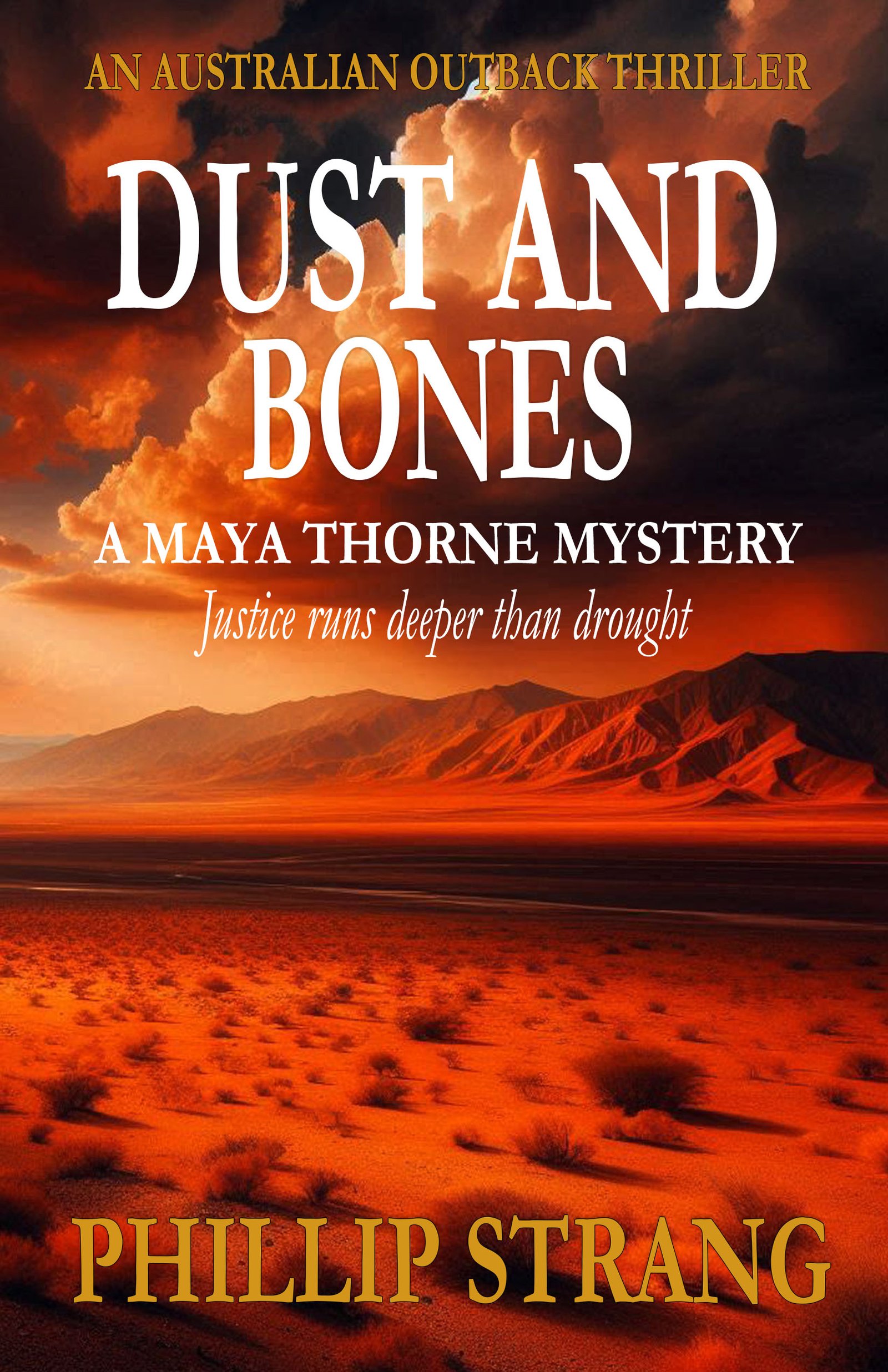
A MAYA THORNE MYSTERY
Get Dust and Bones Free
Justice runs deeper than drought.
Red dust. Shallow graves. A detective who hunts killers where the law runs thin and the nearest help is two hundred miles away.
Send Me the BookYou'll also receive occasional new release emails. Unsubscribe anytime. No spam, ever.
As an Amazon Associate, Phillip Strang earns from qualifying purchases. This page contains affiliate links — buying through them costs you nothing extra.