
The victim identification scene stands as perhaps the most emotionally charged and technically demanding moment in crime fiction. It requires the perfect balance of clinical procedure and raw human emotion, demanding that writers navigate grief, denial, and administrative necessity within a few hundred words. Get it wrong, and you risk melodrama or clinical coldness that destroys the emotional foundation of your entire narrative.
Across eighteen series and more than 150 novels, I have found that the victim identification scene serves as the crucial pivot point where plot mechanics meet character depth. This moment transforms statistics into personal tragedy and abstract crime into visceral reality for both characters and readers.
The Technical Framework That Supports Emotion
Every effective victim identification scene requires a solid foundation of procedural accuracy. The morgue setting, the formal language of identification, the presence of witnesses—these elements provide the scaffolding that allows emotion to hit with maximum impact. In my DCI Isaac Cook series, I always establish the physical environment first: the antiseptic smell, the fluorescent lighting, the sound of the refrigeration units. These details ground the reader in reality before the emotional avalanche begins.
The identification process itself follows strict protocols. A viewing window or monitor, never direct contact with the body. A formal question requiring a yes or no response. The presence of a coroner’s assistant or police officer. These procedural elements create rhythm and tension. They force the identifying character—and your reader—to move through each step deliberately, building anticipation and dread.
Managing the Emotional Temperature
The greatest challenge lies in calibrating the emotional intensity. Too much grief becomes melodramatic soap opera. Too little feels cold and unrealistic. The key is understanding that different relationships produce different grief responses. A parent identifying a child experiences something fundamentally different from a spouse identifying a partner, or a sibling making the identification when parents cannot.
I’ve learned to let the character’s specific relationship with the victim dictate the emotional register. When writing Maya Thorne investigating deaths in the Australian outback, the identification scenes often involve community members who knew the victim in multiple contexts—as neighbor, friend, and sometimes rival. This complexity allows for more nuanced emotional responses than simple grief.
The most powerful identification scenes often focus on small, specific details rather than overwhelming emotion. A mother noticing her son’s hands, still dirty from his last day of work. A husband recognizing a distinctive scar from a childhood accident. These concrete details hit harder than abstract declarations of loss.
How I Actually Write These Scenes
My process for victim identification scenes starts with character preparation long before the scene itself. I need to know exactly what the identifying character hopes to see and fears to confirm. This internal conflict drives the entire scene’s tension.
I write these scenes in real-time, matching the identifying character’s emotional pace. If they’re reluctant, the prose slows down. If they’re desperate for confirmation, the sentences quicken. The rhythm of the language must mirror the character’s psychological state.
The physical positioning matters enormously. Where does the character stand? Do they move closer to the window or step back? Do they touch the glass? These choreographic choices reveal character while maintaining the scene’s emotional authenticity. In several DI Tremayne cases, I’ve had identifying characters focus on their own reflection in the viewing window rather than immediately looking at the body—a natural human response that also serves narrative tension.
I always know the identifying character’s decision point before writing the scene. When exactly do they know for certain? What detail confirms their worst fears? This moment of recognition becomes the scene’s climax, and everything before builds toward it.
Common Pitfalls That Destroy Authenticity
The most frequent mistake involves overwriting the emotional response. Writers often feel compelled to describe every sob, every tear, every physical manifestation of grief. This approach quickly becomes exhausting and loses impact. Better to choose one or two specific physical responses and trust them to carry the emotional weight.
Another common error involves inconsistent character behavior. A stoic police detective who suddenly becomes emotionally overwhelmed without clear motivation breaks reader trust. The character’s professional experience should influence their response, even in personal situations. When one of my police characters must identify someone they knew personally, their training conflicts with their emotion—this internal battle provides much richer material than pure grief.
Many writers also rush through the procedural elements to reach the emotional payoff. This approach undermines both aspects. The administrative requirements of identification—forms to sign, questions to answer, procedures to follow—create natural pacing that enhances rather than detracts from emotional impact.
Dialogue in these scenes frequently becomes stilted or overly formal. Real people don’t speak in complete sentences during emotional crises. They repeat themselves, leave thoughts unfinished, ask irrelevant questions. The best dialogue in identification scenes often involves what characters cannot quite bring themselves to say directly.
Leveraging the Scene’s Broader Narrative Function
Beyond immediate emotional impact, victim identification scenes serve crucial plot functions. They often provide the first opportunity for detailed victim description, establishing physical evidence that becomes relevant later. They can introduce key witnesses or reveal family dynamics essential to the investigation.
These scenes also establish the stakes for your investigating characters. When police officers witness family members identifying loved ones, it reminds them why their work matters. This motivation proves essential during later investigative challenges. The best police procedural novels understand that professional dedication stems from personal witness to crime’s human cost.
I’ve found that identification scenes work exceptionally well as chapter endings or beginnings. The emotional weight provides natural transition points in your narrative flow. They also serve as excellent opportunities to shift point of view, moving from investigative perspective to family perspective, or vice versa.
The scene’s resolution—how characters leave the morgue, what they say or don’t say afterward—establishes important character trajectories for the remainder of your story. Some characters become determined to help the investigation. Others withdraw into grief. These responses create natural plot development opportunities while maintaining emotional authenticity.
Conclusion
The victim identification scene demands technical precision married to emotional truth. Master this balance through careful character preparation, procedural accuracy, and ruthless editing that eliminates everything except the most essential details. When written effectively, these scenes transform your entire narrative from puzzle to human drama.
About Phillip Strang
Phillip Strang is an Australian crime and thriller novelist. Across eighteen series and more than 150 novels, his work spans London police procedurals (DCI Isaac Cook), UK investigations (DI Tremayne), Australian outback crime (Maya Thorne), FBI thrillers (Alex Harlan), Scottish Highland mysteries (DI Sarah Lynch), and espionage (Steve Case). Learn more about Phillip or browse his complete catalogue on Amazon.
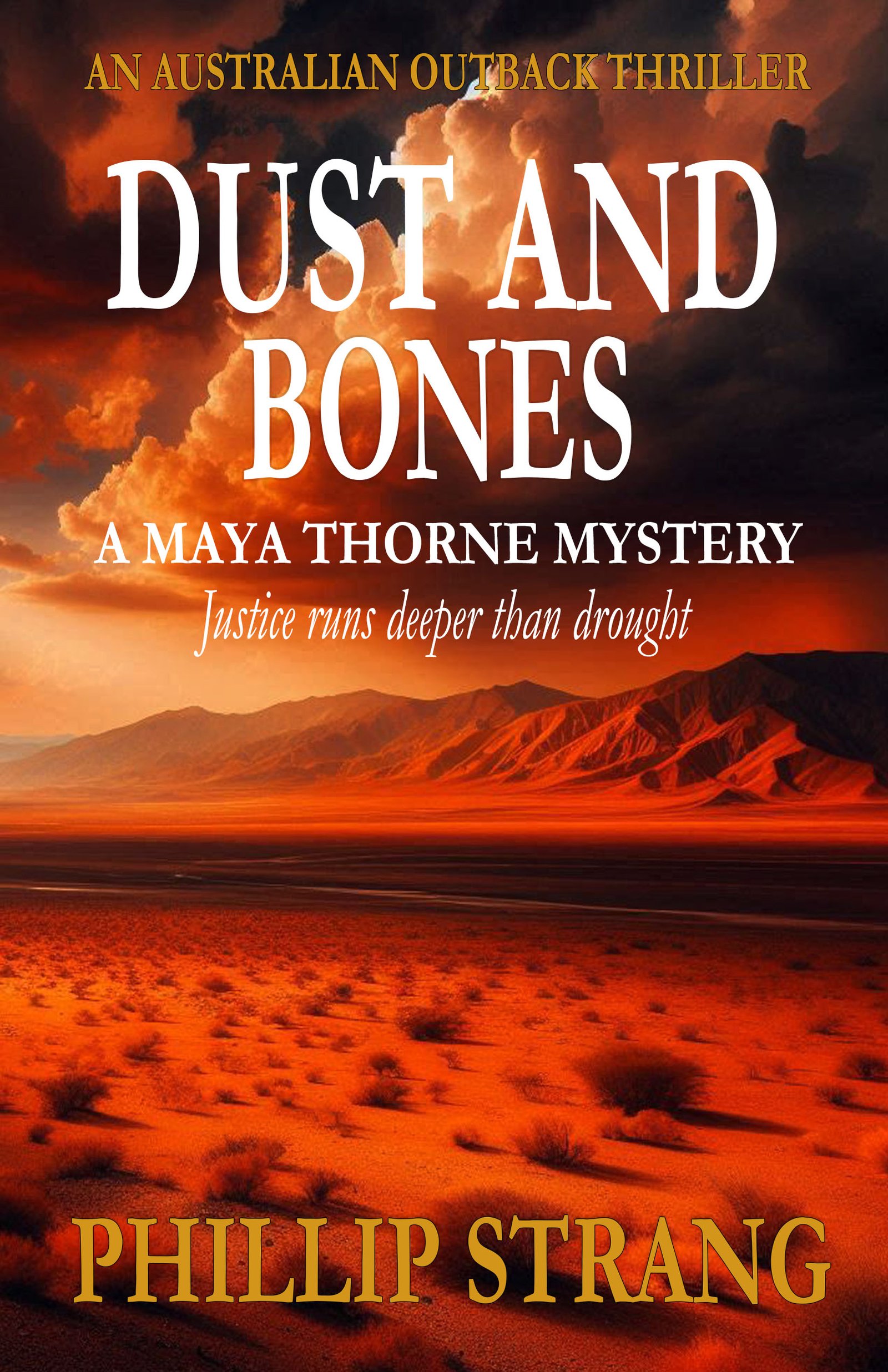
A MAYA THORNE MYSTERY
Get Dust and Bones Free
Justice runs deeper than drought.
Red dust. Shallow graves. A detective who hunts killers where the law runs thin and the nearest help is two hundred miles away.
Send Me the BookYou'll also receive occasional new release emails. Unsubscribe anytime. No spam, ever.
As an Amazon Associate, Phillip Strang earns from qualifying purchases. This page contains affiliate links — buying through them costs you nothing extra.